A mid-ride GPS crash or a phone mount that kills your battery by mile 20 isn't a gear problem — it's a dedicated cycling computer problem, and it's completely solved. The five options below all have true GPS, ANT+ sensor support, and Strava sync, starting at under $50.
| Photo |
Top Pick
|
Versatile

|
Budget

|
Best Value
|
Best for Reliability
|
|---|---|---|---|---|---|
| Product | Garmin Edge 130 Plus GPS Cycling Computer | Wahoo ELEMNT Bolt V2 GPS Cycling Computer | iGPSPORT BSC200S GPS Bike Computer | Magene C606 Smart GPS Bike Computer | COOSPO BC107 GPS Bike Computer |
| Navigation | Breadcrumb + turn prompts | Turn-by-turn + rerouting | Color route nav + rerouting | Offline maps + rerouting | GPS track (no turn-by-turn) |
| Waterproof | IPX7 | IPX7 | IPX7 | IPX7 | IPX7 |
| Battery life | 12 hours GPS-on | 15 hours GPS-on | 25 hours GPS-on | 15-25 hours GPS-on | 20-25 hours GPS-on |
| Connectivity | ANT+ / Bluetooth | ANT+ / Bluetooth / WiFi | ANT+ / Bluetooth | ANT+ / Bluetooth / WiFi | ANT+ / Bluetooth (app only) |
| Buy Now | Check Price → | Check Price → | Check Price → | Check Price → | Check Price → |
Quick Tips
Lock GPS signal before you clip in — stand still outside for 60 seconds after powering on, especially on a first ride with a new unit.Sync your Strava routes the night before long rides so they're cached offline; don't rely on live downloads at the trailhead.Use ANT+ for sensors like heart rate or power meters — Bluetooth drains battery faster and drops on long efforts.Mount position matters more than screen size: an out-front stem mount keeps your eyes on the road and reduces neck strain on multi-hour rides.
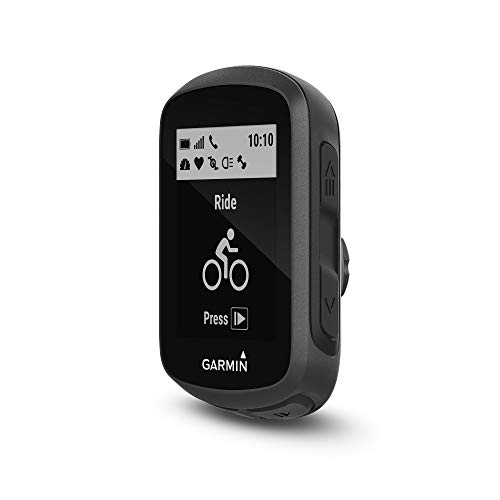
Garmin Edge 130 Plus GPS Cycling Computer
Best for structured training with Strava and TrainingPeaks integration
Garmin Edge 130 Plus GPS Cycling Computer
Best for structured training with Strava and TrainingPeaks integration
What we like
- ClimbPro shows remaining ascent and grade in real time while following a route.
- Syncs structured workouts directly from Garmin Connect, TrainingPeaks, and TrainerRoad.
- Multi-satellite support (GPS, GLONASS, Galileo) holds signal better in wooded or canyon terrain.
- Incident detection sends your real-time location to emergency contacts when paired with a smartphone.
What we don't
- 1.8-inch monochrome display is small and shows no color mapping, only a breadcrumb line.
- 12-hour battery won't survive a full ultra-distance day without a top-up.
- No offline color maps — navigation is functional but minimal compared to pricier Garmin units.
When you're following a structured training plan and need a device that just works with your existing ecosystem — TrainingPeaks, Strava, Garmin Connect — the Edge 130 Plus removes every friction point between your ride and your data. This is the right pick if you train with power or heart rate on familiar routes and want Garmin reliability without a $350 price tag.
Skip it if turn-by-turn navigation on new roads is your primary need.
Wahoo ELEMNT Bolt V2 GPS Cycling Computer
Best for hassle-free setup and clean app-driven navigation
Wahoo ELEMNT Bolt V2 GPS Cycling Computer
Best for hassle-free setup and clean app-driven navigation
What we like
- Companion app setup is genuinely faster than Garmin's — route loading and data field config done entirely from your phone.
- Take Me To on-demand routing generates turn-by-turn directions directly on the device without pre-planning.
- 16GB onboard storage holds full offline maps for most regions without any management.
- Quicklook LED strip at the top of the device gives at-a-glance pace alerts without looking at the screen.
What we don't
- 2.2-inch 64-color display is noticeably smaller and less vibrant than Garmin Edge 540 at the same price tier.
- No touchscreen — all navigation is button-controlled, which slows map interaction mid-ride.
- Ecosystem is smaller than Garmin's; fewer third-party Connect IQ apps and accessories.
If your biggest frustration with GPS computers is spending 20 minutes fighting menus before every ride, the Wahoo ELEMNT Bolt V2 fixes that problem at a fundamental level — setup happens in the app, the device just rides. Best for cyclists who want reliable turn-by-turn navigation on new roads without the Garmin learning curve.
If you're deep in the Garmin ecosystem with existing sensors and Connect IQ apps, the switch cost probably isn't worth it.
iGPSPORT BSC200S GPS Bike Computer
Best for color navigation under $80
iGPSPORT BSC200S GPS Bike Computer
Best for color navigation under $80
What we like
- Color route navigation with turn prompts and rerouting at a price point where most units only show a breadcrumb line.
- 25-hour GPS battery easily covers a full day of riding without a mid-ride charge.
- Supports ANT+ power meters, cadence, heart rate, and front/rear lights — full sensor ecosystem for the price.
- Continue Last Ride function saves multi-day activity data without splitting it into separate files.
What we don't
- iGPSPORT app is functional but less polished than Garmin Connect or Wahoo's ELEMNT app.
- 2.4-inch screen is readable but shows less detail on map pages than larger displays.
- No WiFi sync — data uploads via Bluetooth through the phone app only.
At $65-80, the BSC200S does something no other unit at this price manages consistently: it gives you colored navigation with rerouting, not just a GPS track line, which matters the moment you miss a turn in an unfamiliar area. This is the pick for weekend riders and bike tourists who want real navigation without the Garmin price tag.
Serious racers or athletes on structured plans will want a more refined app and training ecosystem.
Magene C606 V2 GPS Bike Computer
Best mid-range unit for climbers and Strava segment hunters
Magene C606 V2 GPS Bike Computer
Best mid-range unit for climbers and Strava segment hunters
What we like
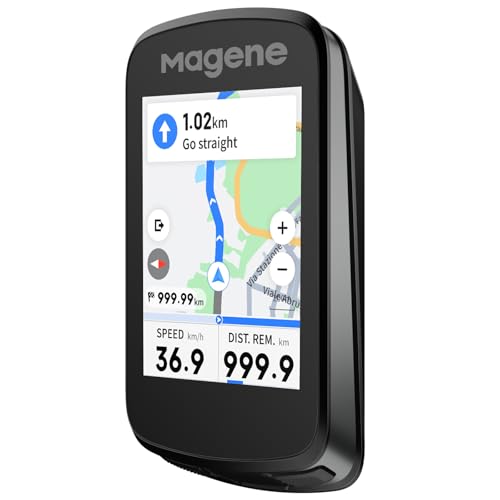
- Multi-Scenario ClimbPro automatically detects climbs on imported routes and shows real-time gradient, remaining distance, and elevation profile.
- Strava Live Segments display on both map and list with approach alerts and live lead/lag status.
- WiFi auto-sync uploads rides and downloads starred Strava segments without touching a phone.
- Full Cycling Dynamics support with compatible power meters for pedaling efficiency analysis.
What we don't
- Magene's ecosystem and brand recognition are significantly smaller than Garmin or Wahoo, which matters for resale and long-term firmware support.
- TFT display is bright indoors but can wash out in direct afternoon sun on the highest brightness setting.
- ClimbPro only activates on imported routes — it doesn't detect climbs on freeride sessions.
The C606 V2 punches into territory Garmin charges $300+ for — offline maps, Strava Live Segments with live PK battles, and ClimbPro-style climb planning — at closer to $130, which makes it genuinely hard to ignore for hilly road cyclists. Pick this if you ride challenging routes and want Strava segment data without buying a Garmin Edge 540.
Pass if brand ecosystem and resale value matter to you.
COOSPO BC107 GPS Bike Computer
Best entry-level GPS for new cyclists tracking distance and speed
COOSPO BC107 GPS Bike Computer
Best entry-level GPS for new cyclists tracking distance and speed
What we like
- Confirmed ANT+ sensor support — pairs with heart rate monitors, power meters, and cadence sensors without buying new equipment.
- 55-hour rated battery keeps it running for days of casual use between charges.
- Strava sync works reliably via the CoospoRide app without requiring a laptop or USB cable.
- IPX7 waterproof rating handles heavy rain without a protective case.
What we don't
- No turn-by-turn navigation — you get a GPS speed and distance tracker, not a route guide.
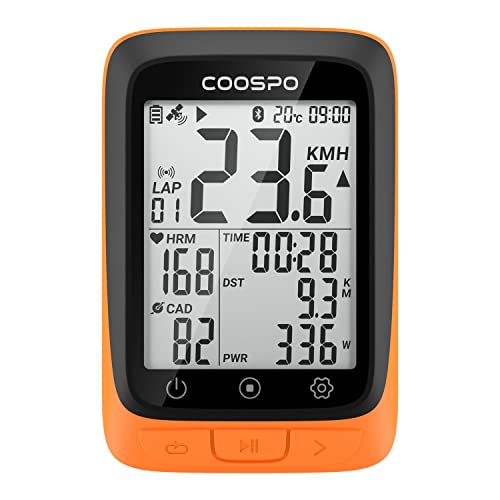
- 2.4-inch monochrome LCD is legible in sunlight but looks dated compared to color displays at $65+.
- Bluetooth on the BC107 is app-only, not for sensors — ANT+ only for hardware pairing.
If you want a GPS unit that tracks your ride, syncs to Strava, and pairs with your existing ANT+ sensors — and you don't need it to tell you where to turn — the BC107 does all of that cleanly at under $50. Right pick for new cyclists who want to move off a phone mount without spending $150.
Wrong pick the moment you start riding unfamiliar routes and actually need navigation.
What to Look For
GPS accuracy and lock speed define how useful a cycling computer actually is on the road. Units using dual-band GNSS (GPS + GLONASS or Galileo) hold signal better in tunnels, canyons, and dense tree cover.
Navigation depth splits the budget field wide open. Breadcrumb maps show you where you've been; turn-by-turn with rerouting is what you actually need when you're 40 miles from the car on unfamiliar roads.
Sensor compatibility is worth checking before you buy. If you already own ANT+ sensors — power meters, cadence, heart rate — make sure the unit supports ANT+, not just Bluetooth, or you'll be replacing working hardware.
Who Should Skip This
If you ride exclusively on a phone with Google Maps and never track training data, a dedicated cycling computer adds cost without benefit — save your money. Riders who want touchscreen navigation with offline maps on a 3+ inch display will outgrow every unit under $150 in this list quickly; step up to the Garmin Edge 840 or Bryton Rider S810 instead.
What the Community Actually Uses
On r/cycling, the recurring advice is blunt: Garmin has the ecosystem, but you're paying for the name at the entry level. Threads comparing the iGPSPORT BSC200S to the Garmin Edge 130 Plus consistently note that the iGPSPORT offers color navigation at a significantly lower price point — the main trade-off being a less polished app and smaller third-party accessory ecosystem.
Quick Picks — In Case You've Already Decided
Frequently Asked Questions
Do I need ANT+ or is Bluetooth enough?
ANT+ is the better choice if you use a power meter, dedicated heart rate strap, or cadence sensor — it's more reliable at distance and doesn't drain battery the way Bluetooth does. If you only pair a phone for Strava sync, Bluetooth alone is fine.
Can I load GPX routes from Komoot or Strava onto these units?
Yes — all five units here accept GPX routes via their companion apps. The Wahoo ELEMNT Bolt V2 and Garmin Edge 130 Plus sync wirelessly; the COOSPO BC107 and iGPSPORT BSC100S and BSC200S require you to load routes through their respective phone apps first.
What's the real-world battery life difference between these units?
Specs are generous — expect roughly 70-80% of the stated number with backlight on and GPS active. The COOSPO BC107's 55-hour claim is for GPS-off mode; with GPS running, you'll see closer to 20-25 hours.
Is the Wahoo ELEMNT Bolt V2 worth the price over a Garmin Edge 130 Plus?
They're close in price. The Wahoo wins on setup simplicity and a better companion app; the Garmin has ClimbPro, deeper ecosystem integration, and a stronger resale value. Training-focused riders tend to prefer Garmin; commuters and casual tourers lean Wahoo.
Do any of these units work without a phone?
All five record data and display GPS metrics completely independently — no phone required while riding. A phone is only needed for initial setup, route loading, and post-ride sync to Strava or TrainingPeaks.
Buying Guide
You need GPS that locks fast and holds signal on tree-covered routes. ANT+ matters if you run a power meter or heart rate strap.
Navigation is the real differentiator — breadcrumb routing covers most riders, but turn-by-turn changes everything on unfamiliar roads. Battery life above 15 hours handles a full day without charging anxiety.