Nothing ruins a camping trip faster than waking up in a puddle because your tent folded in overnight wind and rain. You've probably felt that sinking moment when the first gusts hit your tent walls and you realize the stakes aren't holding — and the storm is just getting started.
The best tents for high winds and heavy rain share a few non-negotiable traits: low profiles that shed wind instead of catching it, fully taped seams that don't weep in sustained rain, and pole systems engineered to flex without snapping. This guide cuts through the marketing so you know exactly what you're getting before the forecast turns ugly.
| Photo |
Top Pick

|
Versatile

|
Budget
|
Best Value

|
Best for Reliability
|
|---|---|---|---|---|---|
| Product | MSR Hubba Hubba NX 2-Person | Marmot Tungsten 3P | Big Agnes Copper Spur HV UL mtnGLO | MSR Hubba Hubba 3-Person | Coleman Skydome 4-Person |
| Weight | 3 lbs 14 oz | 5 lbs 15 oz | 3 lbs 2 oz | 5 lbs 3 oz | 7 lbs 8 oz |
| Capacity | 2 person | 3 person | 2 person | 3 person | 4 person |
| Waterproof | Xtreme Shield | 1800mm fly / 2000mm floor | 1200mm fly / 1500mm floor | Xtreme Shield | — |
| Setup | ~10 min | — | — | — | 5 minutes |
| Buy Now | Check Price → | Check Price → | Check Price → | Check Price → | Check Price → |
MSR Hubba Hubba NX 2-Person
Top Pick for Storm Performance
MSR Hubba Hubba NX 2-Person
Best Overall Storm Tent for Backpackers
What we like
- Easton Syclone poles flex in gusts without snapping
- Xtreme Shield waterproof coating lasts 3x longer than standard coatings
- Fully seam-taped fly and floor — no water intrusion points
- Two vestibules and two doors for real storm livability
- Low-profile dome sheds wind rather than catching it
What we don't
- Premium price — one of the more expensive options here
- 39-inch peak height feels low for taller campers
- Setup takes practice before you get fast at it
The MSR Hubba Hubba NX is what serious backpackers reach for when the forecast says 40 mph gusts and overnight rain. The Easton Syclone poles are the key — they're engineered to flex under load and return to shape, rather than the snap-and-catastrophic-failure you get from cheaper pole systems.
You can feel the difference when a gust hits: the tent moves with the wind instead of fighting it. The Xtreme Shield coating on the fly and floor is genuinely different from standard polyurethane coatings.
MSR claims it lasts three times longer, and real-world experience backs that up — this tent holds its waterproofing season after season without the delamination issues that plague cheaper tents. Fully taped seams mean there's no weak point where sustained rain can find its way in.
Two vestibules and two doors make this tent actually livable in bad weather. You can get in and out without disturbing your tentmate, and you have covered storage for both your packs.
At under 4 pounds, you're getting storm-level protection without a weight penalty that makes it impractical for the backpacking trips where weather is most likely to turn on you.
Marmot Tungsten 3P
Best for Families on a Budget
Marmot Tungsten 3P
Best Value 3-Season Storm Tent
What we like
- DAC Press-Fit poles — same quality found in tents costing twice as much
- Footprint included in the box — rare at this price
- Two D-shaped doors and two vestibules for storm livability
- Pre-bent sleeping zone poles create near-vertical walls
- Factory-seam-taped fly keeps rain out in sustained downpours
What we don't
- Nearly 6 pounds — heavy for serious backpacking
- 1800mm fly rating is adequate but not exceptional for extreme rain
- Setup takes 15-20 minutes without practice
The Marmot Tungsten 3P punches above its price by using DAC Press-Fit poles — the same pole technology found in tents costing $150 more. DAC poles flex and recover without cracking, which matters enormously when wind gusts are rolling through your campsite at 2 AM.
The pre-bent poles also create more vertical sidewalls, giving you livable headroom that cheaper dome tents can't match. CleverHiker ranks this among the best weather-resistant tents for campers who don't need ultralight performance, and the reasoning is straightforward: you get a fully seam-taped fly, a 2000mm waterproof floor, two vestibules for gear storage, and a footprint already included — all at a price that doesn't require justification.
Most tents at this price ship without a footprint and charge extra for it. The weight (nearly 6 pounds) makes this a car camping and base camp tent rather than a backcountry shelter.
But if you're driving to the trailhead or setting up a base camp for multi-day trips where weather is the primary concern, the Tungsten 3P gives you storm performance without the premium price of MSR or Big Agnes.
Big Agnes Copper Spur HV UL mtnGLO
Editor's Choice
Big Agnes Copper Spur HV UL mtnGLO
Best Ultralight Storm Tent with Interior Lighting
What we like
- Awning-style vestibules minimize wind-driven rain entry
- Built-in LED lighting system — genuinely useful on stormy nights
- High-volume design gives more headroom than its weight class suggests
- Double-zipper vestibule doors for ventilation control in rain
- Under 3.5 lbs — lightest tent with real storm capability on this list
What we don't
- 1200mm fly rating is lower than other storm-focused tents here
- Premium price for the weight savings
- LED system requires AAA batteries not included
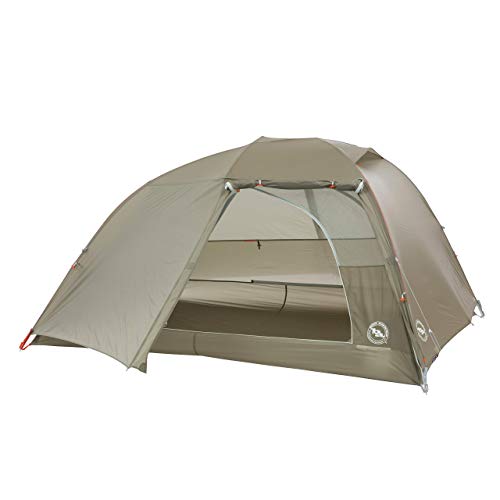
The Big Agnes Copper Spur HV UL stands out for a specific type of camper: someone who needs a tent light enough to backpack but capable enough to handle genuine storm conditions. At just over 3 pounds, it weighs less than any other tent on this list while still delivering a fully seam-taped fly, two vestibules, and the awning-style door design that's specifically engineered to block wind-driven rain from entering when you open the vestibule.
The mtnGLO LED lighting system is more useful than it sounds. When you're stuck inside during a rain-soaked afternoon or navigating the tent at 2 AM, having soft overhead lighting without hunting for a headlamp changes the quality of the experience significantly.
It's a small detail that becomes important during the kind of extended weather events where this tent earns its keep. The 1200mm fly waterproof rating is lower than the Marmot Tungsten or MSR Hubba Hubba, and that's the honest trade-off for the weight savings.
For most 3-season storm conditions this rating is adequate, but if you're camping in areas with sustained multi-day deluges, step up to the Hubba Hubba's Xtreme Shield coating instead.
MSR Hubba Hubba 3-Person
Best for Groups in Bad Weather
MSR Hubba Hubba 3-Person
Best Group Storm Tent for 3 Campers
What we like
- Same Xtreme Shield and pole quality as the 2-person NX
- True rectangular floor maximizes sleeping space for three
- 46-inch peak height — comfortable to sit up inside
- Two doors and two vestibules — essential for 3-person storm use
- Color-coded poles make setup faster in bad light or rain
What we don't
- Over 5 pounds makes this a car camping or base camp tent
- Premium MSR pricing
- Snug for 3 adults with all their gear inside
When you're camping with three people and a serious storm rolls in, the MSR Hubba Hubba 3-Person gives you the same storm engineering as the award-winning 2-person NX but with the space needed for a group. The true rectangular floor — no foot taper — means all three sleeping positions actually work instead of cramming feet into a narrowing corner.
That design detail becomes critical during an extended rain event when you're spending hours inside the tent. The Xtreme Shield coating and Easton pole system carry over directly from the NX, so you're getting proven storm performance scaled up.
Two vestibules give you somewhere to stash three sets of wet gear and boots without bringing the rain inside. The color-coded pole setup system makes pitching faster, which matters when you're racing a storm and fumbling with a complicated pole architecture in the dark.
At 5+ pounds, this isn't a tent you'll backpack with regularly, but it's absolutely viable for base camp use on multi-day trips where weight is shared across a group. For three-person car camping in genuinely bad weather, it's the most capable option at a reasonable weight-to-protection ratio on this list.
Coleman Skydome 4-Person
Best Budget Storm Tent
Coleman Skydome 4-Person
Best Budget Pick for Wind and Rain
What we like
- Frame tested to 35 mph winds — Coleman publishes actual test data
- WeatherTec system: welded corners, inverted seams, taped rainfly
- 5-minute setup with pre-attached poles — crucial in approaching storms
- 20% more headroom than traditional dome designs
- Significantly cheaper than any other tent on this list
What we don't
- Fiberglass poles — weaker than DAC aluminum in extreme conditions
- Heavy at 7.5 lbs — car camping only
- Single door limits access during rain events
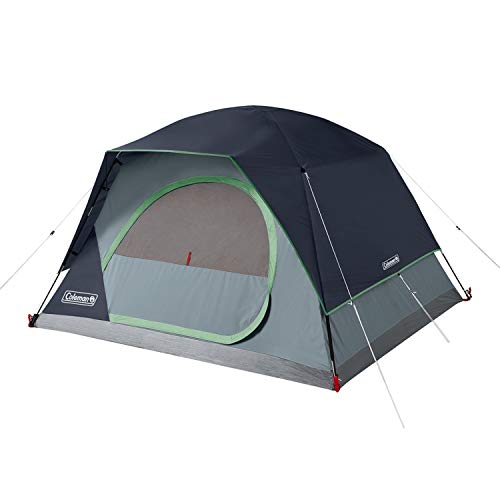
The Coleman Skydome earns its place on this list because Coleman actually publishes wind resistance test data — the frame is rated to 35 mph. Most tent manufacturers don't publish this number, which tells you something.
The WeatherTec system uses welded corners and inverted seams rather than stitched and taped seams, which is a genuinely different construction approach that performs well in sustained rain for a budget tent. The 5-minute setup with pre-attached poles is a real advantage when a storm is approaching and you need shelter quickly.
Most higher-end tents take 15-20 minutes the first several times you pitch them. The Skydome's pre-attached pole system means you can get this shelter up even in wind and light rain without fumbling through a pole assembly sequence.
The fiberglass poles are the honest limitation. In truly extreme conditions — sustained 50+ mph gusts — fiberglass poles can snap where aluminum would flex and recover.
If you're camping in genuinely exposed locations with serious weather, the MSR or Marmot options with aluminum poles are the right call. But for typical campground storms and 35 mph wind events, the Skydome performs well at a fraction of the price.
What to Look For in a Wind and Rain Tent
Pole material is the single most important factor in wind performance. DAC aluminum poles — used in the MSR and Marmot options here — flex under load and return to shape.
Fiberglass poles, found in budget tents like the Coleman, can crack or shatter in extreme gusts. If you're camping in exposed, high-wind locations regularly, aluminum poles aren't optional.
For most campground conditions, fiberglass is adequate and the price difference is significant. Waterproof ratings tell part of the story but not all of it.
A 3000mm fly rating handles sustained rain if the seams are properly taped. A 1200mm fly with full seam taping can outperform a 3000mm fly with untaped seams.
Always check whether seam taping is on the fly only or the full tent — floor seams fail just as often as fly seams in extended rain events, and groundwater is as much of a threat as overhead rain. Tent profile and guy wire systems determine real-world wind performance more than any spec on a data sheet.
Low-profile dome tents shed wind; tall cabin tents catch it. Guylines properly staked out can transform a tent's wind performance — most people camp with guylines unattached, which is fine in light conditions but a serious mistake in a genuine storm.
Whatever tent you buy, practice pitching it with all guylines deployed before you need to do it in the dark during an actual storm.
Who Should Skip These Tents
If you're camping exclusively in fair weather — summer weekend trips to established campgrounds where the biggest threat is morning dew — you're over-buying with any tent on this list. A $60 Coleman Sundome handles those conditions fine, and the extra money is better spent on a sleeping pad or bag.
These storm-rated tents earn their cost in sustained wind and rain events. If your camping is mostly benign, save the budget for gear you'll actually stress-test.
Quick Picks — In Case You've Already Decided
Frequently Asked Questions
What wind speed can a camping tent withstand?
Most quality 3-season tents handle 30-40 mph winds when properly staked and guyed. The Coleman Skydome is tested to 35 mph. MSR and Marmot tents with DAC aluminum poles typically handle 50+ mph with all guylines deployed. Beyond 60 mph, no consumer tent is reliably safe and you should seek hard shelter.
Do I need a 4-season tent for heavy rain?
No — a quality 3-season tent with fully taped seams handles heavy rain well. Four-season tents are designed for snow load and extreme cold, not necessarily rain. The tents on this list are all 3-season designs that perform excellently in rain and wind without the added weight and reduced ventilation of 4-season shelters.
How do I know if my tent seams are properly taped?
Run your finger along the interior seams — properly taped seams have a continuous strip of waterproof tape covering the stitch line. Gaps, bubbles, or peeling tape indicate areas that need re-sealing. Seam sealer is cheap and applying it before your first rain event is the single highest-value tent maintenance step you can take.
Should I use a footprint under my tent in rain?
Yes, especially in sustained rain. A footprint protects the tent floor from abrasion and groundwater pressure — water can wick up through even a well-rated floor under sustained pressure. The Marmot Tungsten includes a footprint; for other tents, a universal ground cloth cut to size works well.
What's the difference between a rainfly and a full-coverage fly?
A partial rainfly covers the roof but leaves the tent body walls exposed — fine for light rain but inadequate in wind-driven rain or sustained storms. A full-coverage fly extends all the way to the ground or near-ground on all sides, creating a weather barrier around the entire tent body. For serious storm use, full-coverage flies are strongly preferred.
What r/camping and r/ultralight Actually Use
Community consensus across r/camping and r/ultralight consistently points to the MSR Hubba Hubba NX as the benchmark for backpackable storm performance — it comes up as the comparison point in nearly every tent recommendation thread involving weather. The Marmot Tungsten appears frequently as the value pick for car campers who want quality poles without MSR pricing. The Coleman Skydome gets recommended for beginners and festival campers who want fast setup and acceptable weather protection. One piece of advice repeated consistently: seam-seal your tent before its first use regardless of what the manufacturer claims, and always stake out your guylines when any weather is in the forecast.