Squinting into the sun on a trail or behind the wheel isn't a vision problem — it's a gear problem, and the right pair of polarized sunglasses solves it in under a second. These five picks range from $22 to $289 and cover every use case from fishing flats to mountain drives.
| Photo |
Top Pick
|
Versatile

|
Budget
|
Best Value

|
Best for Reliability

|
|---|---|---|---|---|---|
| Product | Oakley Men's Holbrook Sunglasses | SMITH Guide's Choice Fishing Sunglasses | Costa Del Mar Fantail PRO Polarized Sunglasses | Ray-Ban RB3025 Classic Aviator Sunglasses | ATTCL Polarized Sunglasses Men TR90 Sports Wrap |
| Polarized | ✓ | ✓ | ✓ | ✓ | ✓ |
| Lens material | Polycarbonate (Prizm) | ChromaPop Glass | 580G polarized glass | Crystal glass (G-15) | TAC polarized polycarbonate |
| Uv protection | UV400 | UV400 | UV400 | UV400 | UV400 |
| Frame material | O-Matter nylon | Evolve bio-based nylon | Co-injected bio-resin nylon | Lightweight metal | TR90 nylon |
| Buy Now | Check Price → | Check Price → | Check Price → | Check Price → | Check Price → |
Quick Tips
Hold the lens up to a light source and tilt it 90 degrees — if it darkens, the lenses are genuinely polarized, not just tinted.For driving, go with gray or brown lenses; gray keeps colors accurate while brown adds contrast on overcast days.Wrap-around frames cut peripheral glare on the water or trail — flat fashion frames won't protect your side vision in bright conditions.If you're buying for fishing or hunting, glass lenses scratch less but weigh more; polycarbonate is lighter and impact-resistant for active use.
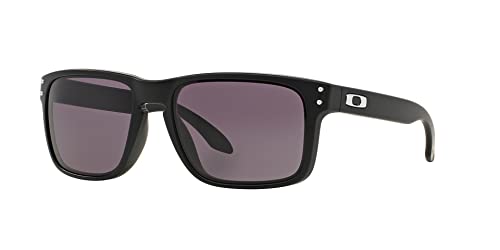
Oakley Men's Holbrook Sunglasses
Best for all-day outdoor wear and driving
Oakley Men's Holbrook Sunglasses
Best for all-day outdoor wear and driving
What we like
- Prizm lens technology boosts contrast and color definition in bright outdoor conditions, making it noticeably sharper than standard polarized lenses.
- O-Matter frame is stress-resistant, stays flexible in cold, and doesn't deform after sitting in a hot truck cab all day.
- Three-point fit contacts only the nose bridge and temples, which keeps the frame from shifting during trail runs or rough drives.
- Available in a massive range of Prizm lens variants — deep water, road, trail — so you can match the lens to your actual activity.
What we don't
- Non-polarized versions are easy to accidentally buy — double-check you're selecting a Prizm Polarized variant if glare reduction is the priority.
- Polycarbonate lenses scratch more easily than glass, especially if you're dropping them on rocks or leaving them loose in a pack.
- The Holbrook fits medium-width faces best; large-headed guys often find them too narrow and need to go up to the Holbrook XL.
The Holbrook is the pair most outdoor guys end up with after going through two or three cheaper options — the Prizm lenses genuinely change how you see trail detail, glare off water, and dashboard reflection compared to standard polarized glass. This is the right pick if you want one pair that works from the truck to the trailhead and looks decent doing both.
If you need serious performance fishing optics or glass lens clarity, step up to the Costa or Smith.
SMITH Guide's Choice Fishing Sunglasses
Best for fishing, hunting, and serious outdoor use
SMITH Guide's Choice Fishing Sunglasses
Best for fishing, hunting, and serious outdoor use
What we like
- ChromaPop Glass lenses are mineral glass — more scratch-resistant than polycarbonate and optically cleaner with higher contrast in changing light.
- Wide temples and aggressive wrap geometry block peripheral light that standard lifestyle frames completely miss.
- Megol non-slip nose and temple pads stay put through sweat, rain, and heavy exertion without needing adjustment.
- Glass Polarchromic variant auto-adjusts tint from light to dark based on UV exposure, which is genuinely useful when moving between shade and open sun.
What we don't
- Glass lenses make this one of the heavier performance options — noticeable compared to TR90 or polycarbonate frames after several hours.
- Premium price point; the ChromaPop Glass Polarchromic version especially runs close to $300.
- Wraparound shape reads sporty, not lifestyle — if you want a pair that also works at a restaurant or in town, the Holbrook fits that role better.
If you spend real time on water or in the field, the Guide's Choice is the serious upgrade — glass lenses and ChromaPop technology mean colors are richer, fish structure under the surface is visible, and you're not squinting even in shifting cloud cover. Buy this if you fish or hunt multiple times a season and want lenses that genuinely improve what you see, not just block the sun.
Pass if you're mostly driving or casual hiking — you'll be paying for performance you won't use.
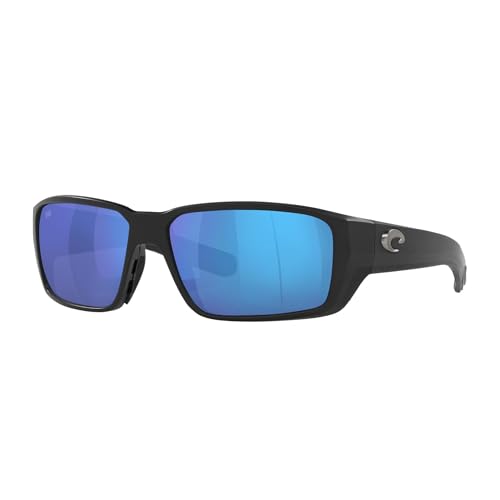
Costa Del Mar Fantail PRO Polarized Sunglasses
Best for water, fishing, and high-glare conditions
Costa Del Mar Fantail PRO Polarized Sunglasses
Best for water, fishing, and high-glare conditions
What we like
- Costa's 580G glass lenses block high-energy visible blue light specifically — not just UV — which dramatically improves contrast in bright coastal and open-water conditions.
- PRO series adds eyewire drains, sweat management channels, and vented nose pads that keep the frame stable during active watersports or sweaty trail use.
- Scratch-proof glass lens surface holds up to being set face-down on a boat deck or truck hood far better than polycarbonate.
- Side shields and sun hooding block overhead and side glare that standard lens geometry misses entirely on the water.
What we don't
- Glass lenses add noticeable weight compared to TR90 or O-Matter frames — fine for stationary fishing, heavier for running or technical hiking.
- PRO frame geometry is aggressive; it's built for performance, not mixed use in urban or social settings.
- High price point makes these a targeted buy — overkill if you're not regularly fishing, boating, or in open coastal sun.
The Fantail PRO is Costa's best fishing sunglass for a reason: the 580G glass cuts glare and blue light in a way that makes surface water transparent and colors pop in a way that standard polarized lenses don't replicate. This is for the guy who's on the water multiple days a week and wants the clearest possible view into the shallows.
If you're mostly driving or hiking with occasional fishing, the Oakley or Smith covers you without the price premium.
Ray-Ban RB3025 Classic Aviator Sunglasses
Best for everyday wear, driving, and style
Ray-Ban RB3025 Classic Aviator Sunglasses
Best for everyday wear, driving, and style
What we like
- G-15 glass lenses are prescription-quality optical glass that transmits natural color accurately — better than most polycarbonate lenses at twice the price.
- Adjustable nose pads provide a genuinely custom fit that works across different face shapes without the frame sliding.
- The classic aviator shape is one of the few sunglass designs that works for outdoor use and looks appropriate everywhere else.
- Polarized version cuts driving glare dramatically, especially off wet roads and other vehicles at highway speeds.
What we don't
- Glass lenses can shatter on a hard impact — not ideal as the only pair in a pack where you might drop them on rock.
- Standard G-15 lens offers less color enhancement and contrast boost than Prizm or ChromaPop technology.
- Wide open aviator frame leaves more peripheral light exposure than wrap-around sport designs — not ideal for fishing or active trail use.
The RB3025 is the pair you wear when you want real glass optical quality, a frame that works on a summit and at a dinner afterward, and don't want to explain why you paid $250 for sunglasses. Best for guys who drive a lot, spend casual time outdoors, and want one pair that works everywhere.
Skip it if fishing or technical sport performance is the main use case — the wrap geometry and lens tech of the Oakley or Smith serve those scenarios better.
ATTCL Polarized Sunglasses Men TR90 Sports Wrap
Best budget polarized option for active outdoor use
ATTCL Polarized Sunglasses Men TR90 Sports Wrap
Best budget polarized option for active outdoor use
What we like
- TAC polarized lenses cut glare off water and roads noticeably — you'd pay $80+ for this level of polarization clarity in a name-brand.
- TR90 frame is ultra-flexible and virtually unbreakable under the stress that would crack cheaper plastic frames.
- Under 30g total weight means you genuinely forget you're wearing them on long trail days or drives.
- Wrap-around geometry blocks side glare that flat-front fashion frames miss — actually useful for fishing and driving.
What we don't
- TAC polycarbonate lenses scratch more easily than glass and will show wear faster in daily pack use.
- ChromaPop and Prizm-level color enhancement are not in the budget here — these are solid, not spectacular.
- No premium coating options; lens clarity and durability ceiling is noticeably lower than mid-tier and premium picks.
At $25, these are the pair you throw in the center console, toss in the dry bag, or hand to a kid who'll inevitably lose them — and the polarized lenses actually work, which most sub-$30 glasses can't say. Right for anyone who needs a functional polarized backup pair or is testing whether polarization is worth upgrading to premium.
Wrong pick if you're spending serious time on the water or doing precision activities where optical quality matters.
What to Look For
Polarization is the single most important spec — it's the difference between seeing clearly and squinting all day. Look for 'polarized' explicitly called out, not just UV400, which is a minimum baseline any decent pair should meet.
Frame material determines how the sunglasses feel after hour three on the water or trail. O-Matter and TR90 stay flexible in the cold and don't crack; metal frames look sharper but can pinch over time.
Lens color changes what you see, not just how much light gets in. Gray is neutral and accurate for driving; brown and copper boost contrast for fishing and hunting; yellow or low-light tints help in overcast and dawn conditions.
Who Should Skip This
If you primarily need prescription eyewear and hate wearing contacts, this list won't solve your problem — most of these don't offer prescription inserts or Rx options at the price points shown. If you're only wearing sunglasses for casual urban use and don't spend time outdoors in glare-heavy environments, any $20 UV400 pair from a drugstore will do the same job.
What the Community Actually Uses
On r/overlanding, the sunglasses question comes up every spring: guys heading into high-desert terrain want something that handles dashboard reflection, dust, and long hours behind the wheel without fogging or slipping. The recurring consensus is polarized glass lenses over polycarbonate for sharpness, and wraparound or semi-wrap frame geometry for side coverage when driving.
Costa and Oakley come up most often, with Smith gaining ground for those who also fish.
Quick Picks — In Case You've Already Decided
Frequently Asked Questions
What's the difference between UV400 and polarized sunglasses?
UV400 blocks ultraviolet light up to 400nm and is a baseline eye-safety spec — most modern sunglasses have it. Polarization is different: it filters reflected horizontal glare off water, roads, and snow. You want both, but polarization is the one that actually changes how comfortable your eyes feel after a full day outside.
Are polarized sunglasses worth it for everyday driving?
Yes, especially for long highway drives or driving near water. Polarized lenses cut the glare bouncing off wet roads and other car hoods that causes eye fatigue. The main trade-off: polarized lenses can make LCD screens (like GPS units or gas pump displays) harder to read.
Do expensive sunglasses actually have better lens optics?
At the premium end, yes — glass lenses from Costa and Smith use mineral glass that provides sharper optical clarity than polycarbonate or TAC plastic. Mid-tier polycarbonate lenses are optically fine for most activities; the main gains at higher prices are lens technology, frame durability, and fit quality.
What frame size should I choose for my face shape?
Wider faces generally fit large or XL frames better — Oakley Holbrook XL and Smith Guide's Choice XL are designed for this. For narrower faces, stick to standard sizing. The bridge width (the number printed on the inside of the temple arm) is the most reliable fit indicator.
Can I use fishing sunglasses for everyday wear?
Absolutely. Performance fishing sunglasses like the Costa Fantail Pro or Smith Guide's Choice are built for all-day wear in harsh light — they're just as effective commuting, hiking, or driving. The wraparound fit might look sporty, but the optics are excellent in any bright environment.
Buying Guide
You need polarized lenses — not just tinted ones. Polarization kills reflected glare off water, pavement, and snow.
UV400 blocks the wavelengths that actually damage your eyes. Frame fit matters more than style: if they slide down your nose on a descent, they're the wrong pair for you.