The right sleeping pad doesn't just cushion you — it holds your spine in neutral alignment the same way a quality mattress does at home. Five pads under $300 now do this reliably, and the difference between sleeping on one versus a flat foam mat is measurable in how your lower back feels at 6am.
| Photo |
Top Pick

|
Versatile

|
Budget
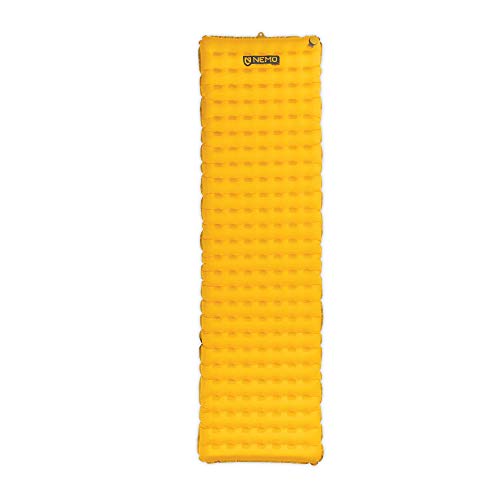
|
Best Value

|
Best for Reliability

|
|---|---|---|---|---|---|
| Product | Therm-a-Rest LuxuryMap Self-Inflating Foam Sleeping Pad | Sea to Summit Ether Light XR Insulated Sleeping Pad Rectangular Regular | NEMO Tensor Insulated Sleeping Pad Regular | Therm-a-Rest Trail Pro Sleeping Pad Regular Wide | Klymit Static V2 Inflatable Sleeping Pad |
| Weight | 3.25 lbs (Large) | 1.4 lbs | 15 oz | 2 lbs 5 oz | 1 lb 4 oz |
| R value | 6.0 | 3.9 | 4.2 | 4.4 | 1.3 |
| Thickness | 3 inches | 4 inches | 3 inches | 3 inches | 2.5 inches |
| Packed size | 26 x 9.5 inches | 4.5 x 11 inches | 8 x 3 inches | 13 x 9.3 inches | 8 x 3 inches |
| Buy Now | Check Price → | Check Price → | Check Price → | Check Price → | Check Price → |
Quick Tips
Deflate your air pad 10-15% below maximum firmness — a slightly softer pad lets your hips and shoulders sink enough to keep your lumbar spine neutral rather than arched.
Side sleepers with back pain should look specifically for pads wider than 23 inches or with Air Sprung Cell construction, which distributes pressure points differently than standard baffles.
Always inflate fully first, then release small amounts of air until your hips aren't touching the ground — this is the correct firmness for back pain relief, not maximum hardness.
Pair your pad with a foam pillow thick enough to keep your neck in line with your spine; back pain on the trail is often a whole-system problem, not just a pad issue.
Therm-a-Rest LuxuryMap Self-Inflating Foam Sleeping Pad
Best for car campers with chronic back pain
Therm-a-Rest LuxuryMap Self-Inflating Foam Sleeping Pad
Best for car campers with chronic back pain
What we like
- Pressure-mapping technology targets support exactly where your heaviest body zones contact the pad, reducing pressure point buildup at hips and shoulders.
- R-value of 6.0 delivers four-season ground insulation, which keeps muscles from tightening in cold conditions that worsen back pain.
- Self-inflating foam provides consistent support that doesn't require firmness management mid-night if you roll around.
- 3-inch loft on a self-inflating pad is genuinely rare and puts it well above the minimum threshold for meaningful spinal alignment.
What we don't
- Heavy at 3.25 lbs — this is a car camping pad, not a trail pad.
- Rolled size is substantial and won't fit inside most packs.
- Pricier than most self-inflating pads in its thickness class.
The LuxuryMap was built around pressure-mapping data that shows where back sleepers and side sleepers actually load a pad — and the foam density varies zone by zone to match. You get genuine lumbar support where you need it, not just uniform cushioning that happens to be thick.
This is the pad for base camp setups, car camping with a bad back, and anyone who's tried air pads and found them too fidgety to manage through the night. If you're backpacking, look further down the list.
Sea to Summit Ether Light XR Insulated Sleeping Pad Rectangular Regular
Best for side sleepers with hip and lower back pain
Sea to Summit Ether Light XR Insulated Sleeping Pad Rectangular Regular
Best for side sleepers with hip and lower back pain
What we like
- Air Sprung Cell construction mimics a spring mattress — each cell compresses independently under heavier body zones, keeping hips and shoulders cushioned while the lumbar stays supported.
- 4-inch loft is the thickest in this roundup, giving side sleepers enough depth to prevent hip contact with the ground.
- Rectangular shape is 25 inches wide versus the tapered version, giving your hips full pad coverage when you move during sleep.
- Included Airstream pump sack inflates the pad in seconds and doesn't introduce moisture that can degrade insulation.
What we don't
- R-value of 3.9 is good for three seasons but may underwhelm in deep winter conditions.
- Among the priciest pads in this class.
- Newer design with less long-term durability data than Therm-a-Rest equivalents.
The Air Sprung Cell system is the key difference here — instead of long tube baffles that create a ridge-and-valley feel under your body, each cell acts independently, creating something that actually behaves like a spring mattress under you. For side sleepers whose hip-to-shoulder width loads the pad unevenly, this matters more than any other spec.
This is specifically the pad for people who've woken up with hip pain even on thick pads — the cell structure, not just the loft, is what makes this one different. Backpackers who can handle 1.4 lbs and want trail-packable comfort will also find it works for carry.
NEMO Tensor Insulated Sleeping Pad Regular
Best for backpackers who can't sacrifice back support for weight
NEMO Tensor Insulated Sleeping Pad Regular
Best for backpackers who can't sacrifice back support for weight
What we like
- Spaceframe baffles use low-stretch trusses that eliminate the springy, unstable feel of standard air tubes and keep hips from rolling toward the ground during sleep.
- At 15 oz, it's one of the lightest pads that still delivers 3 inches of loft — the minimum for meaningful back support on trail.
- Suspended Thermal Mirror insulation is quiet, unlike foil-layer competitors that crinkle when you shift positions.
- Vortex pump sack handles inflation quickly without moisture contamination, which keeps the pad performing correctly over time.
What we don't
- At 20 inches wide, side sleepers with wider hips may find themselves rolling toward the edge.
- Air pad firmness requires occasional tweaking on multi-night trips as temperature changes affect internal pressure.
- Thinner 20D fabric can be puncture-vulnerable on rough ground.
The Spaceframe baffle design is what separates the Tensor from most ultralight competitors — instead of round tubes that let your hips roll off center, the trusses create a stable, flat platform that holds its shape under you. That stability is what back pain sufferers actually need from a trail pad.
This is the call for backpackers who've accepted that support usually means weight and want proof that doesn't have to be true anymore. If you're car camping, the LuxuryMap gives you more support per dollar.
Therm-a-Rest Trail Pro Sleeping Pad Regular Wide
Best value self-inflating pad for back support
Therm-a-Rest Trail Pro Sleeping Pad Regular Wide
Best value self-inflating pad for back support
What we like
- StrataCore foam construction alternates ridges of air and foam to create localized support zones, performing more like a mattress than a flat pad under your back.
- Stretch-knit top fabric conforms to your body shape and pressure points rather than holding a fixed shape the way stiff fabrics do.
- 4.4 R-value covers all four seasons, which matters for back pain in cold-ground conditions.
- Self-inflating foam removes the nightly firmness guesswork that frustrates campers who wake up mid-trip to adjust air pads.
What we don't
- 2 lbs 5 oz and a large rolled size make this a camp-and-carry pad, not a deep backcountry option.
- Not as precisely tunable as air pads for people with specific back pain trigger points.
- 25-inch Regular Wide width helps, but heavier side sleepers may still feel hip contact on rocky ground.
The Trail Pro punches above its price with StrataCore construction that gives you real zoned support rather than a uniform foam block — the alternating air-and-foam ridges compress differently under heavy and light body zones, which is what keeps your lumbar from arching during sleep. Add the stretch-knit top and you get a pad that actively conforms to your back shape.
This is the right choice for campers who want a set-it-and-forget-it pad without the air pad learning curve, and who camp from a vehicle or base area rather than carrying it deep on trail.
Klymit Static V2 Inflatable Sleeping Pad
Best budget option for back sleepers with mild back pain
Klymit Static V2 Inflatable Sleeping Pad
Best budget option for back sleepers with mild back pain
What we like
- V-chamber body mapping design limits air movement to match the natural contours of your torso, reducing the hammock-like sag that causes lower back pain on cheaper flat pads.
- Dynamic side rails center you on the pad and prevent the rolling-off-edge that disrupts sleep and alignment.
- Inflates in 10-15 breaths with no pump needed — fast and simple for campers who want less gear management.
- At under $80, it's a low-risk first upgrade from a foam roll pad for someone testing whether pad quality affects their back pain.
What we don't
- R-value of 1.3 means this is a warm-season-only pad — cold ground will tighten your back muscles regardless of surface comfort.
- 2.5-inch loft is below the 3-inch minimum for serious back pain — adequate for mild cases and back sleepers, not sufficient for side sleepers.
- No insulation means this gets eliminated from consideration for spring and fall camping.
The V2's body mapping chambers are the reason it outperforms its price for back sleepers — the V-shaped air channels shift support toward your torso and away from the dead zones where standard tube baffles don't touch your body. It's not a medical pad, but for mild lower back pain in warm weather, it's a meaningful upgrade from a foam mat at a fraction of the cost.
This is a warm-weather, car-camping entry point, not a serious back pain solution for cold conditions or side sleepers. If your pain is moderate to severe, step up to the Trail Pro at minimum.
What to Look For
Thickness is the single most important spec for back pain. Pads under 2 inches of inflated loft don't provide enough separation between your pressure points and the ground — your hips rotate, your lumbar curves, and you wake up stiff.
Aim for 3 inches minimum; 4 inches is better if you're a side sleeper. Barrel-style baffles and Air Sprung Cell designs actively support your body rather than just filling space under you.
These structures respond to the different weight zones of your body the way springs do in a mattress — heavier zones compress more, lighter zones stay elevated, and your spine stays level without you thinking about it. R-value matters more for back pain than most people realize.
Ground temperatures below 50 degrees F cause muscle tightening and spasm during sleep. A pad with an R-value of 3.5 or higher keeps the ground's cold from reaching your back, which is one of the quieter causes of morning stiffness that gets blamed on the pad's firmness.
Who Should Skip This
Skip this category entirely if you're dealing with acute disc herniation or a post-surgical back — no sleeping pad replaces medical guidance, and sleeping on the ground in those situations may require a cot or specialized setup your doctor should weigh in on. Ultralight backpackers who prioritize sub-14oz packs will also find that the thickest, most supportive pads add meaningful weight that may not fit their system.
What the Community Actually Uses
On r/CampingGear, threads about back pain and sleeping pads come up constantly, and the consensus is consistent: thickness and firmness control matter more than brand, and most people who 'fixed' their camp back pain did it by switching to a pad with at least 3 inches of loft and learning to run it slightly under max pressure. The sub is worth browsing before you buy — you'll find people with your exact sleep position and back situation describing exactly what worked.
Quick Picks — In Case You've Already Decided
Therm-a-Rest LuxuryMap Self-Inflating Foam Sleeping Pad
Check Price on AmazonSea to Summit Ether Light XR Insulated Sleeping Pad Rectangular Regular
Check Price on AmazonFrequently Asked Questions
What thickness sleeping pad is best for back pain?
3 inches is the practical minimum for meaningful back support — below that, most people's hips still make contact with the ground under the pad's pressure. 4 inches gives side sleepers noticeably better lumbar alignment. Thickness alone isn't enough, though; the internal structure matters too.
Are air pads or self-inflating pads better for back pain?
Air pads generally win for back pain because you can fine-tune firmness to your exact needs. Self-inflating pads offer great foam support but less adjustability. The best answer depends on whether you sleep in a fixed position or move around — heavy movers often prefer the responsive feel of air pads.
Does sleeping pad R-value affect back pain?
Indirectly, yes. Cold ground causes muscle tension and spasm during sleep, which worsens morning stiffness. An R-value of 3.5 or higher prevents heat loss to the ground and keeps your back muscles warmer and more relaxed through the night.
Can a sleeping pad fix back pain from camping?
A better pad addresses the two main causes of camping back pain: pressure point buildup and poor spinal alignment from inadequate support. It won't fix structural back issues, but for most campers who wake up stiff, the pad is the culprit and replacing it makes a significant difference.
How firm should a sleeping pad be for lower back pain?
Firmer than you might think, but not maximum. Fully firm air pads can actually worsen lower back pain by creating excessive pressure under the lumbar curve. The ideal firmness lets your hips and shoulders sink slightly while your lower back stays supported — start at full inflation and release air until your hips stop touching the ground.
Buying Guide
You need thickness and support structure, not just cushioning. Look for 3 inches or more of loft, a design that prevents your hips from bottoming out, and an R-value of at least 3.5 so cold ground doesn't tighten your muscles overnight.
Self-adjustable firmness helps you dial in exactly what your back needs.