The right roof top tent doesn't make you wrestle your campsite into existence at 9pm after a five-hour drive — it pops open in under a minute and you're sleeping 4 feet off the ground on a real mattress. The five options here span $500 to $1,800, cover every shell type, and all ship via Amazon with verified ASINs.
| Photo |
Top Pick

|
Versatile
|
Budget

|
Best Value

|
Best for Reliability

|
|---|---|---|---|---|---|
| Product | Roofnest Sparrow 2 Hard-Shell LINE-X Roof Top Tent | iKamper Skycamp Mini 3.0 Rooftop Tent | Trustmade Scout Hard Shell Rooftop Tent | BAMACAR Naturnest Rooftop Tent Hard Shell | Smittybilt GEN2 Overlander Rooftop Tent |
| Setup | ~60 seconds | ~60 seconds | ~60 seconds | ~30 seconds | 5-10 minutes |
| Shell | ABS hardshell | Dual-layer FRP | Aluminum honeycomb | ABS aluminum hard shell | Soft shell fabric |
| Weight | ~130 lbs | ~125 lbs | ~132 lbs | ~110 lbs | ~120 lbs |
| Capacity | 2 person | 2 person | 2-3 person | 2-3 person | 2-3 person |
| Buy Now | Check Price → | Check Price → | Check Price → | Check Price → | Check Price → |
Quick Tips
Verify your roof rack's dynamic weight rating (while driving) — it's always lower than the static rating and needs to exceed your RTT's weight by 20% minimum.
Leave bedding inside the tent when folded — hardshell RTTs seal tight enough to store pillows and a sleeping bag, cutting your setup time to under 60 seconds.
Pop the tent at home before your first trip and check ladder angle and gas strut tension — adjustments are easier in your driveway than a dark trailhead.
Close your tent bone-dry; moisture trapped inside an ABS or aluminum shell breeds mold on the mattress cover within two trips.
Roofnest Sparrow 2 Hard-Shell Roof Top Tent
Best for couples doing frequent weekend overlanding
Roofnest Sparrow 2 Hard-Shell Roof Top Tent
Best for couples doing frequent weekend overlanding
What we like
- ABS shell with internal ribs is genuinely rigid and road-quiet at highway speeds, not just marketing language.
- 2.8" high-density foam mattress with washable cover sleeps like a real bed — no pad upgrade needed.
- 320 GSM blackout fabric means you sleep past sunrise even parked in a sunny meadow.
- Two HVAC ports let you run a small heater or A/C unit directly into the tent shell.
What we don't
- At $1,400+, it's a significant commitment before you add a rack to put it on.
- 130 lbs requires crossbars with a dynamic rating most factory racks can't meet.
- Bedding storage works but is snug — overstuffing the shell causes latch tension issues.
You stop fumbling with tent poles the moment you own a Sparrow 2. One latch, one push, and you're looking at a fully open sleeping space with a real mattress already inside — it's the tent that makes every other camp setup feel like punishment.
This is the move for couples who camp 10+ nights a year and want the RTT experience without compromise. If you're on a tight budget or only camp twice a year, a soft shell does the job for a fraction of the cost.
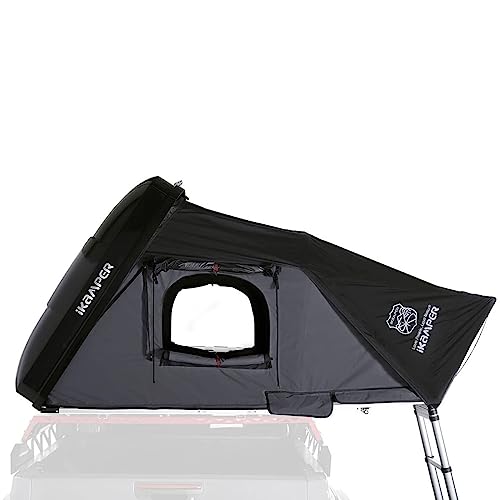
iKamper Skycamp 3.0 Mini Roof Top Tent
Best for compact vehicles and small-footprint setups
iKamper Skycamp 3.0 Mini Roof Top Tent
Best for compact vehicles and small-footprint setups
What we like
- Fold-out floor panel extends the sleeping area without increasing the footprint when closed — works on truck beds and smaller crossover roofs.
- Dual-layer FRP shell traps an air gap between walls, delivering real insulation and road noise reduction most single-shell tents can't match.
- 300 GSM poly-cotton blackout canvas with waterproof zippers handles 4-season use without an add-on insulation kit.
- 9-zone foam mattress with insulating bottom layer is the best base-model sleep surface in this price tier.
What we don't
- At $2,900+, it's the most expensive option here by a wide margin — budget buyers will find the Sparrow 2 does 80% of this for half the price.
- Freight shipping only, not standard Amazon delivery — adds time and coordination.
- iKamper explicitly warns against mounting anything on top of the FRP shell, which limits solar panel and accessory options.
The Skycamp Mini solves the problem compact-vehicle owners hit with every other RTT: too big, too heavy, too long to sit cleanly on a Tacoma bed or a RAV4 roof. The fold-out floor trick gives you legitimate 2-person sleeping space from a closed footprint smaller than a carry-on suitcase.
If you're on a crossover, hatchback, or mid-size truck and want a 4-season hardshell that doesn't compromise fit, this is the one. Budget-focused buyers or those on full-size trucks with more roof space should look at the Roofnest or Trustmade instead.
Trustmade Scout Hard Shell Rooftop Tent
Best mid-range hardshell for first-time RTT buyers
Trustmade Scout Hard Shell Rooftop Tent
Best mid-range hardshell for first-time RTT buyers
What we like
- Honeycomb aluminum shell is structurally stiffer than ABS at a similar price point, without the fiberglass fragility risk.
- PU 3000mm rated poly-cotton canvas with CPAI-84 flame retardant certification covers the most likely safety scenario most buyers never think about.
- Integrated cargo crossbars on top let you carry extra gear without a second rack purchase.
- 7.6 ft ladder with ceiling and sidewall storage nets ship in the box — no accessory orders needed on day one.
What we don't
- Included 3" foam mattress is functional but thin — most owners add a 1" topper after the first few nights.
- PVC cover over the closed tent adds another step to setup and teardown in rain.
- Customer service response times are slow based on user reports — resolve any issues before your first major trip.
The Trustmade Scout sits right where most first-time RTT buyers actually land: past the no-name budget options, but not ready to spend iKamper money. The aluminum honeycomb shell is a real structural step up from the ABS shells on cheaper tents, and it shows in how solid the unit feels once open.
This is for the overland newcomer who wants a hardshell without paying premium-brand premiums. If you already have 20 nights in an RTT and know what you want, spend the extra for the Roofnest.
BAMACAR Naturnest Rooftop Tent Hard Shell
Best value hardshell for budget-first overlanders
BAMACAR Naturnest Rooftop Tent Hard Shell
Best value hardshell for budget-first overlanders
What we like
- 30-second pop-up with 8000N stainless steel gas struts rated for 45,000 cycles — faster than most tents in its class.
- AC duct channel built into the shell lets you run a portable cooling or heating unit directly inside the tent.
- 5 cm mattress with triple-layer condensation protection (felt, condensation pad, marine pad) is above-average for the price.
- 10 interior storage pockets and 2 exterior waterproof shoe bags ship standard — this is usually a paid accessory kit on pricier tents.
What we don't
- ABS shell quality varies unit to unit — inspect for shell warping on arrival before your first trip.
- Brand and warranty support is thin compared to Trustmade or Roofnest — this is a budget bet, not a long-term guarantee.
- YKK zippers on windows are good, but seam sealing is inconsistent in heavy sustained rain.
The Naturnest delivers genuine hardshell RTT function — fast pop-up, real mattress, AC port — for the price of a premium soft shell. It's not built to the standard of a Trustmade or Roofnest, but for overlanders who prioritize camp time over brand names, the gap is smaller than the price suggests.
This is for the buyer who camps hard on a strict budget and is comfortable doing a unit inspection on arrival. Anyone who wants a hassle-free ownership experience with solid warranty backing should step up to the Trustmade.
Smittybilt GEN2 Overlander Rooftop Tent
Best soft shell for overlanders prioritizing value over speed
Smittybilt GEN2 Overlander Rooftop Tent
Best soft shell for overlanders prioritizing value over speed
What we like
- 420D Oxford ripstop flysheet with 4mm spring steel poles has survived thousands of user-reported rainstorms and wind events without delaminating.
- High-density foam mattress sleeps 3 comfortably — the tent interior is genuinely larger than most hardshells at this price.
- Universal dual aluminum track mounting system fits nearly any crossbar setup without adapter kits.
- Annex attachment (sold separately) converts the RTT into a full sheltered base camp with floor, windows, and mosquito netting.
What we don't
- Soft shell setup runs 5–10 minutes vs. 30–60 seconds for hardshells — this is the core tradeoff and it compounds over a full camping season.
- Closing it neatly takes practice; a messy fold leaves the PVC cover bulging and straining the latches.
- Rain fly flaps noticeably in wind above 20 mph — not a failure, but it's loud enough to disrupt sleep.
The Smittybilt Overlander is the tent that got tens of thousands of overlanders into their first RTT — and for good reason. The soft shell format gives you more interior headroom and floor space than a same-price hardshell, and the Annex add-on turns the whole setup into a legitimate basecamp structure.
This is for the overlander who camps 2–5 nights per trip, doesn't mind a 10-minute setup ritual, and wants maximum interior space per dollar. If you're doing quick overnight stops every weekend, the extra setup time will wear on you — get a hardshell.
What to Look For
Shell type is the most important decision you'll make. Hardshells pop open in 30–60 seconds, protect your gear better in transit, and reduce aerodynamic drag compared to open soft shells.
Soft shells cost significantly less and offer more headroom once open, but setup runs 5–10 minutes and closing them neatly takes practice. Weight is the variable most buyers underestimate.
Your roof rack has two ratings: dynamic (while driving) and static (parked). Most RTTs weigh 100–175 lbs, and your crossbars need a dynamic rating that exceeds that with margin to spare.
Exceeding it isn't just a warranty issue — it's a safety one. Capacity numbers are generous.
A rated 3-person RTT sleeps two adults with gear. If you're buying for a couple, a 2-person tent is roomier than it sounds; if you're buying for a family of three, size up to a 3-4 person unit and confirm interior dimensions before ordering.
Who Should Skip This
Skip a roof top tent entirely if you regularly park in covered garages or low-clearance lots — the added height makes urban driving genuinely annoying. Budget backpackers should also pass: even the cheapest RTT here is a significant investment, and a ground tent plus a good sleeping pad is a fraction of the cost.
If your current roof rack dynamic rating is under 130 lbs, you'll need to upgrade the rack before the tent.
What the Community Actually Uses
On r/overlanding, hardshell vs. soft shell debates are evergreen.
The consensus in recent threads skews hard toward hardshells for anyone doing frequent weekend trips — the argument is that the time saved on setup and teardown across a full season more than justifies the price premium. Budget soft shells like the Smittybilt still get enthusiastic defenders who argue that the money saved goes toward gas, gear, and more trips.
Quick Picks — In Case You've Already Decided
Roofnest Sparrow 2 Hard-Shell LINE-X Roof Top Tent
Check Price on AmazonFrequently Asked Questions
Do I need a special roof rack for a roof top tent?
Yes — you need crossbars or a platform rack with a dynamic weight rating (while moving) that meets or exceeds your RTT's weight. Most factory roof racks aren't rated high enough. Check your crossbar manufacturer's spec sheet, not your vehicle's roof rating.
What's the difference between a hardshell and soft shell RTT?
Hardshells use an ABS, fiberglass, or aluminum clamshell that pops open in seconds and stores bedding inside. Soft shells fold out from a flat platform with fabric walls, cost less, but take 5–10 minutes to set up and require all bedding to be removed before closing.
Will a roof top tent hurt my fuel economy?
Yes, expect a 3–10% reduction in mpg depending on tent size, shell shape, and highway speed. Aerodynamic hardshells like the Roofnest Sparrow 2 are designed to reduce drag; boxy soft shells sitting open on the roof are the worst offenders.
Can I leave a roof top tent on my car full-time?
Mechanically yes, but it's not ideal. Constant road vibration and UV exposure wear hardware and fabric faster. Most frequent users remove the tent between camping seasons and store it in a garage.
How cold can I sleep in a roof top tent?
With the right sleeping bag, RTTs are usable into the low 20s°F without a heater. Hardshells with double-layer insulated walls (like the iKamper) hold heat noticeably better than single-layer fabric tents. Add a small propane heater with ventilation for sub-20°F use.
Buying Guide
Decide on shell type first: hardshells pop open in seconds and pack tight for fuel economy, soft shells cost less but take longer to stow. Then match weight to your rack's dynamic rating.
Finally, pick capacity honestly — a 3-person tent sleeps two adults comfortably, not three.