Your van's power setup isn't failing because you bought cheap — it's failing because camper-grade loads eat through standard power stations by 2 AM. The five units below start at 1,056Wh and top out at 3,600Wh, with verified pass-through charging and solar input so your fridge keeps running even if you don't plug in for three days.
| Photo |
Top Pick
|
Versatile

|
Budget

|
Best Value
|
Best for Reliability

|
|---|---|---|---|---|---|
| Product | EF ECOFLOW Portable Power Station DELTA Pro 3600Wh | Jackery Explorer 2000 v2 Portable Power Station | BLUETTI AC200L Portable Power Station | Goal Zero Yeti 1500 Portable Power Station (6th Gen) | Anker SOLIX C1000 Portable Power Station |
| Capacity | 3,600Wh | 2,160Wh | 2,000Wh | 1,516Wh | 1,056Wh |
| Ac output | 3,600W (4,500W X-Boost) | 2,200W (4,400W surge) | 2,000W (4,800W surge) | 2,000W (3,500W surge) | 1,800W (2,400W SurgePad) |
| Solar input | 1,600W max | 1,200W max | 700W max | 600W max | 600W max |
| Pass through | ✓ | ✓ | ✓ | ✓ | ✓ |
| Buy Now | Check Price → | Check Price → | Check Price → | Check Price → | Check Price → |
Quick Tips
Measure your actual daily Wh draw before buying — run all your devices for one hour and add the wattages, then multiply by runtime hours. Most van builds land between 400Wh and 800Wh per day.
LiFePO4 chemistry outlasts standard lithium-ion by 2–3x on cycle count — if you're living in the van full-time, it's worth paying extra for it.
Pass-through charging lets you run devices while the unit charges from solar or shore power — confirm this feature explicitly before buying, as not every unit supports it safely.
Size your solar panels to at least half the unit's Wh capacity in watt input — a 2,000Wh station needs at least 400W of solar to recover meaningfully in a day.
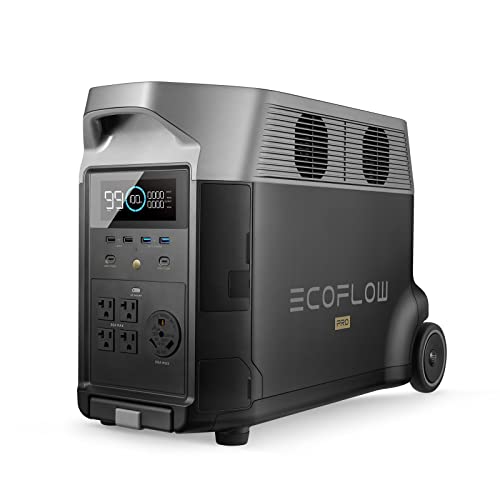
EF EcoFlow Delta Pro 3600Wh Portable Power Station
Best for full-time van lifers running fridge, CPAP, and more simultaneously
EF EcoFlow Delta Pro 3600Wh Portable Power Station
Best for full-time van lifers running fridge, CPAP, and more simultaneously
What we like
- 3,600Wh capacity runs a 12V fridge and CPAP simultaneously for 3+ nights without solar input.
- LiFePO4 battery chemistry rated for 6,500 cycles — that's daily use for nearly 18 years.
- 1,600W max solar input means a full recharge from panels in under 3 hours on a clear day.
- Expandable up to 25kWh with extra batteries, making it the only unit here that scales with a permanent van build.
What we don't
- Weighs 99 lbs — you need a dedicated spot in the van, not a move-around setup.
- Premium price is the highest on this list by a significant margin.
- App connectivity and smart features add complexity that pure off-grid users may not want.
When your van is your house, you need a power station that treats itself the same way — the Delta Pro's 3,600Wh capacity and 1,600W solar input means your fridge, CPAP, and laptop can all run through the night and recover fully off a roof panel array before noon. This is the pick for full-time van dwellers or anyone running a two-zone compressor fridge plus a CPAP.
If you're doing weekend trips with lighter loads, the Jackery or Bluetti below saves you $700 and 60 lbs.
Jackery Explorer 2000 Pro Portable Power Station
Best for weekend van trips that need serious headroom
Jackery Explorer 2000 Pro Portable Power Station
Best for weekend van trips that need serious headroom
What we like
- 2,160Wh covers two full nights of fridge-plus-CPAP runtime without needing to recharge.
- Charges from wall outlet to 100% in 2 hours flat — fastest AC recharge in this class.
- Six SolarSaga 200W panels can top it off in under 2.5 hours from solar alone.
- Quieter than comparable units at under 53dB fan noise — matters when you're sleeping next to it.
What we don't
- Uses NMC lithium-ion cells rather than LFP — rated for 1,000 cycles, shorter lifespan for daily van use.
- Weighs 43 lbs, which is manageable but not trivial to reposition inside a tight van build.
- No expandable battery option if your power needs grow.
The Explorer 2000 Pro is the sweet spot for serious weekend van trippers — 2,160Wh is enough to run a 45L compressor fridge and a CPAP for two nights, and the 2-hour AC recharge means you top it off at a campground hookup in the time it takes to make dinner. This is the right pick if you're on the road 2–3 weekends a month and want the safety margin of a 2kWh unit without the 99-lb weight and full-timer price of the EcoFlow.
Skip it if you're living in the van full-time — the NMC cells will degrade faster than LFP under daily cycling.
Bluetti AC200P 2000Wh Portable Power Station
Best for van builds that prioritize solar charging flexibility
Bluetti AC200P 2000Wh Portable Power Station
Best for van builds that prioritize solar charging flexibility
What we like
- LiFePO4 cells rated for 3,500+ cycles — built to handle daily solar cycling in a van build.
- 17 output ports including dual wireless charging pads and a 12V/25A DC port for van accessories.
- Simultaneous solar + AC input charges at up to 1,200W combined, cutting recharge time to 2.5 hours.
- Dual AC adapter input option means you can fast-charge off shore power when a hookup is available.
What we don't
- 700W max solar input is lower than the EcoFlow Delta Pro — full solar recharge takes longer on heavy-cloud days.
- At 60.6 lbs it's heavier than the Jackery for a similar capacity.
- No battery expansion option if your power needs increase over time.
The AC200P hits a combination the other units miss — LFP cells rated for daily cycling, 17 output ports for a fully wired van, and a 12V/25A DC port that connects directly to van accessories without an inverter loss. This is the pick for a semi-permanent van build where you'll be solar charging daily and want LFP longevity without paying EcoFlow Delta Pro prices.
If you need faster solar recovery or higher AC output ceiling, step up to the EcoFlow.
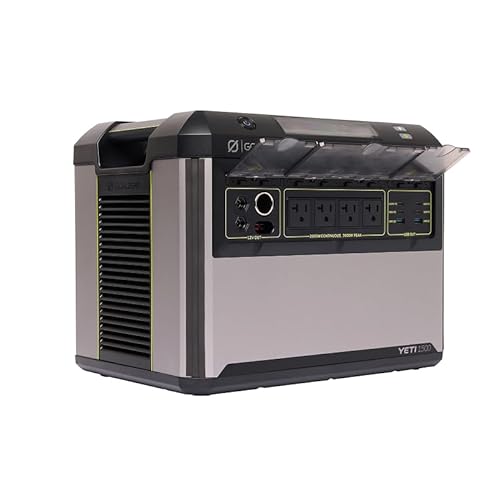
Goal Zero Yeti 1500X Portable Power Station
Best for occasional van users who also want home backup
Goal Zero Yeti 1500X Portable Power Station
Best for occasional van users who also want home backup
What we like
- Anodized aluminum enclosure is more rugged than plastic-shell competitors at this price point.
- 600W MPPT charge controller with up to 30% improved solar efficiency over standard MPPT.
- 10 versatile ports including pure sine wave AC, USB-C, 12V, and Anderson-style connectors.
- Strong brand support and compatibility with Goal Zero's solar panel and accessory ecosystem.
What we don't
- 1,516Wh is tight for van builds running both a compressor fridge and a CPAP simultaneously.
- Uses older NMC battery chemistry in the 1500X, not LFP — cycle life shorter than LFP alternatives.
- Heavier than similarly spec'd units at around 45 lbs.
The Yeti 1500X lives in a practical middle zone — more capacity than a weekend camper needs but enough to handle a van's fridge and small devices through one off-grid night with buffer to spare, in a rugged aluminum shell that holds up to van life's vibration and movement. This is the right pick if you're using the van on weekends and want a unit that doubles as home backup between trips.
If you're running two high-draw devices simultaneously every night, the 2,000Wh units above give you the headroom you'll eventually want.
Anker SOLIX C1000 Portable Power Station
Best for compact van builds with limited storage space
Anker SOLIX C1000 Portable Power Station
Best for compact van builds with limited storage space
What we like
- 15% smaller than comparable 1kWh units — the most space-efficient pick for tight van builds.
- Charges from 0–100% in 58 minutes from AC — fastest full recharge on this list.
- LiFePO4 battery rated for 3,000 cycles and 10-year lifespan at daily use.
- Anker app provides real-time power stats and lets you customize charge speed from your phone.
What we don't
- 1,056Wh is only enough for one night of fridge-plus-CPAP use — not suitable for multi-night off-grid.
- No expansion battery option means you're locked into this capacity long-term.
- Lower AC output ceiling (1,800W) than competitors at similar price — can't run high-draw appliances.
The SOLIX C1000 is the only unit on this list that fits under a van seat without planning around it — 15% smaller than comparable 1kWh stations, with 58-minute full recharge from shore power when you need a fast top-up at a campground. Pick this if your van build is minimal — a phone, some lighting, and maybe a small 12V cooler — and you're okay topping off every night.
If you're running a full compressor fridge plus a CPAP, you'll outgrow 1,056Wh in one night and need to move up to the Bluetti or Jackery.
What to Look For
Capacity is the first number that matters. A 12V compressor fridge draws 40–60W continuously, a CPAP runs 30–60W per night, and a few USB charges add another 30Wh — you need a unit that can cover at least two nights of that without solar input.
Pass-through charging separates true van builds from glorified camping batteries. If a unit can't safely charge while powering your fridge, you're either draining the van battery or losing fridge runtime every time you plug into shore power.
Solar input wattage determines how fast you recover during the day. A unit with only 200W solar input will take all day to recover; 600W+ solar input means you're back to full before the sun hits midday on a clear day.
Who Should Skip This
If you're doing one-night car camping trips with just a phone and a lantern, every unit on this list is overkill — a 300Wh station will do fine and cost a fraction of the price. These picks are specifically built for van lifers, full-timers, and anyone running a compressor fridge and a CPAP simultaneously for multiple nights off-grid.
What the Community Actually Uses
On r/vandwellers and r/overlanding, the recurring debate is LiFePO4 vs NMC chemistry — most long-term van lifers have landed firmly on LFP for the cycle life advantage, even though it adds weight. The EcoFlow Delta Pro and Bluetti AC200P come up most frequently in those threads for full-time builds, while the Anker SOLIX gets recommended for people who want a smaller unit that tops off fast on solar.
Quick Picks — In Case You've Already Decided
EF ECOFLOW Portable Power Station DELTA Pro 3600Wh
Check Price on AmazonFrequently Asked Questions
How many watt-hours do I actually need for a campervan?
Most van builds running a 12V fridge, CPAP, and basic lighting use 400–800Wh per day. Plan for at least 1,500Wh of storage so you have two nights of buffer before hitting empty — more if you're boondocking for several days at a stretch.
Can I charge a power station while also running my fridge from it?
Yes, if the unit supports pass-through charging — all five picks on this list do. Just confirm the input wattage is high enough to both recharge and sustain your load simultaneously, or you'll slowly drain even while plugged in.
Is LiFePO4 worth paying extra for in a van build?
For full-time or frequent use, yes. LFP cells typically deliver 3,000–4,000 cycles versus 500–1,000 for standard NMC lithium-ion. If you're cycling daily, that's the difference between a 2-year and a 10-year lifespan from the same battery.
How much solar input do I need to keep a power station topped up while parked?
Match at least half the station's Wh capacity in solar watt input. A 2,000Wh station running 500Wh of daily load needs at least 400W of solar to recover fully on a good sun day. Under 200W input on a large station is practically decorative.
Can I use a power station to run a CPAP all night in my van?
Yes — a CPAP typically draws 30–60W per night, so even a 1,000Wh unit gives you 16–30 hours of runtime on CPAP alone. The risk is running a CPAP and a 12V fridge simultaneously, which is why units under 1,000Wh are undersized for most full van setups.
Buying Guide
You need to know your daily draw before picking a size. Add up your fridge, CPAP, phone, and lights — most van setups land between 400Wh and 800Wh per day.
Then pick a unit with at least twice that capacity so solar input can top you off before you ever hit zero.