The portable power station market under $500 has caught up fast, and the excuses for buying an underpowered brick are gone. Five of the best options right now land between $280 and $499, with LiFePO4 batteries rated for 3,000-plus cycles and enough output to run a fridge, charge a laptop, and still have juice left by morning.
| Photo |
Top Pick

|
Versatile

|
Budget

|
Best Value
|
Best for Reliability

|
|---|---|---|---|---|---|
| Product | EF EcoFlow RIVER 2 Pro Portable Power Station | Anker SOLIX C1000 Portable Power Station | Goal Zero Yeti 700 Portable Power Station | Jackery Explorer 500 v2 Portable Power Station | EF EcoFlow RIVER 2 Max 500 Portable Power Station |
| Capacity | 768Wh | 1056Wh | 499Wh | 512Wh | 499Wh |
| Ac output | 800W (1600W X-Boost) | 1800W (2400W surge) | 500W (1000W surge) | 500W (1000W surge) | 1000W (X-Boost) |
| Battery type | LiFePO4 (3000+ cycles) | LiFePO4 (3000+ cycles) | LiFePO4 (4000+ cycles) | LiFePO4 (6000+ cycles) | LiFePO4 (3000+ cycles) |
| Recharge time | 70 min (AC) | 58 min (AC UltraFast) | 90 min (AC high-speed) | ~2 hrs (AC) | ~1 hr (AC) |
| Buy Now | Check Price → | Check Price → | Check Price → | Check Price → | Check Price → |
Quick Tips
Run the math before you buy: divide your device's wattage into the station's Wh capacity to estimate real runtime — a 50W fridge gets roughly 9-10 hours from a 500Wh unit at 85% efficiency.
Charge to 80% for storage trips — LiFePO4 cells last longer when not held at 100% indefinitely, and most of these have an 80% mode in their apps.
Pair with a folding solar panel rated for at least 100W to stay topped off on multi-day trips without hunting for shore power.
Cold kills capacity faster than anything — at 14°F you can lose 20-30% of rated capacity, so factor that in if you're running gear in winter conditions.
EF EcoFlow RIVER 2 Pro Portable Power Station
Best for fast-charging basecamp and van life use
EF EcoFlow RIVER 2 Pro Portable Power Station
Best for fast-charging basecamp and van life use
What we like
- 70-minute full recharge from AC is the fastest in this price class, making it practical for trip-day turnaround.
- X-Boost technology lets it power appliances up to 1600W, covering most camping gear well above its rated inverter output.
- 11 output ports including four AC outlets handle a full basecamp load without an adapter nightmare.
- LFP battery rated to 3,000 cycles gives it a realistic 10-year daily-use lifespan.
What we don't
- 768Wh capacity is not enough for running a fridge plus other gear through a full cold-weather night without solar input.
- App connectivity is required to enable the fastest charging mode, which is an extra step some users find frustrating.
- At roughly 17 lbs it is one of the heavier options at this capacity, noticeable on backpack-to-camp hauls.
If you only get to plug in once before a trip, the RIVER 2 Pro's 70-minute full recharge means you are not rearranging your morning around a power station — you charge it while you load the truck and it is ready to go. The 768Wh tank and X-Boost output covers a 12V fridge, a CPAP, and a laptop simultaneously without breaking a sweat.
This is the pick for van lifers and basecamp overlanders who need reliable daily cycling and hate waiting around for a charge. If you are a casual car camper who tops off at home once a month and mostly runs lights and phones, the Jackery below saves you $50-80 with no real-world compromise.
Anker SOLIX C1000 Portable Power Station
Best for home backup and power-hungry basecamp rigs
Anker SOLIX C1000 Portable Power Station
Best for home backup and power-hungry basecamp rigs
What we like
- 1056Wh capacity is the highest on this list, running a portable fridge for 15-plus hours on a single charge.
- 1800W continuous output with 2400W surge handles appliances no other sub-$500 unit can sustain.
- 58-minute UltraFast AC recharge is competitive with the EcoFlow and far ahead of Goal Zero at this size.
- 15% smaller than comparable 1kWh units makes it legitimately portable despite the larger capacity.
What we don't
- UltraFast charging requires the Anker app enabled — it defaults to slower charging without it.
- At the top of the $500 ceiling, price will fluctuate and it occasionally creeps over depending on the day.
- 11 ports is excellent but the layout crowds the panel, making simultaneous cable management a bit awkward.
The C1000 is the only unit under $500 that legitimately bridges car camping power and home backup in a single device — 1056Wh and an 1800W inverter means you are running a full-size blender, a fridge, and charging laptops at the same time without watching wattage. For overlanders who want one unit that works in the rig and stays home during storm season, nothing else on this list does both.
Skip it if you are a weight-conscious backpacker-style camper or if your power needs are basic phones and lights — the Jackery v2 at half the price covers that use case completely and saves you significant cash.
Goal Zero Yeti 500 Portable Power Station
Best for rugged outdoor conditions and ecosystem builds
Goal Zero Yeti 500 Portable Power Station
Best for rugged outdoor conditions and ecosystem builds
What we like
- IPX4 water resistance and dustproof rating make it the most weatherproof unit in this roundup — usable in rain without covering it.
- 4,000-plus LFP cycle rating exceeds every other pick here, giving it the longest projected lifespan at daily use.
- UL2743 safety certification and Goal Zero's decade-long reputation mean this is the easiest sell for anyone risk-averse.
- 90-minute high-speed AC recharge is competitive and charges from 0 to 100 before most trips finish packing.
What we don't
- 500W continuous AC output is the lowest on this list — will not run a hair dryer, electric kettle, or anything above that threshold.
- Priced at a premium versus comparable-capacity competitors, with no clear spec advantage to justify the gap.
- The Goal Zero ecosystem adds cost — their solar panels are excellent but priced higher than third-party alternatives that fit other stations.
The Yeti 500 earns its spot entirely on build quality and weatherproofing — no other unit under $500 has IPX4 water resistance and a certified dustproof rating, which matters if your camp is not always dry or clean. If you are overlanding in the Pacific Northwest or running gear in desert dust, the peace of mind is real.
Choose something else if raw watt-hours-per-dollar is your priority — the EcoFlow RIVER 2 Pro gives you 768Wh with similar cycle life for the same price or less. The Yeti is the pick for the buyer who wants the most durable, weatherproof station regardless of the value math.
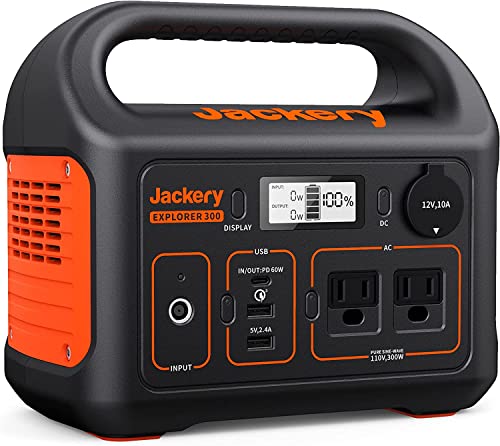
Jackery Explorer 500 v2 Portable Power Station
Best lightweight option for casual campers and first-time buyers
Jackery Explorer 500 v2 Portable Power Station
Best lightweight option for casual campers and first-time buyers
What we like
- 6,000-plus LFP cycle rating is the highest on this list — Jackery rates it for over 10 years of daily use to 80% capacity.
- 14 lbs is the lightest pick in this roundup, a meaningful difference when loading and unloading camp gear repeatedly.
- Lowest price of any LFP unit here makes it the right first power station for someone who is not sure how much they will use it.
- Simple interface with no app required — plug in, charge, use, no setup friction.
What we don't
- Two-hour AC recharge is the slowest on this list, a real inconvenience on trip-morning departure schedules.
- 512Wh capacity is enough for a weekend of phones and lights but will not reliably run a 12V fridge for a full night.
- Single AC outlet limits what you can run simultaneously compared to models with three or four outlets.
The Explorer 500 v2's 6,000-cycle LFP battery is a genuine differentiator — on paper it outlasts every other unit here — and at 14 lbs it is the one you will not dread hauling in and out of the truck bed. For car campers who need phones charged, a lantern powered, and maybe a fan running overnight, this covers the job at the lowest entry price.
Be honest with yourself about the fridge question. If you want to run cold storage reliably, you need to step up to the EcoFlow RIVER 2 Max 500 or RIVER 2 Pro.
The Jackery 500 v2 is for the buyer who camps 3-4 times a year and wants capable, durable power without spending more than necessary.
EF EcoFlow RIVER 2 Max 500 Portable Power Station
Best mid-range option for fridge users on a budget
EF EcoFlow RIVER 2 Max 500 Portable Power Station
Best mid-range option for fridge users on a budget
What we like
- X-Boost pushes effective output to 1000W, letting it run a 12V compressor fridge overnight without the wattage anxiety of lower-rated units.
- One-hour AC recharge is the fastest in this price bracket — meaningfully faster than the Jackery at a similar price.
- 13.3 lbs keeps it in the lightweight category while delivering more usable output than competing 500Wh units.
- 499Wh capacity hits the practical sweet spot for a solo or two-person trip covering fridge, phones, and lighting.
What we don't
- 499Wh capacity is not enough for running a fridge plus additional gear through a cold-weather night without supplemental solar.
- X-Boost output is real but works best with compatible EcoFlow accessories — third-party 12V device compatibility can vary.
- Fewer ports than the RIVER 2 Pro limits simultaneous device connections for larger group setups.
The RIVER 2 Max 500 splits the difference between the entry-level Jackery and the premium RIVER 2 Pro — same 1-hour AC recharge, same LFP chemistry, but at $50-80 less than the Pro with nearly identical day-to-day camping utility for a solo traveler. The X-Boost output means a 12V compressor fridge actually runs on it reliably, which is the one thing the Jackery at this price bracket cannot promise.
Step up to the RIVER 2 Pro if you need 768Wh, four AC outlets, or plan to run heavier gear simultaneously. Stay here if you are running one fridge and a couple of devices and want the fastest recharge at the lowest price that still handles real camp loads.
What to Look For
Capacity in watt-hours (Wh) tells you how much total energy a unit holds, but AC output wattage tells you what it can actually run at once — a 500Wh station with a 300W inverter can't power a 400W coffee maker regardless of its tank size. Battery chemistry matters more than most reviews admit.
LiFePO4 (LFP) cells are safer, run cooler, and last 3,000-plus cycles compared to roughly 500 for older lithium-ion — every pick on this list uses LFP. Recharge time is the spec most buyers overlook.
If you are car camping with solar, a 4-hour recharge is fine. If you are overlanding and need the unit topped off between sites, you want a station that accepts 400W or more of solar input and charges from AC in under 90 minutes.
Who Should Skip This
If you need to run a full-size AC unit, a microwave over 1000W, or a power tool continuously on a job site, nothing under $500 will do it reliably. These units are built for basecamp and emergency use, not sustained heavy loads.
Skip this category entirely and look at 2,000Wh-plus stations with 2,400W inverters.
What the Community Actually Uses
On r/overlanding, the recurring theme in portable power threads is frustration with capacity creep — people buy a 300Wh unit, immediately wish they had gone bigger, and upgrade inside a year. The consensus from experienced members is to skip straight to 500Wh-plus on your first real purchase, treat LFP chemistry as non-negotiable, and factor solar compatibility in from day one rather than as an afterthought.
Quick Picks — In Case You've Already Decided
Frequently Asked Questions
Can I run a portable fridge off a 500Wh power station overnight?
Yes, with caveats. A 12V compressor fridge drawing 40-50W average will run 8-10 hours from a 500Wh unit. Pre-cooling the fridge before switching to battery power makes a significant difference in runtime.
Is LiFePO4 worth it over lithium-ion at this price?
Yes. LFP cells run cooler, are less prone to thermal runaway, and last 3,000-plus charge cycles versus roughly 500 for standard lithium-ion. Every pick on this list uses LFP, and the price difference is now minimal at the $300-500 tier.
What is the difference between AC output watts and battery capacity in Wh?
Capacity (Wh) is the tank size — total energy stored. Output wattage is the faucet — how much power can flow at once. You need both numbers: a 768Wh station with an 800W inverter runs most appliances, but a 768Wh unit with a 300W inverter cannot.
How do I recharge a portable power station while camping?
Three main methods: AC wall outlet before you leave, 12V car or truck outlet while driving, or folding solar panels at camp. Solar is the only option for extended off-grid trips — aim for a panel rated 100W or higher for practical recharge times.
Do these work as a UPS for home power outages?
Most do, but switch-over time varies. Units like the Anker SOLIX C1000 and EcoFlow models advertise 30ms or faster automatic switching, which protects computers and NAS devices. Check the spec sheet for your specific model before relying on it for sensitive equipment.
Buying Guide
You need to match capacity to what you actually run. A 500Wh unit handles phones, laptops, and lights for a weekend.
Want to run a portable fridge overnight? Jump to 768Wh minimum. Check AC output wattage too — not just capacity.
LiFePO4 chemistry beats lithium-ion on lifespan and safety at every price point here.