The ocean doesn't care what kayak you bought — but the right hull shape, length, and tracking system will be the difference between fighting the water and actually enjoying it. Five ocean-ready sit-inside kayaks starting under $700, including one that weighs just 26 lbs and fits in your trunk.
| Photo |
Top Pick

|
Versatile

|
Budget
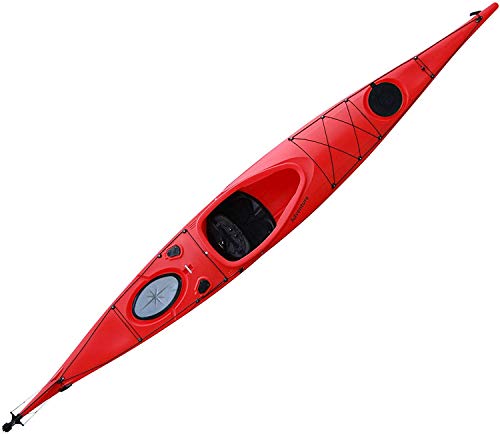
|
Best Value

|
Best for Reliability

|
|---|---|---|---|---|---|
| Product | Wilderness Systems Tsunami 145 | Perception Carolina 14 | BKC SK287 Angler Touring Kayak | Oru Kayak Bay ST Foldable Kayak | Wilderness Systems Tsunami 140 |
| Length | 14.6 ft | 14 ft | 14.75 ft | 12.3 ft | 14 ft |
| Rudder | ✓ | ✗ | ✓ | ✗ | ✓ |
| Weight | 59 lbs | 49 lbs | 55 lbs | 26 lbs | 52 lbs |
| Capacity | 325 lbs | 300 lbs | 330 lbs | 300 lbs | 325 lbs |
| Buy Now | Check Price → | Check Price → | Check Price → | Check Price → | Check Price → |
Quick Tips
Always paddle with a rudder or skeg deployed in open water — even a slight crosswind will turn a flat-water kayak sideways in seconds.
Sealed bow and stern bulkheads are non-negotiable for ocean use: they're your flotation if you flip, not just dry storage.
Practice wet exits and re-entries in calm water before taking any sit-inside kayak into the ocean — rescue skills matter more than the kayak brand.
A 14- to 16-foot kayak tracks straighter and is faster than a 10- to 12-footer; on open ocean, speed and directional control reduce fatigue over long distances.
Wilderness Systems Tsunami 145
Best for serious coastal touring and all-day paddles
Wilderness Systems Tsunami 145
Best for serious coastal touring and all-day paddles
What we like
- Rudder system gives you foot-controlled steering in crosswinds and current without breaking your paddle stroke.
- Phase 3 AirPro seat is genuinely all-day comfortable — adjustable forward, back, and tilt for long tours.
- Sealed bulkheads in bow and stern provide real flotation safety plus large dry storage hatches for overnight gear.
- Flared sidewalls and longer waterline deliver speed and stability that recreational kayaks can't match in ocean chop.
What we don't
- 59 lbs is heavy to cartop solo — you'll want a load assist or a second person for launching.
- Price puts it above most beginner budgets; it's a long-term investment, not a starter boat.
- Narrow cockpit can feel tight for taller or broader paddlers — test the fit before buying.
When the wind picks up and the chop starts building, the Tsunami 145 is the kayak that keeps paddling like everything's fine — the longer waterline holds a course without constant correction, and the rudder lets you focus every stroke on forward power instead of steering. You stop fighting the water and start covering actual distance.
This is the right pick if you're doing multi-hour coastal tours, camping from the kayak, or paddling in conditions where losing control offshore is a real risk. If you're a weekend lake paddler looking for something mellow, this is more boat than you need.
Perception Carolina 14
Best for beginners entering ocean and coastal paddling
Perception Carolina 14
Best for beginners entering ocean and coastal paddling
What we like
- At 49 lbs it's 10 lbs lighter than the Tsunami 145 — a meaningful difference when you're hauling it down a beach launch.
- Six-way adjustable Zone DLX seat with tilt-adjust bottom and height-adjustable backrest sets the comfort standard in this class.
- Leak-proof one-piece construction with built-in bow and stern buoyancy foam adds safety without relying on bulkheads alone.
- Stable V-hull with soft chines handles coastal conditions confidently for intermediate paddlers while still being approachable for newcomers.
What we don't
- No rudder included — a rudder kit sold separately is strongly recommended for ocean use in wind or current.
- Shorter effective waterline than 15-16 foot sea kayaks means more effort to maintain speed on longer crossings.
- Less secondary stability than narrow performance hulls — experienced sea kayakers will feel the difference quickly.
The Carolina 14 is the kayak people buy when they want to actually get on the ocean without spending 18 months learning to brace roll — wide enough to feel stable while you're learning, long enough to track in coastal conditions, and light enough to handle solo on a beach launch. The seat comfort alone is worth calling out; you'll paddle longer and hurt less.
This is best for coastal day trips, protected bays, and anyone stepping up from a recreational kayak into open-water paddling. It's not the choice for serious exposed-coast touring — budget for the rudder add-on and don't take it out past your comfort zone.
BKC SK287 Angler Touring Kayak
Best for budget ocean paddling with rudder included
BKC SK287 Angler Touring Kayak
Best for budget ocean paddling with rudder included
What we like
- Foot-pedal rudder is included in the box — at this price, that's a genuinely unusual value for an ocean-ready kayak.
- 14.75-foot Greenland-inspired hull handles ocean chop and bay crossings better than shorter recreational boats in its price range.
- Dual watertight hatches plus rear cargo bungee give you usable dry storage for day-trip gear and fishing equipment.
- 330 lb capacity handles heavier paddlers and loaded gear without riding low in the water.
What we don't
- Narrow 21.5-inch beam means this kayak requires real balance skill — unstable for beginners until they've logged time on the water.
- Seat comfort is functional but not plush; longer paddles over two hours will have you feeling it.
- Hull quality and fit-and-finish are noticeably below Wilderness Systems or Perception at this price point.
The BKC SK287 is what happens when you take a Greenland sea kayak profile and make it affordable — 14.75 feet of narrow, fast hull with a foot-pedal rudder included, ready for ocean use out of the box. The tradeoff is that narrow beam: this is not a stable beginner boat, and the reviews make clear that paddlers who respect that do well with it, while those who don't get humbled quickly.
Pick this if you already know how to kayak and want a real ocean-capable hull at roughly half the price of the Wilderness Systems. Skip it if this is your first sit-inside or you've never paddled in open water before.
Oru Kayak Bay ST Foldable Kayak
Best for urban paddlers and travel without a car rack
Oru Kayak Bay ST Foldable Kayak
Best for urban paddlers and travel without a car rack
What we like
- 26 lbs and folds down to a 33x14x29-inch box — fits in a car trunk, closet, or can be checked as airline luggage.
- 5mm double-layered polypropylene hull handles lake, bay, and light ocean conditions — rated for 20,000 folds before material fatigue.
- Assembles in 10–15 minutes without tools; the origami fold system is genuinely clever once you've done it a few times.
- Cockpit size and performance are much closer to a hardshell than an inflatable — it actually paddles like a real kayak.
What we don't
- At 12.3 feet it's shorter than ideal for exposed ocean touring — best suited for protected coasts, bays, and calm sea days.
- No bulkheads or watertight hatches — not the right choice if you need dry storage for overnight gear.
- Price-per-foot is high compared to hardshell kayaks; you're paying for portability, not performance per dollar.
The Bay ST solves a problem that has nothing to do with paddling performance — if you live in an apartment, don't own a truck, or want to fly to a coastal destination and paddle when you land, no hardshell kayak competes with something that folds into a carry-on-sized box. In the water it performs like a real 12-foot sit-inside, not an inflatable toy.
This is best for urban paddlers, travelers, and anyone who wants to kayak in coastal conditions without building their life around kayak storage and transport. It's not the pick for serious open-ocean crossings or overnight loaded touring.
Wilderness Systems Tsunami 140
Best for intermediate paddlers stepping up from recreational boats
Wilderness Systems Tsunami 140
Best for intermediate paddlers stepping up from recreational boats
What we like
- Rudder-equipped and 14 feet long — hits the two most important boxes for ocean-ready performance right out of the box.
- 7 lbs lighter than the Tsunami 145 with the same Phase 3 AirPro seat and bulkhead storage system.
- Sealed bow and stern bulkheads provide flotation safety and large dry hatches for a full day of gear.
- Flared sidewalls give you more primary stability than a dedicated sea kayak without sacrificing too much speed.
What we don't
- Slightly shorter waterline than the 145 means marginally less speed and tracking efficiency on long open-water paddles.
- Still a premium price — this is not the budget pick in absolute terms, just the more accessible Wilderness Systems option.
- Cockpit fit may be snug for very tall paddlers; the 145 offers a bit more legroom.
The Tsunami 140 is the Tsunami 145 dialed back slightly — same quality hull, same seat, same safety-ready bulkheads, just two feet shorter and several pounds lighter. On protected coasts and day-length ocean paddles, most paddlers won't notice the difference in performance.
You will notice the difference hauling it to the waterline. This is the right pick if the 145 is more boat than your paddling situations require, or if a 7-pound weight reduction matters to your launching setup.
The exposed-coast, multi-day ocean tourer should still reach for the 145.
What to Look For
Length and hull design determine how your kayak handles in open water. A kayak under 12 feet will fight every gust and wave; 14 feet or longer gives you the waterline to track straight in wind and chop.
Bulkheads and sealed hatches are safety features first, storage second. If you capsize offshore, bulkheads keep the hull afloat so you can re-enter — a kayak without them sinks below the surface when swamped.
Rudder vs. skeg is a real decision based on your paddling style.
A rudder lets you steer with your feet and focus paddle strokes on power; a skeg keeps you tracking straight without foot steering but requires more corrective paddling in crosswinds.
Who Should Skip This
If you're only paddling flat, calm lakes or slow rivers close to shore, an ocean touring kayak is more boat than you need — a shorter recreational sit-inside will be easier to handle and store. Anyone brand new to kayaking should get at least a few lessons in a stable recreational boat before stepping into a narrow sea kayak; the secondary stability curve is real and ocean conditions are unforgiving.
What the Community Actually Uses
On r/kayaking and r/seakayaking, the standard advice for first-time ocean buyers is to demo before you buy — a 14-foot touring hull feels very different from a 10-foot rec boat, and secondary stability can catch beginners off guard. The consensus pick for accessible ocean performance is consistently a Wilderness Systems Tsunami or Perception Carolina, with the Oru Bay ST coming up frequently in urban paddler threads where storage is the main constraint.
Quick Picks — In Case You've Already Decided
Frequently Asked Questions
Do I need a rudder for ocean kayaking?
Not strictly, but it helps significantly. A rudder lets you maintain course in crosswinds and currents without constantly correcting with your paddle strokes, which saves energy on long open-water paddles. A fixed skeg is a lower-maintenance alternative that aids tracking without moving parts.
What length kayak is best for the ocean?
14 to 17 feet is the sweet spot for ocean touring. Longer kayaks track straighter and cover distance more efficiently because of a longer waterline. Anything shorter than 12 feet will be noticeably harder to keep on course in wind or chop.
Can a beginner use an ocean kayak?
Yes, but pick a wider, more stable model like the Perception Carolina 14 rather than a narrow performance hull. Take a lesson in a pool or calm bay first so you know how to wet-exit and re-enter — it's a skill you need before going offshore.
What's the difference between a sea kayak and a touring kayak?
Sea kayaks are a subset of touring kayaks specifically designed for open ocean conditions — lower volume, more rocker, better secondary stability, and almost always equipped with bulkheads and hatches. Many 'touring' kayaks perform well in coastal conditions but may lack the hull design for sustained open ocean use.
Is a sit-inside or sit-on-top better for ocean kayaking?
Sit-inside kayaks are generally preferred for open ocean because they have a lower center of gravity, stay drier in chop, allow use of a spray skirt in rough conditions, and offer better secondary stability. Sit-on-tops are easier to re-enter after a capsize, which makes them popular for warm-water coastal paddling.
Buying Guide
For ocean kayaking, you want a kayak at least 12 feet long with sealed bulkheads, a skeg or rudder for tracking in wind and current, and a low-volume cockpit that sheds water fast. Wider hulls feel stable but tire you out.
Narrower touring hulls cut through chop and glide farther per stroke — that matters when you're two miles offshore.