The right kayak removes you from the fight entirely — sit-on-tops with wide tunnel hulls, upright chairs, and open decks eliminate the entry and stability barriers that make most kayaks a no. Five options under $1,100 exist today that check every box, including one that weighs 40 lbs and fits in your trunk.
| Photo |
Top Pick

|
Versatile
|
Budget

|
Best Value

|
Best for Reliability
|
|---|---|---|---|---|---|
| Product | Perception Access 11.5 Sit-On-Top Kayak | BKC UH-RA220 11.5-Foot Angler Sit-On-Top Kayak | Pelican Catch Mode 110 Fishing Kayak | Lifetime Tahoma 100 | Sea Eagle 380X Explorer Inflatable Kayak Pro Package |
| Weight | 57 lbs | 68 lbs | 63 lbs | 50 lbs | 40 lbs |
| Hull type | Sit-on-top | Sit-on-top | Tunnel hull | Sit-on-top | Inflatable drop-stitch |
| Hull width | 29.5 in | 34 in | 34.5 in | 31 in | 35 in |
| Weight capacity | 325 lbs | 550 lbs | 375 lbs | 275 lbs | 750 lbs |
| Buy Now | Check Price → | Check Price → | Check Price → | Check Price → | Check Price → |
Quick Tips
Use a kayak cart from the parking lot to the waterline — you shouldn't be dragging a 60-lb hull solo
A double-bladed paddle with a longer shaft (250–260cm) gives you reach if your core rotation is limited
Outrigger floats can be mounted to most sit-on-tops for under $80 and add a meaningful stability margin
Launch from a boat ramp or dock over a beach — a flat, knee-height surface cuts transfer risk in half
Perception Access 11.5 Sit-On-Top Kayak
Best for first-time adaptive paddlers who want a forgiving, stable platform
Perception Access 11.5 Sit-On-Top Kayak
Best for first-time adaptive paddlers who want a forgiving, stable platform
What we like
- Open deck design makes entry and exit far less demanding than any sit-inside kayak
- Contoured high seatback with extra cushioning supports paddlers with limited core stability
- Multiple side handles — not just bow and stern — give you real grip points during a water transfer
- Multiple foot rest positions accommodate a range of mobility levels and leg lengths
What we don't
- At 29.5 inches wide it's narrower than the BKC and Pelican options, so paddlers with significant balance issues may want more beam
- 325 lb weight capacity is on the lower end if you're a larger paddler with extra gear
- Not a pedal-drive option, so upper body function is required for propulsion
You get on, you paddle, and the kayak doesn't fight you — that's the whole point of the Access 11.5. The open deck, side carry handles, and high-back contoured seat handle the entry and comfort problems that make most kayaks exhausting before you even reach the water.
This is the right kayak if you want a proven, trusted sit-on-top from an established brand and your primary concerns are ease of entry and seating support. If you need more than 325 lbs of capacity or you're dealing with significant balance issues, step up to the BKC RA220.
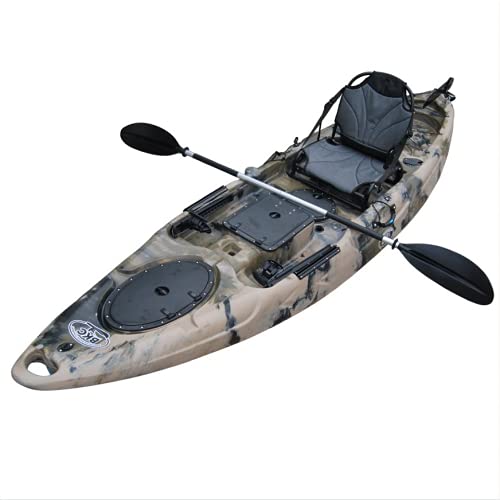
BKC UH-RA220 11.5-Foot Angler Sit-On-Top Kayak
Best for paddlers who need maximum stability and an upright seating position
BKC UH-RA220 11.5-Foot Angler Sit-On-Top Kayak
Best for paddlers who need maximum stability and an upright seating position
What we like
- 34-inch beam is wide enough to stand on, giving paddlers with balance limitations a genuinely planted platform
- Upright aluminum frame chair seat positions you higher than a standard kayak seat, making entry transfers easier
- Foot-operated rudder lets you steer with your legs, freeing your hands and reducing upper body demand
- 550 lb weight capacity accommodates larger paddlers or those who need to bring more adaptive gear
What we don't
- At 68 lbs it's the heaviest paddle-only kayak on this list — you'll want a kayak cart
- The extra width and weight means it tracks slower than narrower kayaks on longer paddles
- Hull weight makes solo roof-racking difficult without assist equipment
If stability is your primary concern, the 34-inch beam on the RA220 changes the math — this thing stays planted where narrower kayaks rock. The upright aluminum chair seat is a genuine difference-maker for anyone who can't comfortably fold themselves into a low-back kayak seat.
This is the call for paddlers with balance, core, or lower-limb limitations who need the widest, most stable platform available without going to a pontoon. If you're closer to 325 lbs capacity needs and want something lighter to manage, the Perception Access is the better pick.
Pelican Catch Mode 110 Fishing Kayak
Best for paddlers who need an anti-tip hull and hands-free deck space
Pelican Catch Mode 110 Fishing Kayak
Best for paddlers who need an anti-tip hull and hands-free deck space
What we like
- Tunnel hull design traps air beneath the hull and resists rocking more actively than a flat-bottom sit-on-top
- Anti-slip deck carpet across the wide flat platform gives you a grippy, safe surface for movement
- ErgoBoost lawnchair-style seat is adjustable to a higher position, which eases the sit-to-stand transfer at the dock
- Ram-X material construction is among the most durable and lowest-maintenance hulls available at this price
What we don't
- At 63 lbs it still needs a cart or two people to transport — not a solo-carry kayak
- The tunnel hull sacrifices some straight-line speed compared to V-hull kayaks
- 375 lb capacity is mid-range and may not work for larger paddlers with heavy gear
The tunnel hull is the standout feature here — it physically resists tipping in a way flat-bottom kayaks don't, and the wide anti-slip deck gives you a genuinely safe surface to brace against during entry. If you've felt uneasy stepping onto a regular kayak, this one changes that feeling.
This is the pick for paddlers who fish, need serious stability on choppy days, or want a platform they can stand on to cast without white-knuckling it. If you don't fish and just want the widest stable platform for general paddling, the BKC RA220 is just as wide with a simpler deck layout.
Lifetime Tahoma 100 Sit-On-Top Kayak
Best budget pick for calm-water paddlers who need stability without the price
Lifetime Tahoma 100 Sit-On-Top Kayak
Best budget pick for calm-water paddlers who need stability without the price
What we like
- Flat bottom with chine stability rails keeps the hull planted on calm lakes and slow rivers without requiring a wide beam
- 50-lb weight is the lightest hardshell on this list, which matters when you're managing solo transport
- Quick-release adjustable seat back lets you customize the support angle without tools
- Multiple footrest positions accommodate paddlers with varied leg mobility and length
What we don't
- 275 lb weight capacity is the lowest on this list — not suitable for heavier paddlers or those with heavy adaptive gear
- At 31 inches wide it has less primary stability than the BKC or Pelican — not ideal for significant balance issues
- The lower price reflects fewer features; no rudder, fewer rod holders, and simpler outfitting
You don't need to spend $700 to get on the water safely — the Tahoma 100 proves that. The flat bottom and chine rails give you a stable, confidence-building ride on lakes and calm rivers, and the adjustable seat back handles the support needs that a plain molded seat can't.
This is the pick if you're budget-constrained, weigh under 250 lbs, and plan to paddle calm water. If you have more significant stability or entry concerns, spend the extra money on the BKC or Pelican — the Tahoma is honest about what it is.
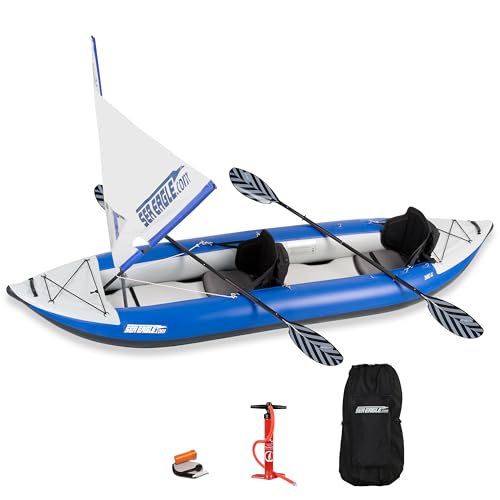
Sea Eagle 380x Inflatable Kayak
Best for paddlers who can't lift or roof-rack a hardshell kayak
Sea Eagle 380x Inflatable Kayak
Best for paddlers who can't lift or roof-rack a hardshell kayak
What we like
- 40 lbs deflated and packed means you carry it like a duffel bag — no roof racks, no heavy lifting, no assistance required
- 750 lb weight capacity is the highest on this list by a significant margin, accommodating larger paddlers and all their gear
- Drop-stitch floor inflates to 10 PSI for a rigid, flat platform that mimics hardshell stability on calm water
- Inflates in under 10 minutes with the included dual-action pump, with 16 self-bailing valves keeping the cockpit dry
What we don't
- Inflation and deflation adds 15–20 minutes to each outing — not ideal if you need to minimize time on land
- Not suitable for moving water or any conditions above Class II — this is a flat-water and slow-river kayak
- Requires more setup coordination than a hardshell, which can be difficult for paddlers who need to manage gear and transfer independently
The transport problem is the whole reason this kayak exists for adaptive paddlers. If you can't get a 60-lb hardshell to the water alone, this 40-lb pack solves it — no roof rack, no kayak cart, no second person required to get it from the car to the launch.
This is the pick if your disability affects your ability to transport and launch a hardshell more than your ability to paddle. If you can manage a kayak cart and have help at the launch, a hardshell like the BKC RA220 will give you more consistent on-water stability.
What to Look For
Hull width is the single biggest factor in stability. A 32-inch beam is the minimum; 34–36 inches is where you stop white-knuckling it.
Tunnel hulls, like those on the Pelican Catch Mode, go further — they trap air beneath the hull and resist rocking in a way flat bottoms can't match. Seat design gets ignored until it matters.
A standard backband pushes against your lower lumbar and assumes you can brace with your legs — upright aluminum frame chairs and lawnchair-style recliners don't. If you have limited core stability, a high-back upright or reclinable seat is non-negotiable.
Entry and exit is where most people get hurt. Open decks with multiple handles at the sides — not just the bow and stern — let you lower yourself in stages.
Sit-on-tops with wide, flat deck platforms mean you can sit on the edge before swinging your legs in, which changes the whole transfer experience.
Who Should Skip This
If you're a strong paddler whose disability affects stamina rather than stability or entry, you may want a narrower touring hull — these wide-beam kayaks are slow by design. If you need hands-free propulsion due to upper limb limitations, look specifically at pedal-drive models like the Pelican Catch Kicker rather than paddle-only kayaks on this list.
What the Community Actually Uses
On r/AdaptiveSports and r/kayaking, the most-repeated advice is to demo before buying if possible, and to rig for your specific needs rather than buying a purpose-built 'adaptive' model that may not exist at your price point. Users frequently recommend the Perception Access line for first-time adaptive paddlers, and consistently flag seat height as the overlooked spec.
Several threads note that a good kayak cart and a patient launch partner close the gap on almost any accessibility limitation.
Quick Picks — In Case You've Already Decided
Frequently Asked Questions
What makes a kayak 'accessible' for someone with a disability?
Three things matter most: hull width (30+ inches for primary stability), seat design (upright or high-back rather than a low backband), and deck openness (easy to get on and off without squeezing into a cockpit). Sit-on-tops cover all three.
Can someone who uses a wheelchair kayak?
Yes, with the right setup. Sit-on-top kayaks with wide decks and low, accessible seat positions are the standard starting point. Many paddlers transfer from their chair at a dock or ramp, and some use sliding transfer boards to get onto the deck.
What is the safest kayak for someone with balance issues?
A wide sit-on-top with a tunnel hull is the most forgiving platform. The Pelican Catch Mode 110 and BKC RA220 both exceed 34 inches wide and are stable enough for cautious standing. Outrigger floats add another safety layer for minimal cost.
Are inflatable kayaks stable enough for paddlers with disabilities?
High-quality inflatables like the Sea Eagle 380x use rigid drop-stitch floors that mimic hardshell stability. They're not ideal for rough water, but on calm lakes and slow rivers they offer a genuinely stable platform — with the added benefit of easy transport.
How do I get into a sit-on-top kayak with limited mobility?
Launch from a dock or ramp at water level, not a beach. Sit on the edge of the dock, lower yourself onto the kayak deck, then swing your legs in. Wide decks with side handles give you multiple grip points during the transfer.
Buying Guide
You need width first — anything under 32 inches is working against you. Sit-on-tops beat sit-inside every time for entry and exit.
Look for an upright or lawnchair-style seat over a standard backband. Weight capacity matters more than you think; load it under 75% for real-world stability.
Self-bailing scuppers keep the deck dry automatically.