Blown-out knees on the way down aren't a fitness problem — they're a boot problem, and the right pair of hiking boots solves it before the trailhead. The five options below span $65 to $230, weigh as little as 1.8 lbs per pair, and every one carries a waterproof membrane that actually holds.
| Photo |
Top Pick

|
Versatile

|
Budget
|
Best Value
|
Best for Reliability

|
|---|---|---|---|---|---|
| Product | Merrell Moab 3 Mid Waterproof Hiking Boot | Salomon X Ultra 4 Mid GTX Hiking Boot | KEEN Targhee III Mid Waterproof Hiking Boot | HOKA Kaha 2 GTX Hiking Boot | Columbia Newton Ridge Plus II Waterproof Hiking Boot |
| Weight | 2.0 lbs (pair) | 1.8 lbs (pair) | 2.2 lbs (pair) | 2.4 lbs (pair) | 2.2 lbs (pair) |
| Outsole | Vibram TC5+ | Contagrip MA | KEEN All-Terrain | Vibram Megagrip | Omni-Grip |
| Waterproof | ✓ | ✓ | ✓ | ✓ | ✓ |
| Ankle height | Mid | Mid | Mid | Mid | Mid |
| Buy Now | Check Price → | Check Price → | Check Price → | Check Price → | Check Price → |
Quick Tips
Break in your boots on short neighborhood walks before a multi-day trip — waterproof membranes stiffen the upper and blisters happen fast on miles one through five.
Size up a half size if you're wearing wool socks or have wide feet — most hiking boots run narrow in the toe box compared to street shoes.
Waterproof ratings decay with use — re-treat the uppers with a DWR spray every season to restore the bead-off performance the boot shipped with.
For rocky or off-trail terrain, prioritize boots with a stiffened midsole shank — it prevents the foot-fatigue twist that accumulates after hour four on uneven ground.
Merrell Moab 3 Mid Waterproof Hiking Boot
Best for all-day comfort straight out of the box
Merrell Moab 3 Mid Waterproof Hiking Boot
Best for all-day comfort straight out of the box
What we like
- Vibram TC5+ outsole grips wet rock and loose dirt without feeling grabby on hardpack.
- Out-of-box comfort is genuinely immediate — minimal break-in time compared to stiffer leather boots.
- Merrell Air Cushion heel absorbs impact on long descents without the mushy feel of cheaper foam.
- M Select DRY waterproof membrane keeps feet dry through stream crossings and sustained rain.
What we don't
- Narrow toe box can cause pinching for wide or high-volume feet — size up or try KEEN instead.
- Suede upper scuffs easily and needs regular conditioning to maintain water repellency.
- Midsole cushioning compresses noticeably after 400 to 500 miles of hard use.
The Moab 3 Mid is the bestselling hiking boot in the world for a reason: it fits most feet well, grips most terrain reliably, and doesn't require a two-week break-in to stop hurting you on the way down. It's the right boot if you want one pair that handles day hikes, weekend trips, and muddy shoulder-season trails without having to think about it.
If you have wide feet or need extra toe room, look at the KEEN Targhee instead.
Salomon X Ultra 4 Mid GTX Hiking Boot
Best for fast hikers on technical terrain
Salomon X Ultra 4 Mid GTX Hiking Boot
Best for fast hikers on technical terrain
What we like
- GORE-TEX waterproofing with noticeably better breathability than most proprietary membranes during sustained effort.
- SENSIFIT lacing system wraps the foot precisely and eliminates heel slip on steep descents.
- Contagrip MA outsole handles wet rock, mud, and dry hardpack in the same stride without compromise.
- Lighter than most waterproof mid-cuts at this price point — it hikes more like a trail runner than a traditional boot.
What we don't
- Narrower last won't work for wide or bunion-prone feet — try before committing.
- Premium price is harder to justify if you're hiking groomed trails rather than technical terrain.
- GORE-TEX membrane can take longer to dry out from the inside once sweat accumulates on long days.
The X Ultra 4 Mid GTX is built for people who hike fast and want the boot to keep up — the Contagrip outsole transitions between surfaces without hesitation and the low weight lets you cover miles without the late-afternoon leg drag that heavier boots cause. Pick this over the Merrell if you're doing technical ridge walks, crossing talus fields, or hiking in conditions where precise foot placement matters.
Skip it if you have wide feet or hike mostly flat, groomed trails where the premium isn't worth the cost.
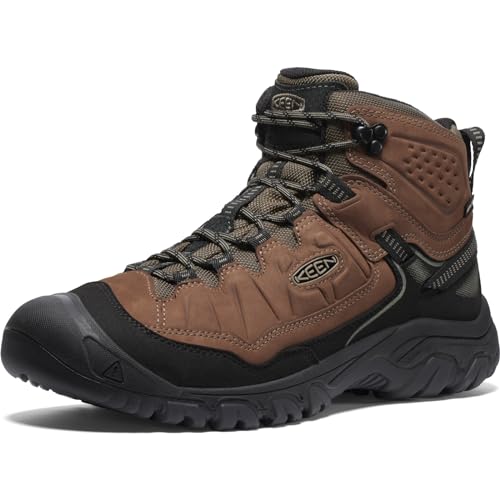
KEEN Targhee III Mid Waterproof Hiking Boot
Best for wide feet and long days on trail
KEEN Targhee III Mid Waterproof Hiking Boot
Best for wide feet and long days on trail
What we like
- KEEN's original wide toe box is the fix for chronic blister and hot-spot problems that other boots cause.
- KEEN.DRY waterproof breathable membrane reliably keeps water out through stream crossings and wet brush.
- 4mm multi-directional lugs dig into mud and loose dirt better than most boots in this price range.
- Metatomical footbed provides arch support without a separate insole insert — it works right out of the box.
What we don't
- Heavier than the Salomon or Merrell — the extra 0.2 to 0.4 lbs is noticeable on big mileage days.
- KEEN All-Terrain rubber wears faster than Vibram on rocky terrain with sustained pavement mixed in.
- Wide last is a feature for most — but too roomy for genuinely narrow feet, causing heel lift.
The Targhee III solves one specific problem better than any other boot on this list: it fits wide and high-volume feet without compromising waterproofing or traction, and it does it reliably across a full day on trail. If you've written off hiking boots because they always pinch your toes or give you blisters by mile three, this is the boot to try.
Skip it if you have narrow feet or want the lightest possible option for fast hiking.
HOKA Kaha 2 GTX Hiking Boot
Best for long-mileage hikers and backpackers
HOKA Kaha 2 GTX Hiking Boot
Best for long-mileage hikers and backpackers
What we like
- HUBBLE heel geometry and thick midsole cushioning absorb repeated impact over 10+ mile days better than any boot at this weight.
- Vibram Megagrip with Traction Lug outsole is one of the most capable wet-rock outsoles available on a hiking boot.
- J-Frame stability technology controls overpronation without a rigid shank — feet feel supported but not locked down.
- GORE-TEX waterproofing with recycled textile upper balances protection and breathability better than most GTX boots.
What we don't
- Heaviest boot on this list at 2.4 lbs per pair — the cushion trade-off is real if you prioritize speed.
- Premium price point is hard to justify for occasional weekend hikers who aren't covering serious mileage.
- Distinctive HOKA silhouette is polarizing — the wide midsole looks bulky compared to traditional hiking boots.
The Kaha 2 GTX is built for the kind of hiking where your feet need to feel okay at mile 18, not just mile 3 — the cushioning stack absorbs what cheaper boots transmit directly to your knees, and the Vibram Megagrip handles the wet technical terrain that tests you late in the day when your legs are already tired. This is the boot for thru-hikers, backpackers carrying weight, and anyone who's discovered that their knees hurt more than their lungs on long descents.
Skip it if you're a casual day hiker who won't use the extra cushion.
Columbia Newton Ridge Plus II Waterproof Hiking Boot
Best for budget-conscious hikers who don't want to compromise
Columbia Newton Ridge Plus II Waterproof Hiking Boot
Best for budget-conscious hikers who don't want to compromise
What we like
- Omni-Tech waterproof seam-sealed construction holds up through sustained rain and shallow crossings at a fraction of premium boot prices.
- TechLite midsole provides genuine cushioning — not the dead foam you get in most boots under $80.
- Full-grain leather and mesh upper is more durable than the synthetic uppers found on competing budget options.
- Lace-up with metal hardware closes securely and doesn't loosen mid-hike the way budget buckle systems often do.
What we don't
- Omni-Grip outsole lacks the lug depth to handle sustained mud or loose technical terrain — it's a groomed-trail sole.
- Stiffer upper requires a proper break-in period — don't take these on a 10-mile first hike.
- Narrower toe box than KEEN — wide-footed hikers will feel pressure by mile four.
The Newton Ridge Plus II proves that $80 can still buy a waterproof mid-cut boot with real leather construction and a midsole that doesn't feel like cardboard after three months — it's not as capable as the Merrell or Salomon, but it covers the basics that most weekend hikers actually need. Buy this if you're new to hiking, need a boot for occasional trail use, or want a solid option while you figure out what your feet actually need before spending $150 or more.
Skip it if you're hiking in muddy or technical terrain where the outsole will struggle.
What to Look For
Waterproofing is the first filter, but the membrane matters more than the brand name on the tag. GORE-TEX and proprietary membranes like KEEN.DRY and Merrell's M Select DRY all keep water out — what separates them is breathability over a long day.
Ankle height determines how the boot handles technical terrain. Mid-cut boots protect the ankle on uneven ground without the weight penalty of a full high boot — they're the right call for 90% of hiking conditions.
Lug depth and rubber compound control traction on wet surfaces. Deep multi-directional lugs shed mud and grip wet rock; shallow lugs work for groomed trails but fail fast in the backcountry.
Who Should Skip This
If you're running ultras or doing fast-and-light trail running, you don't need any of these — a trail runner will serve you better. Backpackers carrying 40+ lbs on technical passes should look at full leather mountaineering boots with crampon compatibility instead of mid-cut hikers.
What the Community Actually Uses
On r/hiking, the most consistent advice is to ignore the 'best boot' lists and focus on fit — multiple threads note that the Merrell Moab fits narrow feet well while KEEN's wider toe box is frequently called out as the fix for people who've had chronic blister issues with other brands. The Salomon X Ultra 4 Mid comes up repeatedly in r/ultralight discussions as the go-to when someone wants a legitimate waterproof mid without sacrificing too much weight.
Quick Picks — In Case You've Already Decided
Frequently Asked Questions
Do I really need waterproof hiking boots?
If you hike in the Pacific Northwest, mountains, or anywhere with unpredictable weather, yes. Non-waterproof boots dry faster when soaked through, but a waterproof membrane keeps your feet dry through wet grass and stream crossings that aren't deep enough to overtop the collar. For dry desert trails, skip the waterproofing and prioritize breathability instead.
How long do hiking boots typically last?
Most quality mid-cut hiking boots last 500 to 1,000 miles of use. The outsole lug wears first, then the midsole loses cushioning. If the tread looks worn and your feet ache after hikes that used to feel fine, it's time to replace them — the boot looks intact long before its cushioning is gone.
Should hiking boots be tight or loose?
Your heel should be locked with zero lift, your toes should have a thumbnail's width of space at the front, and the sides should hold the foot without hot spots. Lace the lower hooks snug and the upper section slightly looser to prevent top-of-foot pressure on steep descents.
Are expensive hiking boots worth it?
Above $150, you're primarily paying for GORE-TEX waterproofing, Vibram outsoles, and lasting construction. If you hike more than 20 days a year, the durability gap is real. For casual weekenders who hike 3 to 5 times a season, a $70 to $100 boot will cover the distance before it wears out.
Can I use hiking boots for everyday wear?
Yes, and most people do — especially mid-cuts like the Merrell Moab and Columbia Newton Ridge that have a low-profile look. The main downside is that miles on pavement wear the lugs faster than trail use, so you'll replace them sooner if they're doing double duty.
Buying Guide
You need ankle support that doesn't feel like a cast, a waterproof membrane you can trust on day two of rain, and a sole with enough lug depth to grip wet roots without thinking about it. Weight matters most if you're covering miles.
Fit matters most if you'll be wearing them straight out of the box.