A good GPS dog collar means you never lose that sickening feeling of scanning the treeline and not knowing which direction to run. The five options below cover every scenario from suburban backyard escapes to multi-mile hunting range, with real-time update rates as fast as every 2–3 seconds and battery lives stretching up to 80 hours.
| Photo |
Top Pick

|
Versatile

|
Budget
|
Best Value

|
Best for Reliability
|
|---|---|---|---|---|---|
| Product | Tractive Smart Dog GPS Tracker | Fi Series 3+ Smart Dog Tracker Collar | Garmin TT 15X Dog Device | Whistle Switch GPS + Health Smart Dog Collar | FitBark GPS Dog Tracker 2nd Gen |
| Waterproof | ✓ | ✓ | ✓ | ✓ | ✓ |
| Update rate | Every 2–3 seconds | Every few seconds (nationwide) | Every 2.5 seconds | Every 15 seconds | Varies (location + activity mode) |
| Battery life | 2–5 days | Up to 3 months | Up to 80 hours | Unlimited (2 swappable batteries) | 7–10 days |
| Subscription | ✓ | ✓ | ✗ | ✓ | ✓ |
| Buy Now | Check Price → | Check Price → | Check Price → | Check Price → | Check Price → |
Quick Tips
Test the geofence alert before your dog's first solo run — set a small boundary and walk out of it yourself to confirm the app notification fires.
For hunting dogs, attach the tracker unit to the back of the collar near the shoulders, not under the chin — it keeps the antenna pointed skyward for better satellite lock.
Charge to 100% the night before any extended trip; most GPS trackers drain faster in rural areas where cellular signals force the device to boost transmission power.
If your dog is under 20 lbs, weigh the tracker unit before buying — anything over 1.5 oz starts to affect movement and posture on small breeds.
Tractive Smart Dog GPS Tracker
Best for everyday dogs and escape-prone backyard runners
Tractive Smart Dog GPS Tracker
Best for everyday dogs and escape-prone backyard runners
What we like
- 2–3 second live location updates mean you can follow your dog in real-time, not catch up to where they were a minute ago.
- Vital signs monitoring tracks heart and respiratory rate changes, alerting you to potential health issues before they become visible.
- Unlimited range via cellular network means no distance cap — it works anywhere your phone has signal.
- Bark monitoring and custom geofencing deliver escape alerts the moment your dog leaves the boundary you set.
What we don't
- Requires a monthly or annual subscription starting around $5/month — the hardware cost is only half the picture.
- Cellular-dependent, so tracking goes dark in dead zones like remote hunting land or backcountry trails.
- Battery life of 2–5 days means you'll be charging it multiple times per week for high-activity dogs.
If your dog has ever cleared a fence and you've spent 20 minutes driving the neighborhood, this is the collar that ends that panic — real-time location updates every 2–3 seconds mean you're watching your dog move on the map, not guessing a direction. This is the right pick for suburban and urban dog owners who want a full-featured tracker without a huge upfront cost.
If you hunt in areas without cell coverage or need multi-day battery life in the field, look at the Garmin TT 15X instead.
Fi Series 3+ Smart Dog Tracker Collar
Best for active dogs with health and behavior tracking needs
Fi Series 3+ Smart Dog Tracker Collar
Best for active dogs with health and behavior tracking needs
What we like
- AI-powered behavior tracking detects barking, licking, scratching, eating, and drinking — the first smart collar to offer this level of detail.
- Battery life up to 3 months in normal mode means weeks between charges rather than days.
- Apple Watch integration gives you live location and Lost Mode directly on your wrist without pulling out your phone.
- Built-in LED light improves visibility in low-light situations and adds a safety layer for early morning or evening walks.
What we don't
- Higher upfront cost compared to clip-on trackers — you're buying a full collar, not an attachment.
- Subscription required after the included membership period expires, adding to long-term cost.
- Bulkier module design may not be ideal for very small or short-necked breeds.
The Fi Series 3+ is the tracker for the dog owner who wants to know not just where their dog is but what they've been doing — the AI behavior monitoring flags changes in scratching, eating, or sleep patterns that often signal a health issue before any visible symptoms appear. Pick this over the Tractive if your dog is already healthy and active and you want the longest possible battery life alongside location tracking.
If your dog is under 15 lbs or you mostly need basic escape alerts, the Tractive is a simpler, lighter, cheaper fit.
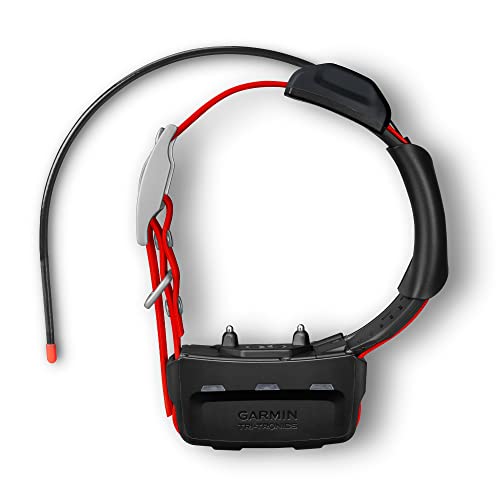
Garmin TT 15X Dog Device
Best for hunting dogs and off-grid tracking with no cell required
Garmin TT 15X Dog Device
Best for hunting dogs and off-grid tracking with no cell required
What we like
- VHF radio communication works completely independent of cellular networks — track your dog up to 9 miles away with zero cell signal.
- 80-hour battery life means you can run a multi-day hunt without recharging mid-trip.
- 18 levels of stimulation for training, plus tone and vibration, make this a track-and-train system in one device.
- 10-meter water resistance handles full submersion at creek crossings and heavy rain without issue.
What we don't
- Requires a compatible Garmin handheld (Alpha or Astro) to use — the collar alone does nothing, which significantly raises the total system cost.
- No smartphone integration without the Garmin Explore app and a connected handheld, making it less intuitive for non-hunters.
- Heavier than consumer GPS trackers — not ideal for dogs under 30 lbs.
This is the only tracker on this list that works when you're three ridges deep in a national forest with no bars on your phone — VHF radio doesn't need a cell tower, which is why serious hunting dog handlers have run Garmin Alpha systems for years. Buy this if you run hounds, bird dogs, or any working dog in terrain where cell coverage is zero.
Skip it if you just need a backyard escape alert — the system cost of collar plus compatible handheld runs over $500 and it's more equipment than that use case needs.
Whistle Switch GPS + Health Smart Dog Collar
Best for small dogs and owners who want zero charging gaps
Whistle Switch GPS + Health Smart Dog Collar
Best for small dogs and owners who want zero charging gaps
What we like
- Two interchangeable battery packs mean you swap instead of charge — no downtime, ever, if you keep a second battery topped up.
- Works on dogs as small as 5 lbs, making it one of the only full-featured GPS collars viable for small breeds.
- Health monitoring tracks licking, scratching, and drinking behavior to flag potential issues like allergies, UTIs, or joint pain.
- Waterproof design survives pool swims and rain without a case or cover.
What we don't
- 15-second update rate is slower than Tractive or Fi — fast runners can cover a lot of ground in that window.
- Subscription required for cellular GPS coverage, adding monthly cost on top of the hardware price.
- The dual-battery system adds bulk compared to single-module designs — some small dogs may find it uncomfortable.
The swap-don't-charge battery system solves the one problem that makes every other GPS collar frustrating — you always forget to plug it in the night before the thing you actually need it for. With two battery packs, one's always charged and the switch takes seconds.
This is the right pick if your dog weighs under 25 lbs or if you need tracking continuity across long days without carrying a charger. Choose the Tractive over this if faster update rates matter more to you than swappable battery convenience.
FitBark GPS Dog Tracker 2nd Gen
Best lightweight option for small breeds and health-focused owners
FitBark GPS Dog Tracker 2nd Gen
Best lightweight option for small breeds and health-focused owners
What we like
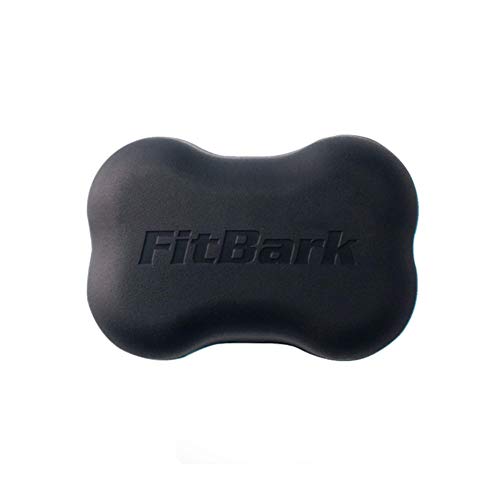
- At just 16 grams, it's one of the lightest GPS dog trackers on the market — barely noticeable even on small dogs.
- 4G LTE with multi-carrier coverage (Verizon, AT&T, T-Mobile) gives it stronger signal reliability than single-carrier trackers.
- Used by over 100 universities and research institutions for pet health data, backing up its health-tracking accuracy with real science.
- 7–10 day battery life means weekly charging rather than daily, which is realistic for most owners.
What we don't
- Location update interval is less aggressive than Tractive or Fi in real-time mode, so it's better for health monitoring than active pursuit.
- Subscription cost adds up over time relative to the lower hardware price.
- Clip-on attachment rather than integrated collar design means there's a chance it shifts or detaches on a very active dog.
The FitBark's value isn't the price tag — it's the weight. At 16 grams, it clips onto any collar and disappears on your dog, which matters if you've got a 12 lb terrier who refuses to wear anything that slows them down.
Pick this if your dog is small, you're primarily interested in health and activity trends alongside basic location tracking, and you want multi-carrier cell coverage without paying a premium hardware price. If you need second-by-second location in a high-stakes escape scenario, step up to the Tractive.
What to Look For
Update rate is the spec that matters most when your dog is running. A tracker updating every 2–3 seconds lets you react while your dog is still in range; one that updates every 60 seconds can leave you chasing a ghost.
Range requirement depends entirely on your use case. A dog that escapes the backyard needs cellular nationwide coverage; a hunting dog in a national forest needs VHF radio range measured in miles, not cell towers.
Battery life and waterproofing are non-negotiable for working dogs. Short hunting days run 6–8 hours; multi-day backcountry trips expose a collar to rain, mud, and submersion at creek crossings — confirm the IPX or ATM rating before you trust it.
Who Should Skip This
GPS dog collars aren't the right tool for every dog owner. If your dog is under 10 lbs, most full-featured GPS units will be too heavy and awkward for comfortable daily wear.
If your dog never leaves a fenced yard and you only need basic containment, a standard wireless fence system will do the job at a fraction of the ongoing subscription cost. And if you're hunting in extremely remote terrain with no cellular coverage and no Garmin handheld, most consumer-grade collar trackers will be effectively useless.
What the Community Actually Uses
On r/hunting, the GPS collar conversation comes up every fall before deer season and always splits in two directions — hunters running Garmin Alpha systems who want mile-plus VHF range and train-and-track capability, and everyday dog owners looking for the cheapest reliable way to get an escape alert on their phone. The consensus from high-activity threads is that subscription cost is the most underestimated part of the total purchase price, and that 2-second update rate is the single feature that separates trackers that actually help from ones that just tell you where your dog was.
Quick Picks — In Case You've Already Decided
Frequently Asked Questions
Do GPS dog collars work without cell service?
It depends on the technology. Tractive and Fi rely on cellular networks, so they lose real-time tracking in dead zones. Garmin's Alpha and Astro systems use VHF radio between the handheld and collar, meaning they work in remote terrain with zero cell coverage — that's why they're the standard choice for hunting dogs in deep cover.
How often does a GPS dog collar need to be charged?
It varies widely by design. Tractive's standard model runs 2–5 days between charges in normal use; the XL version can stretch to a month in power-saving mode. Garmin's TT 15X lasts up to 80 hours of continuous tracking. FitBark lasts around 7–10 days. Always check the update interval setting — faster updates drain batteries significantly faster.
What's the difference between a GPS dog collar and a GPS dog tracker?
A GPS dog collar integrates the tracking module into the collar itself (like Fi Series 3+). A GPS tracker is a separate module you clip or strap onto your existing collar (like Tractive or FitBark). Collars are cleaner and harder to lose; separate trackers let you keep your dog's current collar and switch trackers between dogs.
Is a monthly subscription required for GPS dog collars?
Most real-time GPS trackers require a cellular subscription because they're transmitting location data through mobile networks. Tractive, Fi, and Whistle all require plans starting around $5–10/month. Garmin Alpha systems use VHF radio rather than cellular, so there's no monthly fee — but the hardware cost is significantly higher upfront.
What size dog can use a GPS collar?
Most GPS tracking modules list a minimum weight of 8–25 lbs depending on the brand. Fi Series 3+ and Tractive both work on dogs from around 8–10 lbs; Whistle Switch starts at 5 lbs. Garmin's collar devices are heavier and better suited to medium and large dogs. Always check the tracker weight against your dog's size — a 2.5 oz module is noticeable on a 12 lb dog.
Buying Guide
You need a collar that matches where your dog actually goes. Suburban escape artists need geofence alerts and fast cellular coverage.
Hunting dogs in deep cover need VHF range and rugged waterproofing. Match the tracker to the terrain and your dog's body weight — most GPS modules add real bulk below 25 lbs.