The right women's fleece jacket stops the shiver before it starts — and you don't need to spend $200 to get one that actually works. Five options here cover everything from ultralight trail layers to plush basecamp warmth, starting at under $40.
| Photo |
Top Pick

|
Versatile

|
Budget

|
Best Value
|
Best for Reliability

|
|---|---|---|---|---|---|
| Product | Patagonia Women's Better Sweater Fleece Jacket | The North Face Women's Osito Full Zip Fleece Jacket | Marmot Women's Rocklin Full Zip Fleece Jacket | Columbia Women's Benton Springs Full Zip Fleece Jacket | Columbia Women's Fast Trek II Full Zip Fleece Jacket |
| Fit | Fitted / slim | Standard / relaxed | Slim / true-to-size | Classic / relaxed | Regular / slightly fitted |
| Weight | ~14 oz | ~15 oz | ~8.8 oz | ~11 oz | ~10 oz |
| Layering | ✓ | ✓ | ✓ | ✓ | ✓ |
| Fleece weight | 200-weight | High-pile / silken raschel | 100-weight | MTR filament / midweight | Microfleece / lightweight |
| Buy Now | Check Price → | Check Price → | Check Price → | Check Price → | Check Price → |
Quick Tips
Size up one if you plan to layer a base layer underneath — most women's fleeces run fitted through the torso.100-weight fleece packs smaller and breathes better on active hikes; 200-weight is the move for stationary cold at camp.Zippered hand pockets double as hand warmers on cold mornings — prioritize them over decorative pockets if warmth is your goal.Pair your fleece with a waterproof shell rather than buying a heavier fleece — layering always beats a single bulky jacket.
Patagonia Women's Better Sweater Fleece Jacket
Best for all-day hiking and clean layering under a shell
Patagonia Women's Better Sweater Fleece Jacket
Best for all-day hiking and clean layering under a shell
What we like
- Sweater-knit exterior looks put-together enough to wear off-trail without screaming 'outdoor gear'.
- Stand collar with zipper garage eliminates the chin-chafe problem you get with cheaper fleeces.
- Princess seams on the back and forward shoulder seams create a contoured fit that layers cleanly under a shell.
- Made from Fair Trade Certified recycled polyester — one of the few fleeces where sustainability claims actually hold up.
What we don't
- Runs fitted through the torso; go up one size if you plan to layer a base layer underneath.
- Pilling becomes noticeable after 1-2 seasons of heavy use, a reported downgrade from older non-recycled versions.
- Premium price puts it out of reach for hikers who only need a casual layer.
You're not buying warmth here — you're buying a fleece that disappears under your shell and does exactly what a midlayer should do without adding bulk or fighting your movement. The contoured cut keeps it from riding up when you reach overhead, and the collar seals tight enough to skip the neck gaiter on mild days.
This is for the hiker who wears their fleece from the car to the summit and back to dinner — not for someone who needs it stuffed in a pack for emergencies. If weight is your obsession, the Marmot Rocklin is lighter; if budget is the issue, Columbia covers you.
The North Face Women's Osito Full Zip Fleece Jacket
Best for cold-weather warmth at camp and casual fall hikes
The North Face Women's Osito Full Zip Fleece Jacket
Best for cold-weather warmth at camp and casual fall hikes
What we like
- Silken raschel high-pile fleece is noticeably warmer than standard polyester fleece at the same weight.
- Stand collar and internal draft flap together block wind better than most fleeces in this price range.
- Recycled polyester construction with circular design certification — built to be disassembled and recycled at end of life.
- Standard fit gives enough room to comfortably layer over a base layer without feeling constricted.
What we don't
- High-pile fleece doesn't pack as flat as thinner options — takes up more space in a daypack.
- Not cut for aggressive layering under a tight technical shell; better as a standalone outer layer.
- Color options lean toward casual rather than neutral technical tones.
The Osito runs warmer than its weight suggests because high-pile raschel fleece traps more air than standard micro-fleece — you'll feel the difference standing at a cold trailhead before you even start moving. It's the jacket you reach for when the thermometer drops below 40 and you're not sure what the day holds.
This one is for hikers who prioritize warmth and comfort over compressibility — car campers, basecamp setups, or cold morning hikes where you'll keep the jacket on all day. If you need something to stuff in a pack 'just in case,' the Marmot is a better match.
Marmot Women's Rocklin Full Zip Fleece Jacket
Best for active hiking where you need warmth without overheating
Marmot Women's Rocklin Full Zip Fleece Jacket
Best for active hiking where you need warmth without overheating
What we like
- 100-weight fleece at 8.8 oz is light enough to actually pack as a backup layer without feeling the weight.
- Flatlock seams eliminate chafe under a pack on full-day approaches — a detail most fleeces at this price skip.
- Slim cut layers cleanly under a hardshell without bunching at the elbows or back.
- Zippered hand pockets are deep enough to actually secure a phone without it bouncing out on descents.
What we don't
- 100-weight fleece won't keep you warm stationary in sub-freezing temps — pair with a shell or go heavier.
- Minimal color range compared to Columbia or TNF options at similar pricing.
- Some reviewers report the side pocket zipper failing early with heavy daily use.
This is the fleece for the hiker who actually sweats — light enough to keep moving in, warm enough to stop in when you hit the summit and the wind picks up. The flatlock seams are the detail that separates it from cheaper options: no hot spots, no chafe, even under a loaded daypack for six hours.
This one is for active hikers who log miles in the 30-50°F range and need a layer they can forget is there. If you run cold or spend more time at camp than on trail, step up to the TNF Osito or Patagonia Better Sweater for more thermal output.
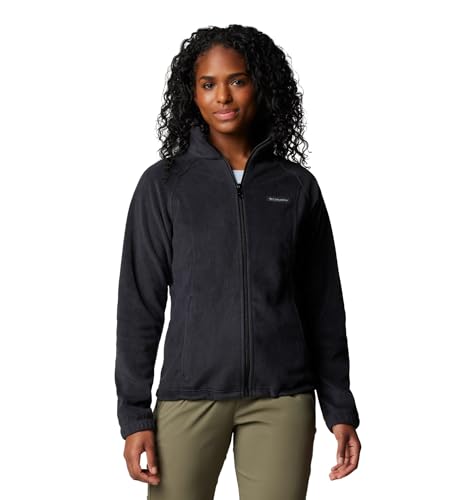
Columbia Women's Benton Springs Full Zip Fleece Jacket
Best for everyday hiking and camping on a budget
Columbia Women's Benton Springs Full Zip Fleece Jacket
Best for everyday hiking and camping on a budget
What we like
- MTR filament fleece is noticeably softer than standard polyester at this price point — doesn't feel like a budget buy.
- Classic relaxed fit accommodates layering over a base layer without feeling tight across the shoulders.
- Adjustable drawcord hem lets you seal out drafts when standing still at camp without bunching the fabric.
- Available in an unusually wide range of colors and sizes including extended plus sizing.
What we don't
- Heavier and less compressible than the Marmot at a similar price — not the move if pack space is tight.
- Classic fit can feel loose for slim builds who want a cleaner layer under a technical shell.
- Durability on the collar stitching is inconsistent across size runs based on customer reports.
For under $50 most of the year, the Benton Springs gets you a fleece that doesn't feel like a concession — the MTR filament construction is genuinely soft, and the relaxed cut means you can throw it on over whatever base layer you're already wearing without thinking about fit. It's an honest everyday hiking layer that earns its spot in the rotation.
This is for the hiker who wants a reliable cold-weather layer for car camping, casual hikes, and early-season use without spending close to a hundred dollars. If you're running hard technical routes or need something that layers invisibly under a shell, step up to the Marmot.
Columbia Women's Fast Trek II Full Zip Fleece Jacket
Best lightweight budget fleece for mild-weather hiking
Columbia Women's Fast Trek II Full Zip Fleece Jacket
Best lightweight budget fleece for mild-weather hiking
What we like
- 4-way comfort stretch means you're not fighting the fabric on scrambling sections or overhead reaches.
- Sleeve zip pocket secures small items like a key or ID without adding bulk to the hand pockets.
- Microfleece construction is lighter and dries faster than standard polar fleece — useful on multi-day trips where damp layers are a problem.
- Drawcord adjustable hem seals against wind without the bulk of a longer cut jacket.
What we don't
- Microfleece is noticeably less warm than midweight options — not enough on its own below 40°F without a shell.
- Slim fit on the sleeves can feel restrictive for hikers with muscular arms who prefer more freedom of movement.
- Color selection varies heavily by size — popular neutrals often sell out first.
This is the 'grab it before you leave' fleece — light enough to stuff in a bag at the last minute, warm enough to solve a 45°F situation at the trailhead when you didn't think you'd need it. The stretch fabric means you're not slowing down to peel it off the second you warm up, which is the real advantage over stiffer budget fleeces.
This one is for mild-weather hikers, spring and fall day trippers, and anyone who wants a layer they can throw over workout clothes without looking like they're gearing up for an expedition. For real cold-weather hiking or technical layering, spend up to the Marmot or Columbia Benton Springs.
What to Look For
Fleece weight is the first thing to nail down before buying. A 100-weight fleece is thin, breathable, and packs small — right for aerobic hiking where you'll heat up fast.
A 200-weight or midlayer fleece holds more heat and is better for cold camps or slow hikes in genuinely cold temps. Fit affects warmth more than most people realize.
A jacket that gaps at the waist or neck bleeds heat; look for a fitted cut with a stand collar that seals against wind. Raglan sleeves or underarm gussets give you the arm mobility you need without bunching under a shell.
Fabric construction separates trail fleece from couch fleece. Flatlock seams prevent hot spots under a pack; raised seams cause chafe within an hour.
Recycled polyester fleece is now standard at every price point and performs equally to virgin poly in all conditions.
Who Should Skip This
Skip this category entirely if you're going below 20°F and expect to stay active — a fleece-lined softshell or a synthetic insulated jacket will outperform any standalone fleece at those temps. Skip the budget options if you're running long ridge lines where wind is constant; spend up for the Patagonia or TNF and use a shell over it.
If you run hot on trail and mostly need something for camp, a vest will serve you better than any of these.
What the Community Actually Uses
On r/Ultralight, the Better Sweater gets cited constantly as the dividing line between casual hikers and people who've actually thought about their kit — not because it's the lightest option, but because it layers so cleanly under a hardshell without bunching. The sub generally advises sizing to your actual measurements rather than going up a size, which contradicts the common advice you'll see on r/CampingGear.
Quick Picks — In Case You've Already Decided
The North Face Women's Osito Full Zip Fleece Jacket
Check Price on AmazonFrequently Asked Questions
What weight fleece is best for hiking?
100-weight fleece is best for active hiking — it breathes well and won't overheat you on climbs. Go with 200-weight if you're mostly at camp or doing slow cold-weather hikes where you stop frequently.
Can I use a fleece jacket as my only outer layer?
In dry, calm conditions above 35°F, yes — a midweight fleece works fine on its own. Add wind or rain and you need a shell over it; fleece has no wind or water resistance on its own.
How do I keep my fleece from pilling?
Wash inside-out on a gentle cycle and skip the dryer — heat breaks down the polyester fibers faster than washing does. A mesh laundry bag adds extra protection during the wash cycle.
Is Patagonia Better Sweater worth the price?
For most hikers, yes — the fit, layering performance, and durability justify the cost over 3-5 seasons of use. If budget is tight, the Marmot Rocklin gets you 80% of the performance at half the price.
What's the difference between a fleece and a softshell jacket?
Fleece is warmer and more breathable but has no wind or water resistance. A softshell blocks wind and light precip but is less warm on its own. For cold hiking, pair both: fleece midlayer, softshell or hardshell over the top.
Buying Guide
You want a fleece that earns its spot in your pack — not one that sits at the bottom because it's too bulky or too cold to bother with. Focus on weight, warmth-to-bulk ratio, and whether you'll wear it as an outer layer or under a shell.
Fit matters most: too tight kills mobility, too baggy traps dead air.