No cell signal does not mean no way out — the right satellite communicator puts a 24/7 rescue coordination center one button-press away, anywhere on earth. Five options cover every budget from $150 to $400, with two-way messaging, GPS tracking, and SOS response times measured in minutes.
| Photo |
Top Pick

|
Versatile
|
Budget

|
Best Value

|
Best for Reliability

|
|---|---|---|---|---|---|
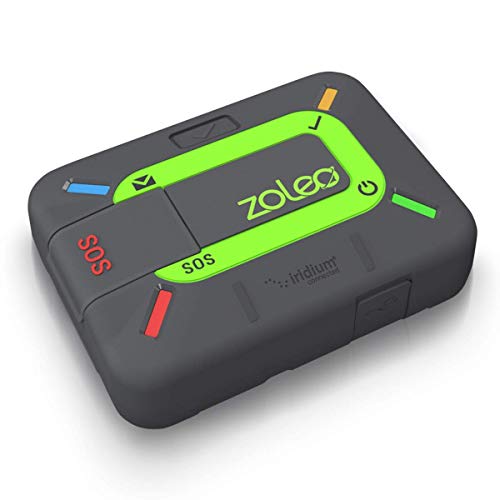
| Product | Garmin inReach Mini 2 Satellite Communicator | ZOLEO Satellite Communicator | SPOT Gen4 Satellite GPS Messenger | ACR Bivy Stick Satellite Communicator | Garmin inReach Messenger |
| Weight | 3.5 oz | 4.9 oz | 4.0 oz | 1.9 oz | 3.9 oz |
| Waterproof | IPX7 | IP68 | IP68 | IPX7 | IPX7 |
| Battery life | 14 days (10-min tracking) | 200+ hours | 7 days (AAA batteries) | 150+ hours | 28 days (10-min tracking) |
| Satellite network | Iridium (global) | Iridium (global) | Globalstar | Iridium (global) | Iridium (global) |
| Buy Now | Check Price → | Check Price → | Check Price → | Check Price → | Check Price → |
Quick Tips
Register your device and test-activate a non-emergency check-in before your first trip — SOS only works if your contact info is current.
Use 10-minute tracking mode on multi-day trips to extend battery life; switch to 2-minute intervals only when terrain gets technical.
Carry a USB battery bank — most satellite communicators charge via USB-C and a 10,000mAh pack adds days of emergency reserve.
Keep the device clipped to your pack's shoulder strap, not buried inside — you need one-hand SOS access if you're injured.
Garmin inReach Mini 2
Best for ultralight backpackers and solo expeditions
Garmin inReach Mini 2
Best for ultralight backpackers and solo expeditions
What we like
- Iridium satellite network delivers true pole-to-pole global coverage with no dead zones.
- At 3.5 oz it disappears in a hip belt pocket or clips to a strap without unbalancing a light pack.
- Two-way messaging lets you exchange real text with any phone number or email address, not just preset messages.
- MIL-STD-810 impact resistance and IPX7 water rating handle legitimate backcountry abuse.
What we don't
- Requires an active Garmin subscription starting around $15/month to use any features, including SOS.
- Tiny screen makes on-device typing painful — you really need your phone paired for comfortable messaging.
- Premium price puts it out of reach for occasional hikers who only need it a few times a year.
If you're heading somewhere that genuinely has no cell signal — deep wilderness, international hunting grounds, solo river crossings — this is the device that keeps you retrievable. The Iridium network means there is no coverage gap on earth, and two-way messaging means your rescue team can confirm they received your GPS coordinates and update you on ETA.
This is the right device for anyone doing solo backcountry work where a failed SOS acknowledgment is not acceptable. If you never leave cell range by more than a few miles, the subscription cost is hard to justify — consider the SPOT Gen4 instead.
ZOLEO Satellite Communicator
Best for overlanders and group trips who always have a phone
ZOLEO Satellite Communicator
Best for overlanders and group trips who always have a phone
What we like
- Plans start at $20/month — the lowest subscription cost of any Iridium-based communicator on this list.
- IP68 waterproof rating is more robust than IPX7, meaning it survives full submersion, not just rain and splashing.
- Supports texting any SMS number or email address directly, so contacts need nothing installed to receive your messages.
- 900-character message limit is the longest of any device here — enough to give real situation updates during an emergency.
What we don't
- Fully dependent on pairing with your smartphone app to compose or read messages — useless if your phone dies.
- No standalone navigation or mapping — it is a communicator only, not a GPS unit.
- The physical device has almost no on-device functionality beyond SOS and check-in without the app.
ZOLEO pairs Iridium's global network with the cheapest monthly plans in this category, making it the practical choice for the overlander who wants real safety coverage without a painful ongoing cost. It seamlessly switches between Wi-Fi, cell, and satellite so your messages always route through the cheapest available network — you only burn satellite credits when you're actually off-grid.
This is the pick for anyone who always has a charged phone available, wants the lowest subscription bill, and travels in a group where staying in satellite contact with base camp matters more than standalone navigation. If your phone dies in the field, step up to the inReach Mini 2.
SPOT Gen4 Satellite GPS Messenger
Best budget option for domestic hiking and car camping
SPOT Gen4 Satellite GPS Messenger
Best budget option for domestic hiking and car camping
What we like
- Lowest device price on this list by a wide margin, with subscription plans starting around $12/month.
- Runs on standard AAA batteries, so you can always find a field replacement even without a charging source.
- IP68 waterproofing is class-leading for the price and survives full submersion up to 2 meters.
- One-touch SOS and check-in buttons make it dead-simple to operate with gloves in cold weather.
What we don't
- Globalstar satellite network has coverage gaps outside North America, Europe, and Australia — not suitable for international expeditions.
- No two-way messaging — SOS is one-way and you cannot receive confirmation or updates from rescue services.
- Preset check-in messages only; cannot compose custom texts to contacts from the device.
The Gen4 is the entry point to satellite safety and it does the most important job — getting your GPS coordinates to emergency services — for less than any Iridium device. If your trips stay in North America and you mostly want peace of mind rather than routine daily messaging, the math on device cost plus subscription is genuinely hard to beat.
Choose this if you're budget-limited and hiking domestic trails where Globalstar has solid coverage. Skip it if you travel internationally, want to text home from camp, or need confirmation that your SOS was received — the one-way limitation is a real constraint in a genuine emergency.
ACR Bivy Stick Satellite Communicator
Best for hikers who want offline maps plus two-way messaging
ACR Bivy Stick Satellite Communicator
Best for hikers who want offline maps plus two-way messaging
What we like
- Lightest device on this list at 1.9 oz — noticeable when counting grams on long backpacking trips.
- Bivy app includes 50,000+ curated trails with offline maps, adding real navigation value beyond just communications.
- SOS monitoring is handled by Global Rescue, which includes extraction coordination, not just message relay.
- Annual plans drop to $14.99/month, making Iridium global coverage accessible at a price point near the ZOLEO.
What we don't
- Fully app-dependent like the ZOLEO — no on-device messaging without your smartphone paired.
- Smaller user base means less community troubleshooting help compared to Garmin's ecosystem.
- No on-device navigation display — maps and messaging require your phone screen.
The Bivy Stick punches well above its price on weight and network — you get Iridium global coverage and Global Rescue SOS monitoring in a 1.9 oz device at a subscription cost that undercuts Garmin. The offline maps built into the Bivy app make it a genuine navigation tool, not just a safety device, which matters on trips where you're moving through unmapped terrain.
This is the pick for fastpacking and ultralight backpackers who want the lightest possible safety device with real two-way messaging. It's not the right call if your phone battery is unreliable or if you want standalone on-device operation without a paired phone.
Garmin inReach Messenger
Best for frequent messaging and group coordination
Garmin inReach Messenger
Best for frequent messaging and group coordination
What we like
- 28-day battery life in 10-minute tracking mode is the longest of any device on this list.
- Supports group messaging through the Garmin Messenger app — coordinate with multiple contacts in a single thread.
- Seamlessly switches between satellite and cellular to route messages cheaply and fast when you're in range.
- Compact and rugged with MIL-STD-810 impact resistance for genuine field durability.
What we don't
- At $249+ it is more expensive than the inReach Mini 2 MSRP — pricing can vary; check current listings.
- Full messaging capability requires the Garmin Messenger smartphone app, though basic SOS and check-in work standalone.
- No built-in screen for reading incoming messages on-device without a paired phone.
The inReach Messenger is built for people who actually use their satellite communicator to communicate — not just as an SOS insurance policy. The 28-day battery and group messaging make it the best choice for multi-person expeditions where daily satellite check-ins with different team members or base camp are part of the itinerary.
Pick this over the Mini 2 if battery longevity and group coordination matter more than raw weight savings. If you're a solo hiker who just wants the lightest Iridium device for emergencies, the Mini 2 is a more focused tool for less money.
What to Look For
Satellite network coverage is the single most important spec — Iridium covers every point on earth, Globalstar has gaps in polar regions and parts of the Southern Hemisphere. If you travel remote internationally, Iridium-based devices are the only safe choice.
Two-way messaging separates communicators from simple PLBs — you can confirm the rescue team received your coordinates and update them as conditions change. One-way SOS beacons are cheaper but cannot receive confirmation, which creates dangerous uncertainty during a real emergency.
Subscription plans vary widely and can cost more than the device over time — compare monthly vs annual rates and whether you can suspend the plan between seasons. Some plans include unlimited SOS and check-ins but charge per satellite message, which matters if your group does daily contact.
Who Should Skip This
If you stay on maintained trails within a few miles of a trailhead, a satellite communicator is probably more device than your risk profile requires — a personal locator beacon (PLB) is cheaper, requires no subscription, and triggers the same 911-level response. Day hikers in well-traveled parks, car campers, and casual overlanders who rarely leave cell coverage zones will find the monthly subscription cost hard to justify.
What the Community Actually Uses
On r/overlanding, the inReach Mini 2 vs ZOLEO debate runs in nearly every 'comms' thread. The consensus is that inReach wins for standalone usability on longer expeditions, while ZOLEO gets the nod for overlanders who always have a phone handy and want the lowest subscription cost.
Several experienced members note that any device is better than no device — the real mistake is leaving camp without one.
Quick Picks — In Case You've Already Decided
Frequently Asked Questions
Do satellite communicators work everywhere on earth?
Iridium-based devices (Garmin inReach, ZOLEO, ACR Bivy Stick) work at every point on earth including poles. Globalstar-based devices like the SPOT Gen4 have coverage gaps in polar regions and parts of South America and Africa — check the coverage map before traveling internationally.
Do I need a subscription to use SOS?
Yes, every device on this list requires an active paid subscription for SOS and messaging. However, SOS-only PLBs (personal locator beacons) work without any subscription and trigger the same international rescue response — they just cannot send or receive two-way messages.
Can I text a regular phone number from a satellite communicator?
ZOLEO, ACR Bivy Stick, and Garmin inReach Messenger all support texting standard phone numbers and email addresses. The SPOT Gen4 supports preset messages and check-ins but has more limited two-way texting to arbitrary contacts.
How long does satellite SOS rescue actually take?
Response time depends on your location and local SAR resources — the monitoring centers are staffed 24/7 and typically acknowledge within minutes, but physical rescue can take hours in remote terrain. The two-way messaging feature lets you communicate with the response center while you wait.
Can I share my live GPS location with family while on a trip?
Yes — all five devices on this list support location sharing via a web link your contacts can view in a browser without any app. Update intervals vary from 2 to 30 minutes depending on your plan and battery mode.
Buying Guide
You need a device with true global satellite coverage, not regional. Check whether it uses Iridium — the only network with pole-to-pole reach.
Two-way messaging matters more than one-way for trip check-ins. SOS monitoring should be staffed 24/7.
Battery life over ten days is the real-world minimum for week-long backcountry trips.