A cheap GPS cycling computer doesn't mean a compromised one — the right sub-$100 units track accurately, sync to Strava, and last a full day on a charge. Five options here range from $25 to $130, with the top pick running 12 hours of GPS on a single charge at under 33 grams.
| Photo |
Top Pick
|
Versatile

|
Budget

|
Best Value
|
Best for Reliability
|
|---|---|---|---|---|---|
| Product | Garmin Edge 130 Plus GPS Cycling Computer | iGPSPORT BSC100S GPS Bike Computer | XOSS G+ Gen2 GPS Bike Computer | Bryton Rider 15 Neo GPS Cycling Computer | COOSPO BC107 GPS Bike Computer |
| Weight | 33g | 67g | 45g | 52g | 58g |
| Waterproof | IPX7 | IPX7 | IPX7 | IPX7 | IPX7 |
| Battery life | 12 hours GPS | 40 hours GPS | 28 hours GPS | 16 hours GPS | 25 hours GPS |
| Sensor support | ANT+ & Bluetooth | ANT+ & Bluetooth 5.0 | ANT+ & Bluetooth | Bluetooth BLE | Bluetooth only |
| Buy Now | Check Price → | Check Price → | Check Price → | Check Price → | Check Price → |
Quick Tips
Pair your new computer with the brand's app before your first ride — most units need the app to unlock Strava sync and customize data screens.Mount position matters more than you think: an out-front stem mount keeps the screen readable without moving your eyes far off the road.If GPS lock is slow on the first ride, stand still outdoors for 60 seconds after powering on — the unit is downloading satellite almanac data.Set your auto-pause threshold before a ride, not after — most cheap GPS computers apply it globally and can't be adjusted per-activity post hoc.
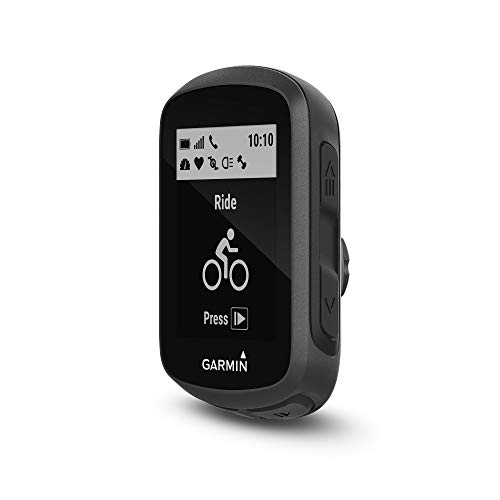
Garmin Edge 130 Plus GPS Cycling Computer
Best for serious cyclists who want Garmin reliability without Garmin pricing
Garmin Edge 130 Plus GPS Cycling Computer
Best for serious cyclists who want Garmin reliability without Garmin pricing
What we like
- Multi-satellite tracking (GPS, GLONASS, Galileo) delivers reliable lock even in tree cover and urban canyons.
- ClimbPro feature shows remaining ascent and grade in real time when following a loaded route.
- Syncs structured workouts directly from TrainingPeaks and TrainerRoad — not just Strava.
- Incident detection sends your real-time location to emergency contacts when paired with a phone.
What we don't
- No color screen or touchscreen — data is black-and-white and button-only.
- No preloaded maps — breadcrumb navigation only, which means you need to know your route.
- Sits at the top of the budget range and sometimes pushes past $130 at retail.
You get Garmin's actual GPS engine and sensor ecosystem here — the same multi-satellite system that powers their $300+ units, squeezed into a 33g device that lasts a full 12 hours on a charge. This is the pick for the rider who wants data they can actually train from: VO2 max estimates, structured workout sync, and ClimbPro pacing on big days in the hills.
Buy this if you ride with a heart rate monitor or cadence sensor and want everything in one place without paying Garmin's flagship prices. Skip it if all you want is speed and distance — three of the other picks do that for $60 less.
iGPSPORT BSC100S GPS Bike Computer
Best for riders who want 40-hour battery life and full sensor support under $60
iGPSPORT BSC100S GPS Bike Computer
Best for riders who want 40-hour battery life and full sensor support under $60
What we like
- 40-hour claimed battery life is the longest on this list — real-world multi-day touring riders confirm 30+ hours regularly.
- Five-satellite positioning (GPS + BeiDou + GLONASS + Galileo + QZSS) is as accurate as units costing three times as much.
- ANT+ and Bluetooth 5.0 dual-protocol means it pairs with virtually any speed, cadence, or heart rate sensor on the market.
- 2.6-inch anti-glare screen is easy to read in direct sunlight without squinting.
What we don't
- At 67g it's heavier than budget-tier competitors — noticeable on a lightweight road or gravel build.
- App UI is functional but less polished than Garmin Connect — Strava sync requires an extra step through the iGPSPORT app.
- No breadcrumb navigation — purely a data display unit with no route following.
The BSC100S is the unit for riders who do long days and don't want to think about battery anxiety — 40 hours of GPS runtime means a weekend bikepacking trip with one charge if you're diligent about auto-sleep. Sensor support via both ANT+ and Bluetooth 5.0 puts it ahead of most units at this price, and the 5-satellite GNSS system holds signal better than you'd expect under tree cover.
This is the right call for commuters, touring cyclists, and anyone who does rides over 4 hours regularly and doesn't want to babysit a battery. If you ride short and just want the lightest possible computer, the XOSS below is a better fit.
XOSS G+ Gen2 GPS Bike Computer
Best lightweight GPS option for road cyclists on a strict budget
XOSS G+ Gen2 GPS Bike Computer
Best lightweight GPS option for road cyclists on a strict budget
What we like
- Under 45g makes it one of the lightest GPS units at any price — barely noticeable on road or gravel bars.
- ANT+ support means it pairs with cadence and heart rate sensors, including third-party brands.
- 28-hour battery life is more than enough for any single-day event, gran fondo, or back-to-back training days.
- USB-C charging means no proprietary cable — one less thing to pack or lose.
What we don't
- 2.2-inch screen is the smallest on this list — readable but requires a glance, not a skim.
- GPS lock can be slow on the first outdoor use — standing still outdoors for 60 seconds resolves it.
- No sensor-free indoor training mode — GPS-off indoor use is limited without a paired cadence sensor.
The G+ Gen2 is what you buy when weight and cost are both constraints — it hits under 45g, supports ANT+ sensors, and costs around $35 most days. The 2.2-inch screen is the trade-off you make for that weight, and it's genuinely readable on the bike at normal riding speed.
This is the pick for road cyclists who want Strava-syncing GPS without the Garmin tax and ride routes they already know. If you need a bigger screen or longer battery for touring, step up to the iGPSPORT BSC100S instead.
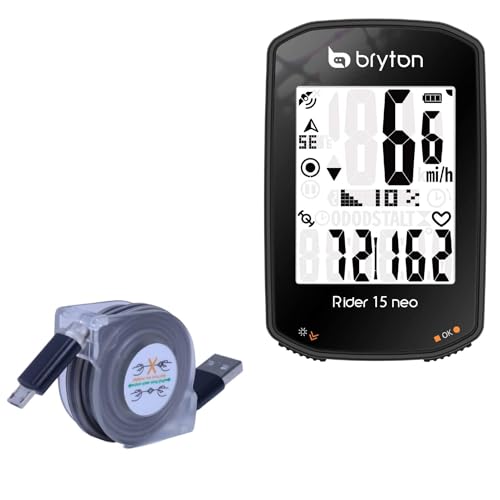
Bryton Rider 15 Neo GPS Cycling Computer
Best for beginners who want zero-setup GPS out of the box
Bryton Rider 15 Neo GPS Cycling Computer
Best for beginners who want zero-setup GPS out of the box
What we like
- Truly plug-and-ride — no wheel size input, no sensor pairing required before your first ride.
- Orientation mode shows compass heading alongside ride data, useful for riders unfamiliar with a route's general direction.
- Three large physical buttons are easy to operate with gloves — meaningful for cold-weather or MTB riders.
- Strava auto-sync through the Bryton Active app works reliably once set up initially.
What we don't
- Bluetooth BLE only — no ANT+ means it won't pair with ANT+-only sensors like older Garmin speed sensors.
- 16-hour battery is adequate but trails the iGPSPORT and XOSS options noticeably.
- 2-inch screen is compact and high-contrast but shows fewer data fields at once than larger displays.
The Rider 15 Neo's real strength is how fast you go from box to riding — there's no wheel size configuration, no speed sensor to pair, no profile to set up. Mount it, power it on, and it starts tracking your GPS ride immediately.
This is the right pick for newer cyclists, kids, or anyone buying their first GPS computer who wants to skip the setup friction entirely. If you already own ANT+ sensors from another device or brand, the G+ Gen2 or iGPSPORT will integrate more cleanly.
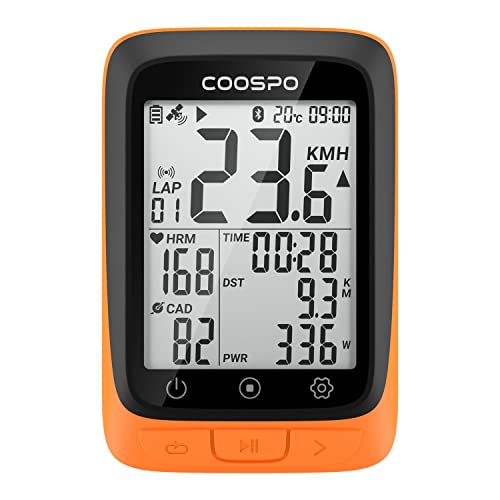
COOSPO BC26 GPS Bike Computer
Best stripped-down GPS tracker for commuters who just need Strava data
COOSPO BC26 GPS Bike Computer
Best stripped-down GPS tracker for commuters who just need Strava data
What we like
- 25-hour GPS battery is excellent for the price — outlasts most commuters' weekly ride total.
- Sunlight-readable FSTN screen doesn't wash out in direct sun the way backlit TFT displays do.
- Strava sync via .fit file through the CoospoRide app works reliably on both iOS and Android.
- Minimalist three-button interface means nothing to accidentally misconfigure mid-ride.
What we don't
- No ANT+ and no sensor pairing of any kind — this is a pure GPS tracker, nothing more.
- No cadence, heart rate, or power data — speed, distance, altitude, and time only.
- Extension mount not included in the package — you'll need to buy a stem mount separately.
The BC26 does one thing: records your GPS ride and syncs it to Strava. That's the whole product, and it does it reliably for around $30.
If your only ask is ride tracking without carrying your phone, this is the cleanest answer — no sensor pairing to configure, no app complexity, just power on and go. Buy this if you commute the same routes daily and just want mileage and Strava records without spending real money.
Anyone who wants cadence data, heart rate, or sensor support needs to step up to the XOSS or iGPSPORT instead.
What to Look For
Battery life is the spec that actually limits how useful a cheap GPS computer is on long rides. Units with under 15 hours of GPS runtime will leave you battery-anxious on anything over 4 hours, and most manufacturers inflate claims by 20–30% under real conditions.
Screen readability in sunlight separates usable from frustrating — FSTN and transflective LCD panels hold up well; backlit TFT screens wash out completely on sunny days. If you ride in direct sun, check that the screen type is specifically listed as sunlight-readable before buying.
ANT+ sensor compatibility is the divide between basic trackers and actual training tools. If you ever plan to add a cadence sensor, heart rate monitor, or power meter, confirm ANT+ support — Bluetooth-only units won't pair with most standalone sensors.
Who Should Skip This
If you need turn-by-turn navigation with full maps loaded on the device, none of these will replace a Garmin Edge 540 or Wahoo Elemnt Bolt. Riders doing unfamiliar multi-day routes or bikepacking trips that require on-device navigation should budget $200+ for a unit with preloaded maps.
These picks are built for riders who know their routes and want data, not guidance.
What the Community Actually Uses
On r/cycling and r/bikecommuting, the recurring advice is to skip the cheapest no-name units and spend just a little more for a known brand with actual firmware support. iGPSPORT and XOSS come up constantly as the sweet spot — more reliable than white-label units, a fraction of Garmin pricing — with users reporting multi-year reliability from both brands.
Quick Picks — In Case You've Already Decided
Frequently Asked Questions
Do cheap GPS cycling computers sync with Strava?
Yes — most mid-range options sync via the brand's companion app over Bluetooth, which then pushes .fit files to Strava automatically. A few budget units require a manual USB upload to a PC instead. Check the listing description specifically for 'Strava sync' before buying.
What's the difference between GPS-only and ANT+ computers?
GPS tracks your location, speed, and distance — ANT+ lets the unit connect wirelessly to external sensors like a cadence sensor, heart rate monitor, or power meter. If you only want ride stats, GPS-only is fine. If you train with sensors, you need ANT+ support.
Can I use a cheap GPS computer for mountain biking?
Yes, with caveats. Most units on this list are IPX7 waterproof and handle trail riding fine. None offer turn-by-turn trail navigation, so you'll need to know the route. Vibration resistance is generally solid across all five picks.
How accurate is GPS tracking on budget cycling computers?
Units using multi-system GNSS (GPS + GLONASS + Galileo + BeiDou) are more accurate than single-system GPS, especially in tree cover or urban canyons. The iGPSPORT BSC100S uses 5-satellite positioning and performs comparably to Garmin units in most real-world riding conditions.
Are cheap cycling computers worth it or should I just use my phone?
A dedicated computer beats a phone for battery life, screen visibility in sunlight, and handlebar readability at speed. Phones overheat on long rides in direct sun and drain fast with GPS active. A $40–$60 GPS computer will outlast your phone on any ride over 3 hours.
Buying Guide
You need GPS, Strava sync, and enough battery to finish your ride — everything else is a bonus. Look for IPX7 waterproofing, ANT+ sensor support if you run a cadence or HR monitor, and a screen you can actually read in direct sun.
Don't pay for navigation you won't use.