A chimney stove changes the math completely: it heats your tent, cooks your food, and runs on whatever wood you can find. The five options below range from a 5.7-pound titanium backpacking unit to a 20-pound stainless workhorse trusted for seasons of below-zero deer camp.
| Photo |
Top Pick
|
Versatile

|
Budget

|
Best Value

|
Best for Reliability
|
|---|---|---|---|---|---|
| Product | Winnerwell Nomad Medium Tent Stove | OneTigris Tiger Roar Tent Stove | POMOLY Ti 0.6 Titanium Tent Stove | POMOLY Dweller Stainless Steel Tent Stove | Guide Gear Outdoor Wood Burning Stove |
| Weight | 20 lbs | 20 lbs | 5.73 lbs | 22 lbs | 42 lbs |
| Firebox | 800 cu in | 878 cu in | Compact fold-flat | Large bottom-feed | 11x17x8 in |
| Material | 304 Stainless | 304 Stainless | Titanium | 304 Stainless | Galvanized Steel |
| Chimney dia | 2.5 in | 2.36 in | Collapsible 9.84 ft | 2.76 in | 3.375 in |
| Buy Now | Check Price → | Check Price → | Check Price → | Check Price → | Check Price → |
Quick Tips
Do your first burn outside the tent — every new stove off-gasses oils and finish that will smoke up an enclosed space badly on burn one.
Run the chimney height at least 6 feet for proper draft; short chimneys produce backdraft and push smoke into your shelter.
Use a CO detector inside any hot tent — no exceptions, even with vents open and a quality stove.
Only burn dry, seasoned hardwood: green or wet wood produces creosote buildup in the chimney that can ignite.
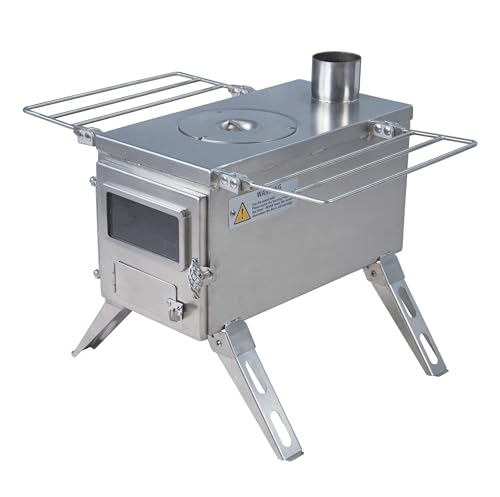
Winnerwell Nomad Medium Tent Stove
Best for canvas tent basecamp setups that need dependable heat all night
Winnerwell Nomad Medium Tent Stove
Best for canvas tent basecamp setups that need dependable heat all night
What we like
- Chimney pipes and all accessories stow completely inside the stove body for a clean, self-contained carry.
- 304 stainless construction resists corrosion and patinas beautifully after seasoning — it gets better with use.
- Dual dampers give you precise control over burn rate, making overnight temperature management straightforward.
- Side shelves double as carry handles and fold out flat to hold a pot or kettle while the stove runs.
What we don't
- At 20 lbs it is strictly a drive-in stove — no one is hiking this into a backcountry camp.
- The 800 cubic inch firebox is sized for a medium canvas tent; it will underperform in a large wall tent without a size upgrade.
- No glass viewing window on the standard Nomad Medium — you get fire control without the ambiance.
If you have a hot tent and a vehicle to drive it in, the Nomad Medium is the stove that sets the standard — it heats a medium canvas tent reliably, cooks on top, and packs flat enough to stop thinking about storage between trips. Everything about the design is intentional: the legs fold under, the pipes stow inside, and the side shelves clip down so the whole unit becomes a self-contained brick you throw in the truck bed.
This is the stove for hunters, overlanders, and basecamp campers who spend multiple nights in one spot and want a system that works every single time. If you need something you can hike in or you are trying to heat a wall tent bigger than about 100 square feet, step up to the Nomad Large.
OneTigris Tiger Roar Tent Stove
Best for overlanders who want a proven stove with a full accessory kit included
OneTigris Tiger Roar Tent Stove
Best for overlanders who want a proven stove with a full accessory kit included
What we like
- Includes 7 pipe sections plus 4 elbow pieces and a replacement glass window — a complete out-of-box kit with nothing left to buy.
- German Schott ROBAX glass-ceramic window is crack-resistant at extreme temperatures, unlike cheaper borosilicate alternatives.
- The split air intake valve sends airflow both up and down simultaneously, producing a more complete burn with less wasted fuel.
- 878 cubic inch firebox is slightly larger than the Winnerwell Nomad Medium at a lower price point.
What we don't
- Chimney pipe is 2.36-inch diameter, which may not match hot tents designed for 2.5-inch jacks without an adapter.
- Heavier elbow pipe kit adds bulk when stowed — the pack volume is larger than the Nomad at a similar weight.
- Build finish quality is slightly behind Winnerwell at a higher scrutiny level, with visible machine marks on some units.
The Tiger Roar undercuts most name-brand chimney stoves on price while arriving with a more complete accessory kit than competitors — you get elbow pipes, gloves, and a backup glass window in the box, which is not standard at this price. The 878 cubic inch firebox heats a medium hot tent efficiently, and the dual-direction air intake makes fire management noticeably more forgiving than single-vent designs.
Choose this over the Winnerwell if you want more firebox volume at a lower price and you are pairing it with an OneTigris tent like the Rock Fortress or Northgaze where the pipe diameter already matches. Skip it if your tent jack is sized for 2.5-inch pipe and you do not want to source an adapter.
POMOLY Ti 0.6 Titanium Tent Stove
Best for backpackers who want real heat in a cold-weather hot tent without the weight penalty
POMOLY Ti 0.6 Titanium Tent Stove
Best for backpackers who want real heat in a cold-weather hot tent without the weight penalty
What we like
- At 5.73 lbs total with accessories, it is the lightest fully functional chimney tent stove in this roundup by a wide margin.
- Both the stove body and chimney pipe are collapsible — it packs flat and disappears into a pack without a dedicated bag.
- Dual glass side windows give you fire visibility from both sides, which matters when you are monitoring a fire overnight.
- Titanium construction handles repeated high-heat burn cycles without the rust and corrosion risk of steel in wet conditions.
What we don't
- Titanium at 0.6mm is thin and will deform visibly after repeated burns — POMOLY states this is normal and does not affect function, but it bothers some buyers.
- Smaller firebox means shorter burn times per load compared to 800+ cubic inch stainless stoves.
- Price per pound is significantly higher than stainless options — you are paying a weight premium, not a durability premium.
This stove exists for one specific person: the backpacker or bikepacker using a lightweight hot tent who refuses to freeze on a cold-weather trip but cannot carry 20 lbs of steel. At 5.73 lbs with chimney included, it is genuinely packable in a way the stainless stoves are not — and the collapsible titanium pipe means no rattling bundle of separate sections to manage.
Expect it to heat a small solo or two-person hot tent adequately in temperatures down to the teens. If you need all-night heat in a larger shelter or you are doing basecamp-style camping where weight is irrelevant, spend less on the stainless Winnerwell and use the savings on firewood.
POMOLY Dweller Stainless Steel Tent Stove
Best for hot tent campers who want a panoramic glass front and efficient bottom-feed burn
POMOLY Dweller Stainless Steel Tent Stove
Best for hot tent campers who want a panoramic glass front and efficient bottom-feed burn
What we like
- Bottom air curtain intake design allows every piece of wood in the firebox to burn more completely than side-vent alternatives.
- Large refractory glass front window creates genuine fireplace ambiance inside the tent — not just a heat source.
- 3mm stainless steel cooktop is thick enough to stay flat under high heat, giving you a reliable cooking surface that will not warp.
- Drawer-style ash collection box makes cleanup between burns faster than stoves that require scraping ashes out manually.
What we don't
- 2.76-inch chimney diameter is larger than most standard hot tent jacks — verify your tent's stove jack size before ordering.
- At 22 lbs it is heavier than the Winnerwell Nomad Medium for a similar size footprint.
- POMOLY customer support access can require patience — resolution times are slower than US-based brands.
The Dweller is the stove you buy when the fire itself is part of the experience — the panoramic glass front turns your tent into something that actually feels like a cabin, and the bottom-feed air curtain produces a cleaner, more complete burn than most chimney stoves at this price. For two to four people spending a week in a canvas or tipi hot tent, this is a serious option at a serious value.
The 2.76-inch chimney diameter is the one genuine watch-out: most hot tents are designed for smaller pipe, and you will need to confirm compatibility before your trip, not after. If your tent matches, this stove punches above its price point on ambiance and burn efficiency.
Guide Gear Outdoor Wood Burning Stove
Best for backyard, wall tent, and car camping setups where weight is completely irrelevant
Guide Gear Outdoor Wood Burning Stove
Best for backyard, wall tent, and car camping setups where weight is completely irrelevant
What we like
- Hard to beat on price for a full chimney stove kit with five interlocking pipes that form a 6.45-foot chimney — everything included.
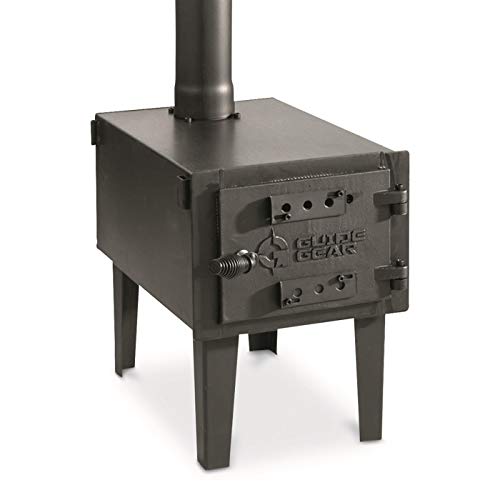
- Cast iron front door with adjustable air vent handles hard use season after season without the failure points of thin stainless.
- Large flat cooktop keeps coffee, sauce pots, and cast iron pans hot simultaneously during a multi-person basecamp morning.
- Legs detach and all pipes nest inside the firebox — it packs into itself for truck transport without any loose pieces.
What we don't
- At 42 lbs it is one of the heaviest stoves in this category — this is not leaving the truck.
- 3.375-inch chimney pipe diameter will not fit any standard hot tent stove jack without a custom adapter.
- Galvanized steel rusts faster than stainless under repeated wet-weather use — needs drying and light oiling between seasons.
At under $130 for a complete chimney stove kit, the Guide Gear undercuts everything else on this list by a wide margin — and for the right use case, it delivers exactly what it promises. Set it up outside a canvas wall tent or as a standalone outdoor cooking station, run the 6.45-foot chimney, and you have more cooking surface and heat output than most people will ever need at basecamp.
This is the stove for people who cook for a large group, have a fixed basecamp they return to every season, and need a chimney stove that costs less than a tank of gas. It is not a hot tent stove in the traditional sense — the 3.375-inch pipe will not mate to a standard stove jack — but as an outdoor or open-shelter heating and cooking unit, nothing at this price comes close.
What to Look For
Weight and pack size determine whether you carry a chimney stove in or drive it in. Lightweight titanium options like the POMOLY Ti 0.6 hit under 6 lbs; stainless steel stoves like the Winnerwell Nomad run 20 lbs and need a vehicle.
Firebox volume sets how long one load burns and how big a tent you can heat. A 800-900 cubic inch firebox heats a medium canvas tent comfortably; bigger canvas wall tents or yurts need a large model or a stove designed for the volume.
Chimney pipe diameter must match your tent's stove jack. Most hot tents use a 2.36-inch or 2.5-inch jack — verify before you buy because an inch of mismatch means fabricating your own adapter in the field.
Who Should Skip This
A chimney wood stove is wrong for you if you are hiking more than 2-3 miles to camp with a full pack and you want heat, not just cooking. Even the lightest titanium option adds meaningful system weight when you factor in the pipe sections.
Ultralight backpackers who just need a cooking source are better served by a canister stove and a sleeping bag rated for the expected low. And anyone without access to dry seasoned wood at their site — think high desert or alpine timberline camps — should skip a wood burner entirely.
What the Community Actually Uses
On r/CampingGear and r/overlanding, the recurring debate is stainless vs titanium chimney stoves — and the consensus keeps landing in the same place: stainless for basecamp and canvas wall tent setups where weight is not a factor, titanium for any trip that involves a pack or a smaller hot tent. The Winnerwell Nomad and OneTigris Tiger Roar come up most often in car camping and hunt camp threads, while POMOLY titanium models dominate the ultralight and bikepacking cold-weather conversations.
Quick Picks — In Case You've Already Decided
Frequently Asked Questions
Can I use a chimney stove inside a tent?
Yes, but only in a tent specifically designed with a stove jack — a reinforced, heat-resistant port where the chimney exits the tent wall or roof. Never run a chimney stove in a standard camping tent not designed for it. Always use a CO detector inside and maintain ventilation.
What diameter chimney pipe do most hot tents use?
Most canvas hot tents and tipi-style hot tents use a stove jack sized for 2.36-inch or 2.5-inch chimney pipe. Check your tent's spec sheet before ordering a stove. Some tents include a universal adjustable jack that covers both sizes.
How long will one load of wood burn in a chimney tent stove?
With dry hardwood and the damper partly closed, most stainless steel chimney stoves give you 3-5 hours per load. Overnight heating means getting up once to reload. Titanium stoves run a shorter burn time due to their smaller fireboxes.
Is titanium or stainless steel better for a chimney stove?
Titanium wins on weight — often under 6 lbs versus 20 lbs for stainless — making it the right call for backpacking and ultralight hot tent setups. Stainless is heavier but holds up better over years of hard use and is easier to repair if a leg or shelf bends.
Do I need a spark arrestor on a chimney stove?
Yes, always. A spark arrestor on the top of the chimney catches burning embers before they exit and land on your tent fabric or dry ground around the shelter. Most quality stoves include one, but verify before your first burn.
Buying Guide
A chimney stove needs to match your shelter setup before anything else. Measure your tent's stove jack diameter before ordering — most stoves run 2.36 to 2.5 inches, but mismatches happen.
You also need dry, seasoned wood: wet wood chokes the draw and fills your tent with smoke instead of heat.