The right car camping sleeping pad turns a rough night into a non-issue, and the wrong one means you're home a day early. Five options here range from $60 to $250 and cover every sleep style, from solo side-sleepers to couples who need queen-sized room.
| Photo |
Top Pick

|
Versatile

|
Budget

|
Best Value
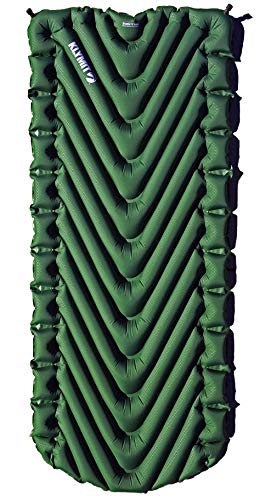
|
Best for Reliability

|
|---|---|---|---|---|---|
| Product | Therm-a-Rest MondoKing 3D Sleeping Pad | NEMO Equipment Roamer Self-Inflating Sleeping Pad | Exped MegaMat 10 Self-Inflating Sleeping Pad | Klymit Static V Luxe Sleeping Pad | Hikenture 4-Inch Self-Inflating Sleeping Pad |
| Weight | 5.5 lbs | 4.4 lbs | 4.56 lbs | 26.5 oz | 4.2 lbs |
| R value | 7.0 | 5.5 | 10.0 | 1.3 | 9.5 |
| Thickness | 4.25 inches | 4 inches | 4 inches | 3 inches | 4 inches |
| Packed size | 26 x 10.3 inches | 11 x 24 inches | 10 x 30 inches | 9 x 5.5 inches | 12 x 28 inches |
| Buy Now | Check Price → | Check Price → | Check Price → | Check Price → | Check Price → |
Quick Tips
Leave self-inflating pads fully open for at least 15 minutes before topping off with breath — the foam core needs time to expand fully or you will underinflate.
For cold-ground camping (below 40F), aim for an R-value of 5 or higher — most car campers underestimate ground-cold and wake up cold from the bottom, not the air.
Store self-inflating pads rolled loosely or flat, never compressed — crushing the foam core long-term reduces loft and warmth permanently.
Use a pump sack instead of blowing air directly into your pad — breath moisture trapped inside accelerates foam degradation and creates mold over seasons of use.
Therm-a-Rest MondoKing 3D Self-Inflating Camping Sleeping Pad
Best for serious comfort seekers who car camp year-round
Therm-a-Rest MondoKing 3D Self-Inflating Camping Sleeping Pad
Best for serious comfort seekers who car camp year-round
What we like
- R-value of 7.0 handles genuine cold-ground camping in near-freezing temps without extra layers beneath you.
- TwinLock dual-valve system inflates faster and deflates more completely than single-valve competitors.
- 3D vertical sidewalls create edge-to-edge usable sleep surface — no rolling off the comfort zone at 2am.
- Two pads connect side by side with the Couple Kit for a queen-sized setup at basecamp or in a tent.
What we don't
- At 5.5 lbs and rolling to 26 inches, it takes real trunk space — not a problem for car camping but worth knowing.
- The premium price is hard to justify for occasional summer-only campers who could get away with far less.
- Self-inflation takes 15 to 20 minutes for the foam core to fully expand before topping off.
If you wake up stiff every camping trip and you're done blaming your sleeping bag, this is the pad that fixes it. The 4.25-inch foam core and 7.0 R-value mean you stop feeling the ground entirely — cold or rocky — and the TwinLock valve makes setup and breakdown faster than any other self-inflating pad in this size class.
This is built for campers who car camp more than a few times a year and want the same rest they get at home. If you camp twice a summer, the Klymit below gets you 80% of this for half the price.
NEMO Equipment Roamer Self-Inflating Sleeping Pad
Best for campers who want bed-like comfort in a smarter package
NEMO Equipment Roamer Self-Inflating Sleeping Pad
Best for campers who want bed-like comfort in a smarter package
What we like
- Flow Core internal channels inflate and deflate faster than traditional foam pads — no waiting around at camp setup.
- Laylow micro-adjustable valve lets you fine-tune firmness in seconds after the initial self-inflation.
- Single and Single Wide sizes include link toggles so two pads connect for couples without slipping apart overnight.
- Stretch polyester top fabric feels noticeably softer than the nylon surfaces most competing pads use.
What we don't
- R-value of 5.5 is solid for three seasons but not the right call for winter camping or high-elevation cold-ground nights.
- Flow Core deflation requires a full open dump valve press and roll — skipping steps leaves air trapped inside.
- Single wide at 30 inches is the sweet spot but adds cost; the standard 25-inch single feels narrow for larger frames.
You get four inches of foam and a valve system smart enough to inflate and fine-tune itself faster than any other pad here. The Roamer earns its spot because it combines legitimate comfort — not just thickness — with a setup process that doesn't feel like a chore after a long drive to the site.
This is the pick for campers who prioritize a quality sleep experience but find the MondoKing's bulk or price hard to justify. Skip it if winter camping is on your calendar — the 5.5 R-value isn't enough for frozen ground.
Exped MegaMat 10 Self-Inflating Sleeping Pad
Best for two people sharing a tent who both need real sleep
Exped MegaMat 10 Self-Inflating Sleeping Pad
Best for two people sharing a tent who both need real sleep
What we like
- R-value of 10.0 is the highest in this roundup and handles genuinely cold ground without a secondary insulation layer.
- 3D construction with vertical sidewalls gives you the full sleep surface edge to edge with no dead zone at the border.
- Semi-self-inflating design with included mini pump tops off firmness quickly without the effort of a pump sack.
- Stretch tricot polyester top is softer and quieter than most competitors — no crinkling sound when you roll over.
What we don't
- Rolls to 10 x 30 inches packed — bulkier than the NEMO or MondoKing and needs dedicated storage space in your vehicle.
- The semi-self-inflate requires the mini pump to reach full firmness, which is one more piece of gear to keep track of.
- At R-10, this is overkill for summer-only campers who will never sleep on cold enough ground to need it.
The MegaMat earns its place in this list because of the R-value — 10.0 is rare in a self-inflating foam pad and means this thing handles cold ground that would make other pads feel thin. If you camp in fall or at altitude, this removes the ground-cold variable entirely.
The Duo version of this pad is the right answer for two people who want to stop compromising on sleep — it expands to a true queen surface. Solo campers who only camp in warm weather should look at the Klymit below instead and keep the extra $100.
Klymit Static V Luxe Sleeping Pad
Best for campers who want a serious upgrade without a serious price
Klymit Static V Luxe Sleeping Pad
Best for campers who want a serious upgrade without a serious price
What we like
- V-chamber body mapping design distributes support better than flat air chambers and keeps your sleeping bag lofting underneath.
- 30 inches wide and 76 inches long gives side sleepers real room to shift position without rolling off the edge.
- Dynamic side rails cradle you lightly and prevent the pad from shifting on slick tent floors during the night.
- Packs to water-bottle size and inflates in about 10 breaths — the easiest setup of any pad in this list.
What we don't
- R-value of 1.3 means this is a warm-weather-only pad — cold ground will come straight through below about 50F.
- Pure air construction means any micro-puncture causes gradual deflation; carry the included patch kit every trip.
- Three inches of air is less stable than foam under restless sleepers — you may feel a slight bobbing effect.
For summer car camping where ground temperature stays above 50F, this pad competes with options that cost three times as much on comfort alone. The 30-inch width and V-chamber design solve the two main complaints about cheap air pads — narrow sleeping surface and flat unsupported feel — without asking you to spend $200.
This is the right pick for fair-weather car campers, festival setups, or anyone who wants a capable pad without committing to a premium price. The moment temperatures drop below 50F at ground level, you need the Exped or MondoKing instead.
Hikenture 4-Inch Self-Inflating Sleeping Pad
Best for budget car campers who still want real thickness
Hikenture 4-Inch Self-Inflating Sleeping Pad
Best for budget car campers who still want real thickness
What we like
- Four inches of foam at this price point is the thickest budget option in the car camping category by a meaningful margin.
- R-value of 9.5 rivals the Exped at a fraction of the cost — genuinely useful for cold-ground or shoulder-season camping.
- Dual-way valve with included pump sack self-inflates and tops off without needing a separate piece of gear.
- Soft stretch-knit polyester top fabric is quiet during sleep — no crinkle noise when you roll over at night.
What we don't
- Unknown long-term foam durability at this price — the loft may compress faster than premium pads over multiple seasons.
- Valve quality is the main risk point; inspect the seal before each trip and carry tape as a backup precaution.
- Packed dimensions are large relative to weight — takes up real trunk space similar to pricier self-inflating options.
Four inches thick and R-9.5 for under $80 is the value math that puts this pad in the list. If you are new to car camping and not ready to spend $200 on a sleeping pad, this gives you the same comfort floor as the premium options at a price that leaves room for the rest of your kit.
The trade-off is durability uncertainty — foam quality at this price is less consistent than Therm-a-Rest or Exped across multiple seasons. If you camp more than ten nights a year, the MondoKing pays for itself in longevity.
For occasional campers who want to sleep well without overspending, this is the right starting point.
What to Look For
Thickness is the biggest comfort driver for car camping pads. Three inches is the minimum for side sleepers who want pressure point relief, and four inches starts to feel genuinely bed-like on flat ground.
R-value measures how much the pad insulates you from cold ground, not cold air. A value above 4 handles three seasons comfortably, and 6 or higher is the target if you camp in shoulder season or at elevation.
Self-inflating foam pads are more stable and quieter than pure air mattresses — they don't crinkle when you roll over and won't deflate overnight from a micro-puncture. Pure inflatable pads pack smaller but require more setup care.
Who Should Skip This
Car camping sleeping pads are deliberately oversized and heavy relative to backpacking alternatives. If you're hiking more than a mile to your site, none of these make sense — look at ultralight inflatable options under 20 oz instead.
Hammock campers should also skip foam pads entirely since they add weight with no ground insulation benefit in a suspended setup.
What the Community Actually Uses
On r/CampingGear, the recurring advice is to never judge a car camping pad by packed size — nobody cares how small it rolls down when it lives in your truck bed. The most upvoted threads consistently call out that side sleepers need more thickness than specs suggest, and that R-value gets ignored until the first cold-ground night humbles everyone.
Quick Picks — In Case You've Already Decided
NEMO Equipment Roamer Self-Inflating Sleeping Pad
Check Price on AmazonFrequently Asked Questions
What R-value do I need for car camping?
For summer camping above 50F, an R-value of 2 to 3 is enough. For three-season use including spring and fall, aim for R-4 or higher. If you camp in near-freezing conditions or on snow, R-5 to R-7 is the target range.
Are self-inflating pads better than air pads for car camping?
For car camping specifically, self-inflating foam pads win on stability, insulation, and noise — they don't crinkle when you move and hold firmness overnight. Pure air mattresses pack smaller but offer less ground insulation and can lose air from temperature swings.
How thick should a car camping sleeping pad be?
Three inches is the practical minimum for back sleepers, and four inches is where most side sleepers stop noticing the ground. Anything under two inches will leave you feeling the surface beneath on hard or uneven terrain.
Can I use a backpacking sleeping pad for car camping?
Technically yes, but you will notice the difference immediately. Backpacking pads are narrower, thinner, and designed to minimize weight — not maximize comfort. For car camping, there is no reason to accept those trade-offs since weight doesn't matter.
How do I keep a self-inflating pad from losing firmness overnight?
Make sure both valves are fully closed after inflation — even a slightly loose valve causes slow deflation. Top off with a pump sack rather than breath to avoid moisture inside the foam. Let the pad pre-inflate for 15 minutes before adding final air.
Buying Guide
For car camping, weight barely matters — comfort and R-value do. You want at least 3 inches of thickness for side sleepers and an R-value above 4 for three-season use.
Self-inflating foam beats pure air for stability. Wider pads keep restless sleepers on the mat.
Pump sacks save your lungs at altitude.