The right base layer doesn't just keep you warm — it stops you from soaking through your mid-layer every time you push the pace. Five of the best women's options right now range from $20 to $120, cover everything from lightweight synthetic to 250g merino, and include one set that's been bought 3,000+ times on Amazon.
| Photo |
Top Pick

|
Versatile

|
Budget

|
Best Value
|
|---|---|---|---|---|
| Product | Smartwool Women's Classic Thermal Merino Base Layer Crew | MERIWOOL Women's Merino Wool Midweight Long Sleeve Thermal Shirt | Minus33 Women's Midweight Merino Wool Base Layer Crew | 32 Degrees Heat Women's Lightweight Baselayer Scoop Top |
| Fit | Slim / layering | Fitted | Regular / set | Regular |
| Care | Machine wash cold | Machine wash cold, tumble dry low | Hand wash, lay flat | Machine wash cold |
| Micron | 18.5 | 18.5 | 17.5 | 18.5 |
| Fabric weight | 250g/m² merino | 250g/m² merino | 320g/m² (heavyweight) | 235g/m² merino |
| Buy Now | Check Price → | Check Price → | Check Price → | Check Price → |
Quick Tips
Size down one if you plan to layer aggressively — a snug base layer pulls moisture more efficiently than a loose one.Merino can be worn 3–5 days before washing; synthetic needs washing after every hard use or it will hold odor permanently.Flatlock seams prevent chafing under a pack harness — check for them before buying if you carry weight.Avoid cotton entirely as a base layer — it absorbs sweat and holds it against your skin, killing warmth on cold days.
Smartwool Women's Classic Thermal Merino Base Layer Crew
Best for cold-weather hiking and ski touring
Smartwool Women's Classic Thermal Merino Base Layer Crew
Best for cold-weather hiking and ski touring
What we like
- 100% merino wool with flatlock seams that won't chafe under a pack harness after a full day.
- Raglan sleeve construction removes the shoulder seam exactly where a pack strap would press against it.
- Interlock knit provides better thermal regulation than jersey-weave merino at the same weight.
- Available in an extended size range with a women's-specific cut that doesn't gap at the waist.
What we don't
- Price sits at the top of the merino category and is hard to justify for casual users.
- Slim fit runs small — order up if you're between sizes or have a larger chest.
- Colors are limited compared to synthetic options in the same price range.
When you're hiking hard and then stopping to eat lunch in wind, your base layer has about 90 seconds to transition from venting sweat to holding warmth — the Smartwool's 250g interlock knit handles that swing better than anything else on this list. The raglan sleeves and flatlock seams mean you won't feel it under a loaded daypack, which is exactly when base layer construction actually matters.
This is the pick for women who hike in shoulder seasons, ski tour, or hunt and need one top that holds up across changing output levels. If you want a rock-bottom price or only do summer hiking, something lighter and cheaper makes more sense here.
MERIWOOL Women's Merino Wool Midweight Long Sleeve Thermal Shirt
Best all-season workhorse base layer
MERIWOOL Women's Merino Wool Midweight Long Sleeve Thermal Shirt
Best all-season workhorse base layer
What we like
- Machine washable and tumble-dry safe on low — the only 100% merino option on this list with that convenience.
- Interlock-knit construction at 250g hits the sweet spot between active-layer breathability and resting warmth.
- Hang-dry loop built into the seam keeps it tidy in a tent vestibule or camp shower situation.
- Crewneck sits flat under a softshell without bunching or rolling.
What we don't
- Fewer color options than Smartwool — mostly basics.
- Sizing runs slightly generous; fitted users may want to size down.
- No thumbhole option, which matters for hand warmth during cold mornings.
The MERIWOOL costs less than Smartwool and covers nearly the same performance ground — 250g merino, flatlock seams, and a fitted cut that works under any mid-layer. The differentiator is that tumble-dry-low rating, which matters on a car camping trip or overlanding run where you want to wash and go same-day without waiting for air dry.
This is the pick for women who want a genuine merino base layer without the premium Smartwool price, and who value the extra care flexibility. It's not the choice if you need a half-zip for ventilation or want the most refined technical construction.
Merino.tech Women's Merino Wool Base Layer Set
Best for extreme cold and multi-night winter camping
Merino.tech Women's Merino Wool Base Layer Set
Best for extreme cold and multi-night winter camping
What we like
- 320g/m² heavyweight wool is the warmest merino option on this list — built for cold static use, not high-output activity.
- 17.5 micron superfine wool is softer than most competing merino at this weight class.
- Set includes matching bottoms, making it a complete cold-weather base layer system in one purchase.
- RWS-certified New Zealand merino with OEKO-TEX Standard 100 certification for clean-chemical processing.
What we don't
- Hand wash only — tumble drying will damage these fibers at 320g density.
- Too warm for active hiking above 35°F; you'll overheat quickly on any real climb.
- Sold as a set, so you're locked into buying both pieces even if you only need a top.
At 320g/m², this isn't an active hiking layer — it's what you put on when you stop moving and the cold becomes the threat. For winter camping, hunting from a blind, or sleeping in a tent at low temps, the heavyweight merino holds warmth in a way a 250g top simply can't.
The 17.5 micron wool is noticeably softer than most merino at this weight, which matters when you're wearing it directly against skin for 8+ hours overnight. Get this if you winter camp, hunt in cold weather, or need a base-layer set that goes directly into a sleeping bag on cold nights.
Skip it if your activities involve sustained uphill output — you'll be stripping layers within 10 minutes.
Minus33 Women's Midweight Merino Wool Base Layer Crew
Best merino value for three-season use
Minus33 Women's Midweight Merino Wool Base Layer Crew
Best merino value for three-season use
What we like
- 235g/m² puts it squarely between lightweight and midweight — usable across spring, fall, and mild winter days.
- Tagless construction eliminates the collar irritation that ruins cheaper merino options.
- Runs from XS to 3XL, the widest size range of any top on this list.
- Machine washable and from a brand with over 20 years of US merino wool production history.
What we don't
- Regular fit is less refined than the Smartwool or MERIWOOL for close-contact layering under a fitted shell.
- 235g is a slight gap — not warm enough for static cold use, not quite as breathable as a true lightweight.
- Color selection is more limited than Smartwool.
Minus33 costs less than the Smartwool and MERIWOOL options and delivers genuine 100% merino at 235g — a weight that works for most three-season hiking without ever feeling stifling. The brand has been making merino in the US wool tradition since 2002, and the quality-to-price ratio is consistently better than most competing options at this price point.
This is the pick for the hiker who wants real merino without spending $80+, or anyone who needs an extended size range that the premium brands don't cover. It's not the choice if you need the most technical flatlock construction for pack use or want maximum warmth per dollar.
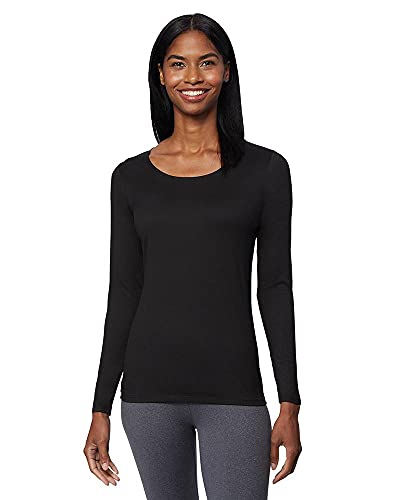
32 Degrees Heat Women's Lightweight Baselayer Scoop Top
Best for mild days, high-output activity, or budget use
32 Degrees Heat Women's Lightweight Baselayer Scoop Top
Best for mild days, high-output activity, or budget use
What we like
- Under $25 makes this the lowest barrier-to-entry base layer on the list that actually performs.
- 4-way stretch and brushed polyester moves freely with you and dries faster than any merino option here.
- Anti-static and tag-free construction means it won't cling or irritate under other layers.
- Works as a travel layer or everyday cold-weather underlayer when merino is overkill.
What we don't
- Polyester holds odor after repeated use — not a multi-day backcountry option.
- No thermal regulation of merino; once you sweat through it, it stays damp longer.
- Scoop neck sits lower than a crew — limits use in very cold conditions where neck coverage matters.
At under $25, this is the base layer you grab for the gym, a quick day hike in mild weather, or as a backup layer in your kit. The brushed polyester wicks fast and dries faster than merino, which makes it the right call for high-output cardio or any activity where you know you'll be washing same-day.
It's not trying to be a merino replacement — it's a legitimate lightweight base layer at a price that lets you buy two. Get this if you hike in shoulder-season temps that don't require serious warmth retention, or if you want a disposable-budget option for day use.
Don't take it on a multi-day trip expecting it to stay fresh — synthetic doesn't forgive the way merino does.
What to Look For
Fabric weight is the most important spec nobody talks about. A 165g/m² top is a three-season piece for active output; a 250–320g/m² top is what you want when you stop moving and the cold hits fast.
Fit determines performance. A base layer that bunches under your arms or gaps at the waist won't wick effectively — look for a fitted cut specifically designed for layering, not just a slim-fit shirt marketed as one.
Micron count matters for merino. Anything above 20 microns will feel itchy against sensitive skin.
The best options on this list use 17.5–18.5 micron wool, which is finer than human hair and genuinely comfortable all day.
Who Should Skip This
If you run extremely hot and primarily do high-output summer hiking, a base layer may be overkill — a moisture-wicking tee does the same job at a lower price. Women who are highly sensitive to any wool fiber may find even superfine merino uncomfortable; a synthetic option is a safer starting point.
If your budget is truly under $20 for a single top, look at the 32 Degrees option — but don't expect multi-day odor resistance.
What the Community Actually Uses
On r/CampingGear, base layer threads come up every fall and consistently produce the same shortlist: Smartwool, Meriwool, and Minus33 for merino; 32 Degrees as the budget entry point. The biggest recurring complaint is women buying men's cuts because women's options were harder to find — that's changed, and this list reflects the current women's-specific lineup.
Quick Picks — In Case You've Already Decided
Smartwool Women's Classic Thermal Merino Base Layer Crew
Check Price on AmazonMERIWOOL Women's Merino Wool Midweight Long Sleeve Thermal Shirt
Check Price on AmazonFrequently Asked Questions
Is merino wool really worth the price over synthetic?
For multi-day trips or hunting where you can't wash daily, yes — merino resists odor for 3–5 days in a way synthetic can't match. For single-day hikes where you'll wash after every use, a quality synthetic works fine at a lower cost.
What weight base layer should I get for winter hiking?
A midweight (230–250g/m²) merino top covers most cold-weather hiking. Go heavyweight (320g+) only if you'll be standing still for extended periods — hunting, ice fishing, or winter camping without high activity.
Can I machine wash merino base layers?
Most options on this list are machine washable on cold, delicate cycle. Always lay flat to dry — tumble drying on high heat damages merino fibers permanently and causes shrinkage.
Should a base layer fit tight or have some room?
Snug — not compressive, but close to the skin. A loose base layer traps dead air and wicks less effectively. If you're between sizes, size down for a layering piece.
Can I wear a base layer as a standalone top?
Midweight merino tops like the Minus33 and MERIWOOL can pass as standalone tops on cool days. Lightweight synthetic options like the 32 Degrees are too thin and fitted to wear alone comfortably in most situations.
Buying Guide
You want a base layer that moves moisture away from your skin before it soaks into your insulation. Look for either merino wool for odor resistance and natural temp regulation, or a polyester-spandex blend for faster drying on hard efforts.
Weight matters — lighter runs cooler, heavier traps more warmth. Fit should be snug but never restrictive.